Toilet Bubbling in Philadelphia: What It Means
A toilet that bubbles when another fixture drains is reporting air displaced past a downstream restriction. The toilet is rarely the problem; it is the messenger, because its large trap and direct connection make it the most visible pressure gauge in a Philadelphia rowhouse.
- Symptom guide
- Philadelphia area
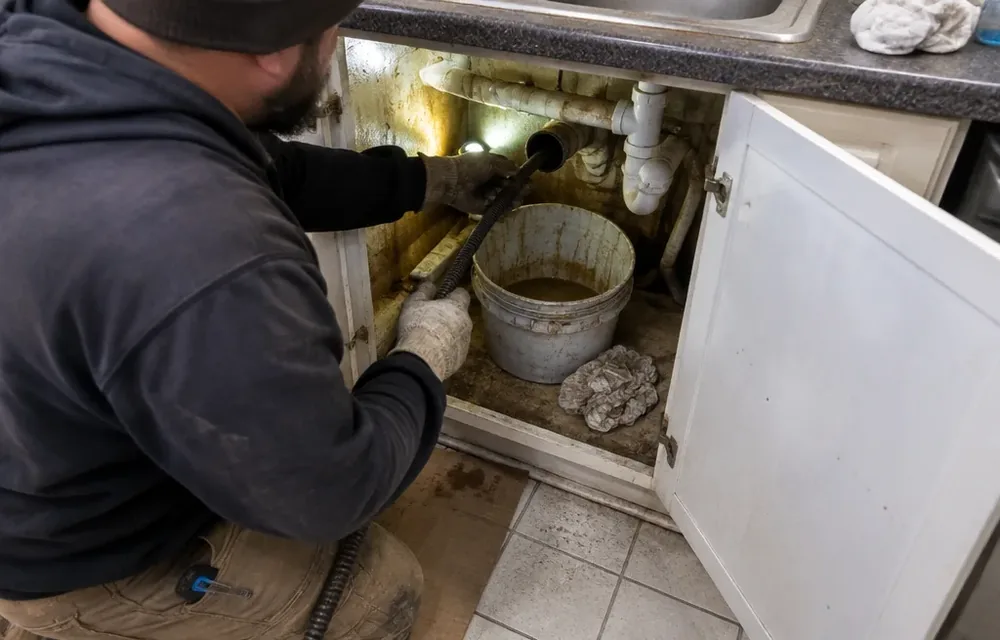
Understanding toilet bubbling
Why the toilet reacts to other fixtures
Toilets sit low on the branch system with a wide trapway holding a large volume of water, which makes them exquisitely sensitive to pressure changes downstream. When a washing machine or upstairs sink discharges past a partial blockage below the toilet tie-in, the slug of water compresses air ahead of it. That air takes the easiest escape route, which is up through the toilet trap, and the bowl burps. The fixture you see reacting is upstream of the restriction; the fixture causing it is simply the one moving the most water.
In Philadelphia housing stock the restriction behind this pattern has a short list of usual suspects. Root intrusion at clay tile joints catches paper and solids until the bore narrows. Cast iron scale in the building drain snags everything passing through older stacks. A partial belly in a settled lateral holds a permanent puddle that each discharge must push through, compressing air with every cycle. All three live downstream of every fixture, which is exactly why the symptom shows up as fixtures affecting each other rather than as one bad drain.
Bubbling is therefore an early-warning instrument, not a fixture defect. A toilet that bubbles today while everything still drains is describing the same line that will back up next month after one heavy rain or one bad week of grease. Replacing the toilet, adjusting its fill valve, or plunging its trap addresses none of this, because the restriction the air is detouring around sits feet or tens of feet downstream. Read drain cleaning for how fixture-level and line-level problems are told apart before money is spent.
How to test the pattern at home
Map the trigger deliberately. With the bathroom quiet, run each water-using fixture in turn: the upstairs sink, the shower, the washing machine on a full cycle, the kitchen sink. Note which triggers produce bubbles and which do not, and whether the bubbles arrive during the discharge or at its end. A washing machine trigger is the classic main-line tell, because no other household fixture moves water as fast; a toilet that only bubbles for the washer is describing a restriction that only full-bore flow exposes.
Watch the bowl water as well as the bubbles. A bowl that rocks, drops below its normal level, or refills sluggishly after a bubbling episode is losing trap seal to pressure swings, and a weakened seal admits sewer gas between episodes. Flush the toilet on its own and time it: a toilet that flushes strongly alone but bubbles when others run confirms the downstream-restriction diagnosis, while a toilet that flushes weakly even alone may carry its own trap or jet problem on top of the line issue.
Listen across the house during the washer discharge, the highest-volume routine event in most homes. If a tub or shower gurgles at the same time the toilet bubbles, two fixtures are reporting the same downstream restriction independently, and the diagnosis is as certain as it gets without a camera. Write down the trigger list with dates before calling, since a dispatcher who hears the full pattern will send the right machine the first time. The clog symptom diagnostic follows this same trigger-mapping logic.
What fixes it, and when to call now versus wait
Occasional light bubbling with strong drainage everywhere can be watched for a short while, but treat it as a countdown rather than a quirk. Reduce the triggers in the meantime: avoid running the washer and dishwasher simultaneously, stagger showers, and keep an eye on the lowest drain in the house, since that is where this story ends if the restriction closes fully. Do not pour chemicals; a downstream restriction is unreachable at useful concentration and the caustic residue endangers whoever eventually opens the line.
Schedule service promptly when bubbling is repeatable, when two fixtures react together, or when the bowl level visibly drops. The visit should start with diagnosis across fixtures, not with a plunger at the toilet: the fix is clearing the building drain or lateral, verified under full washer volume. See main sewer line cleaning for the trunk-line work and sewer camera inspection for what follows when the same line has bubbled before, because a repeat performance marks a pipe defect rather than a passing clog.
Call now if bubbling escalates into rising water, sewage odor, or backup in any fixture. Those are the signs the partial restriction has become a near-total one, and continued water use converts a routine clearing into a contamination cleanup. For the root cause behind so many Philadelphia cases, tree roots in Philadelphia sewer lines explains how street trees find clay joints and what the entry footage looks like on camera.
Toilet Bubbling: questions
Does a bubbling toilet mean I need a new toilet?
Almost never. The toilet is reacting to pressure from downstream, and a new fixture on the same restricted line will bubble exactly the same way. Replace a toilet for cracks, chronic poor flushing on its own, or age; fix bubbling by clearing the line downstream of it.
Why does only the washing machine make my toilet bubble?
Because the washer discharges faster than any other fixture, often twenty gallons in minutes through a pump. That volume exposes a partial restriction that slower fixtures slip past unnoticed. Washer-triggered bubbling is one of the most reliable early signs of a main-line narrowing.
Can a vent problem make a toilet bubble?
Yes, though it is less common than a downstream restriction. A blocked vent forces discharging water to push air through trap seals instead of drawing makeup air from the roof. Vent-only bubbling tends to arrive with cold snaps or nesting season and affects upper fixtures first, while restriction bubbling is steady regardless of weather.
Services that fix this
Drain Cleaning
A single slow sink is a nuisance.
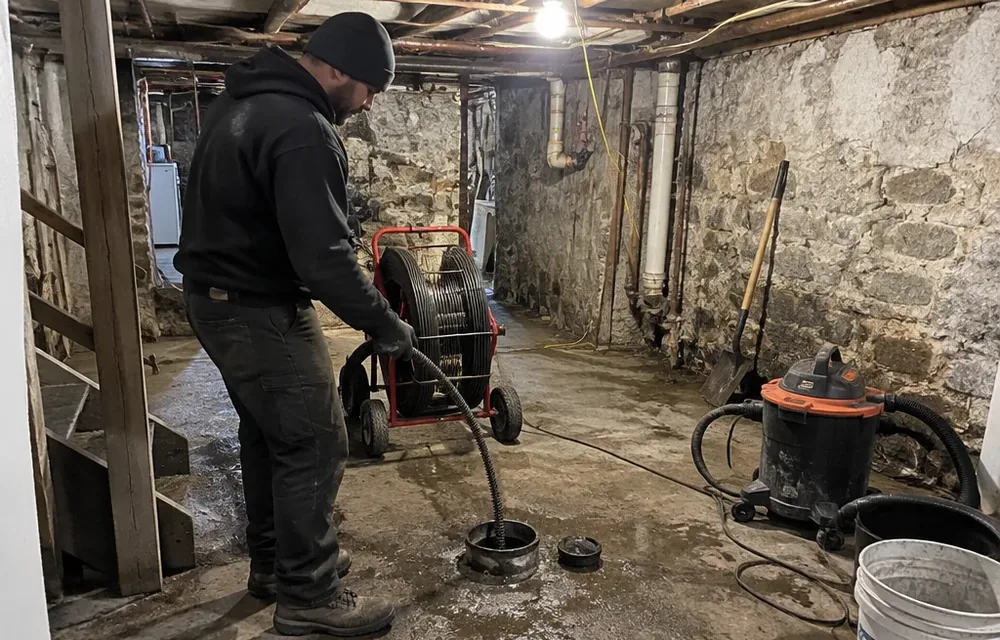
Main Sewer Line Cleaning
The lateral is the most expensive drain you own — a 60-to-100-foot clay run from your rowhouse to the street main, shared with stormwater, hunted by street-tree roots.
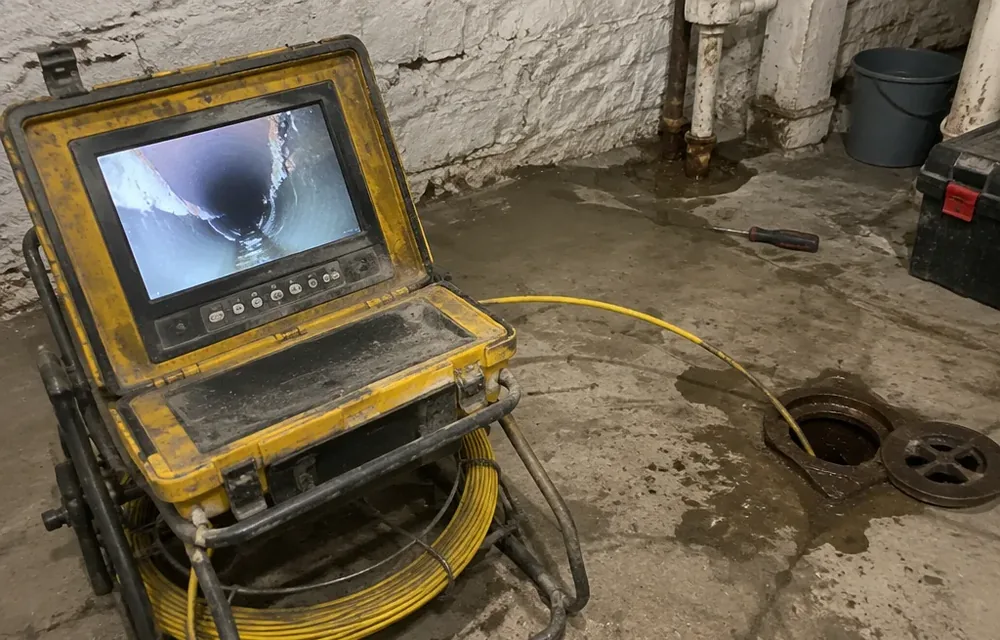
Sewer Camera Inspection
Every expensive sewer decision in Philadelphia — jet, repair, line, replace — depends on one thing: what the pipe actually looks like inside.
Guides on this symptom
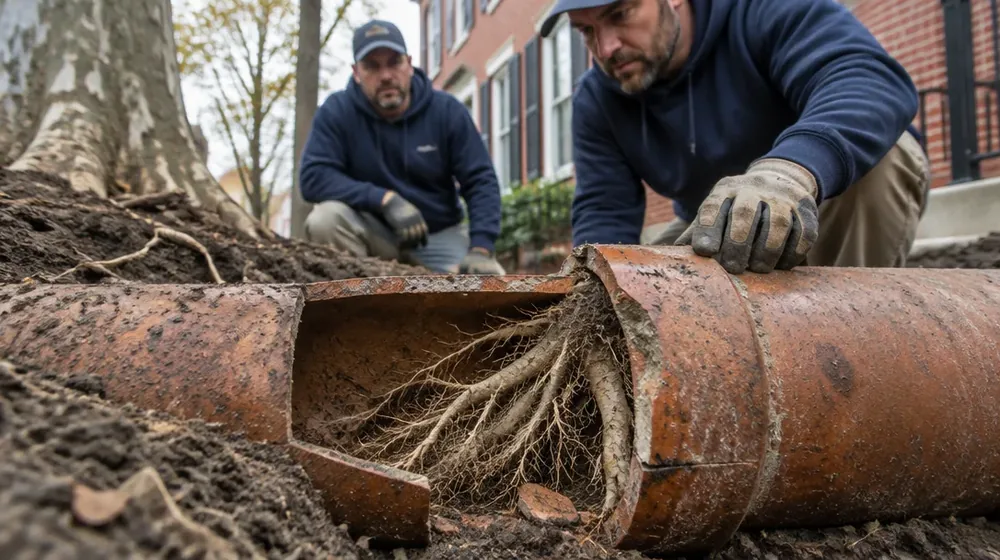
Tree Roots in Philadelphia Sewer Lines Guide
Roots do not break into sound pipe. They find the clay joint that is already leaking, thicken in the flow, and become …
What Is Sewer Camera Inspection? Philly Guide
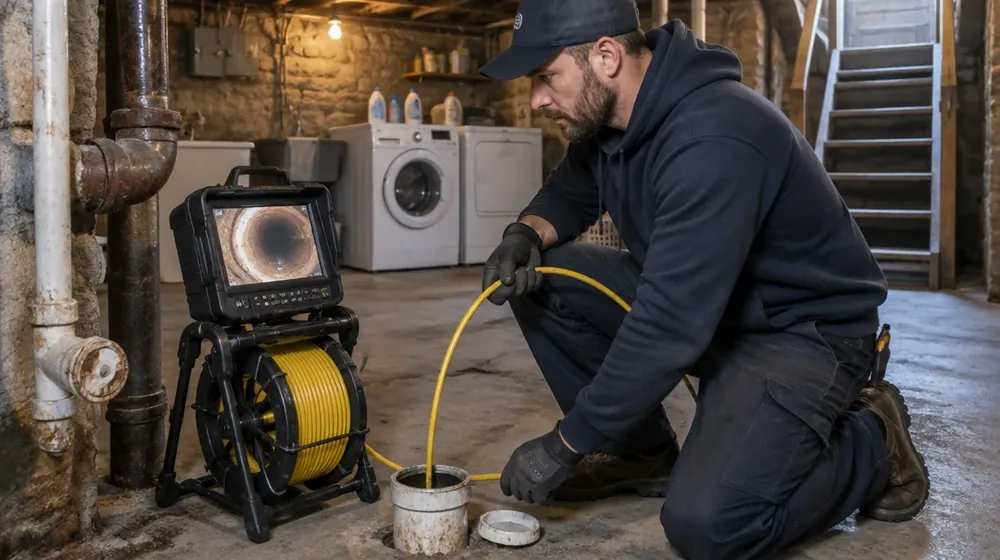
A sewer camera inspection sends a small waterproof camera through a drain or sewer line on a push rod or crawler, reco…