Camera Inspection Before Hydro Jetting: What It Must Show
Nobody can price pressure honestly without seeing the pipe first. On Philadelphia laterals of unknown age and material, the camera is what separates a routine scouring from a costly collapse.
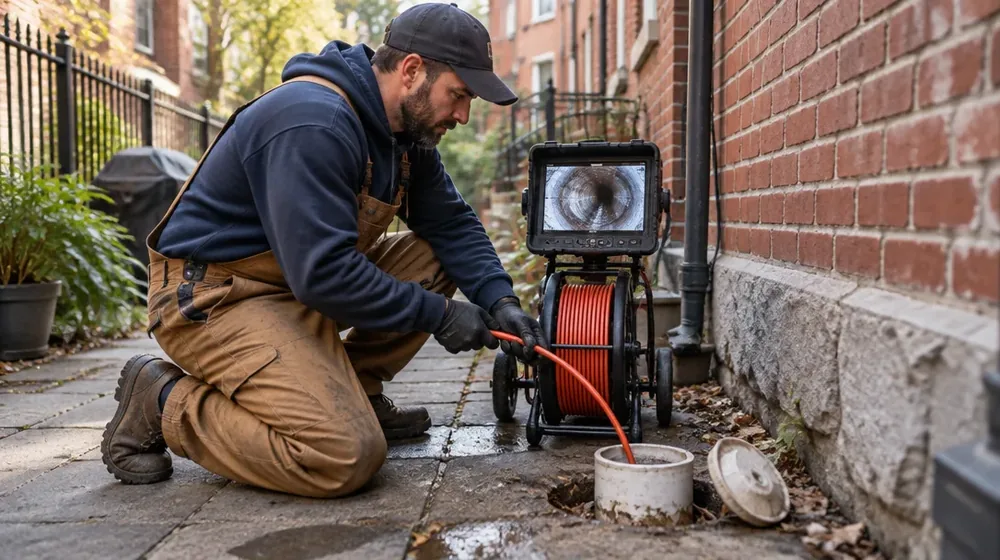
Why jetting blind is a gamble the homeowner funds
Hydro jetting applies thousands of PSI inside a pipe the operator cannot see, which is entirely safe in sound pipe and destructive in failing pipe. The difference between those two outcomes is invisible from the surface: a 1915 clay lateral with good joints jets beautifully, while the identical-looking 1915 lateral next door with separated joints, an Orangeburg patch, or paper-thin scaled iron converts the same pressure into a collapse, a void, or a flooded excavation. The camera is the only instrument that tells them apart before water is committed.
Philadelphia housing stock makes blind work especially reckless. Pre-war rowhouse blocks from Fishtown to Point Breeze contain the full catalog of twentieth-century materials, often mixed within a single lateral where decades of patches joined clay to iron to fiber to plastic with couplings that are themselves the weakest points. Freeze-thaw heave, delivery loading over sidewalk corridors, and trench settlement from a century of utility work shift those joints continuously. Pressurizing that assembly without footage is not efficient service; it is underwritten risk with the homeowner as the underwriter.
The economics favor scoping even before safety enters the calculation. A camera visit that reveals a belly, a collapse, or Orangeburg redirects jetting money toward the repair that actually solves the problem, while a camera that confirms sound coated pipe aims the jetting precisely at the grease or sludge extent with the right head and pressure. National homeowner guides from Angi, Bob Vila, and Forbes place typical jetting around 350 to 600 dollars within a 300 to 1,100 dollar spread as national orientation, and a single avoided misdirected jetting pays for many inspections.
Professional standards align with the same conclusion. The Pennsylvania Uniform Construction Code and the Philadelphia Plumbing Code presume work appropriate to the pipe at hand, competent practice refuses to pressurize Orangeburg or visibly failing pipe, and the jetting decision tool logic used across the industry gates high pressure on camera confirmation for older buildings. Any proposal to jet a pre-1970 Philadelphia lateral without footage should be declined regardless of scheduling pressure.
What competent footage must document
| Element | What good footage shows | Why the homeowner needs it |
|---|---|---|
| Material and diameter | Clay, iron, PVC transitions with sizes | Decides pressure, head, and whether to jet at all |
| Footage marks | Distance from cleanout at every defect | Aims future service; prices repair without re-exploring |
| Depth and locate | Surface marks with depth at curb and defects | Prices excavation and permits accurately |
| Defect catalog | Roots, scale, grease, bellies, offsets | Separates cleaning targets from repair targets |
| Flow behavior | Standing water, debris drift, load test | Reveals bellies and capacity under real slugs |
| Kept file | Video handed over with written summary | Enables competing bids and insurance records |
Footage without marks is entertainment rather than documentation. The numbers are the product: material boundaries by footage, each defect located in feet from a named cleanout, depths at the curb and at each repair candidate, and a surface locate tying the underground run to the sidewalk and areaway above. That record lets any future bidder price cutting, jetting, spot repair, or replacement without re-exploring, which compresses every later visit from investigation to execution.
Flow behavior on video matters as much as static defects. Standing water mid-line with debris drifting back after a flush proves a belly that no still image conveys; paper snagging rhythmically at an offset lip proves a protrusion the diameter measurement misses; grease sheets flexing under flow prove lamination thickness that a dry description understates. The operator should narrate these behaviors in real time and demonstrate a load test with a full tub or laundry slug where capacity is in question.
When to scope: the five occasions that earn their fee
Before buying any pre-1970 Philadelphia home, scope the lateral to the main. The lateral is the most expensive invisible system in the house, replacement crosses sidewalk and street restoration with permit costs, and sellers rarely warrant it. A pre-purchase camera with kept footage and depths costs a fraction of one lateral correction and converts negotiation from suspicion to arithmetic: either the line is sound and the purchase proceeds with confidence, or the footage prices the correction the offer must reflect.
At the second backup in two years, scope rather than re-clearing blind. Two events establish a pattern that a third clearing will not break, because the line is coated or defective rather than merely unlucky. The camera at the second event distinguishes grease that wants scouring from roots that want scheduled cutting, scale that wants descaling judgment, and bellies or collapses that want repair figures, saving the cost of every subsequent blind visit.
Before authorizing any lining or replacement figure, scope independently. No honest capital figure can be priced without footage showing the defect extent, depths, and surface conditions above, and any bidder willing to price excavation from symptoms alone has announced how the project will be managed. Independent footage also disciplines the scope: a whole-run replacement bid against footage showing one bad joint can be challenged with evidence rather than skepticism.
Before jetting any older, repeat-offender, or unknown line, scope as the safety gate this guide exists to defend. And after any thorough jetting, scope again to verify bare wall, restored diameter, and remaining wall thickness, because the verification pass is the proof of value and the baseline for the interval. Five occasions, each converting uncertainty into a file the homeowner keeps.
How the visit runs when done properly
Launch from a proper cleanout
Exterior two-way or basement cleanout for stable footage references. Cleared first if fully blocked.
Run to the main with narration
Material, diameter, and every joint and transition called with footage.
Surface-locate key points
Paint and depths at defects, curb crossing, and the main connection.
Demonstrate flow under load
Flush observation plus a full-bore slug where capacity is questioned.
Deliver file plus summary
Video with marks and a written defect list the homeowner retains.
Recommend from footage
Cut, scour, descale, maintain, or repair stated against specific marks.
Blocked lines need clearing before meaningful scoping, and the order matters: cut roots to full diameter, jet fines out where the pipe is sound enough, then scope the cleared line so the joint rather than the debris is what photographs. Scoping a fully blocked line and declaring failure from debris footage frightens without informing and has sold many replacements that a cleared-line re-scope would have reduced to maintenance.
Winter and wet-weather logistics deserve a sentence each. Cold snaps demand caps reseated and risers protected after the visit so frost does not enter; surcharged combined mains during cloudbursts off the Schuylkill and Delaware corridors may require rescheduling the scope until the main recedes, since surcharge masks private defects and risks the equipment. Neither constraint excuses skipping the camera; each merely schedules it competently.
Reading your own video: a homeowner translation
Clay reads as a rhythmic joint sequence with bells every few feet; iron reads as a continuous run with internal texture from smooth through orange-peel to flaking scale; PVC reads as smooth and jointless with long straight runs. Roots appear as pale hair waving in the flow at a joint, grease as dark sheets flexing on the wall, scale as rough orange-brown growth narrowing the bore, bellies as standing water with a visible meniscus holding debris, and offsets as a lip where one segment steps past its neighbor with paper catching at the edge.
Severity language should tie to footage rather than adjectives. A root intrusion at 42 feet with sound joints elsewhere is a maintenance entry; offsets at every joint from 30 to 60 feet with soil visible is a replacement run; scale reducing a 4-inch iron bore to two inches with flaking through-wall is a judgment call on remaining thickness; a belly holding two inches of water across eight feet is a regrade regardless of how clean the walls photograph. Ask for every conclusion in feet and depths, because adjectives negotiate while footage does not.
Two findings redirect money immediately. Orangeburg fiber pipe, dark and oval with blistering, forbids pressure and converts the project to replacement planning. A collapse or void with soil or daylight visible ends the cleaning conversation entirely and begins the excavation conversation with safety priority, since voids above the pipe threaten the sidewalk and areaway loading. Both findings are why the camera runs first: they are cheap to discover and ruinous to discover with a jetter.
Using footage to control price and scope
Footage with marks makes competing figures comparable in a way verbal descriptions never do. Send the file and the defect summary to each bidder and require the six-line scope: access point, diameter and footage, cutting and camera inclusion, pressure matched to the shown material, load-test proof, and the written contingency if excavation proves necessary. Bidders pricing from the same footage compete on efficiency and judgment rather than on who imagines the worst pipe, and the homeowner can see which scope the footage actually supports.
The file also disciplines change orders mid-project. If excavation reveals conditions matching the footage depths and materials, the contingency prices agreed in advance apply; if it reveals conditions the footage contradicts, the discrepancy is visible to everyone rather than asserted by one side. Philadelphia sidewalk-corridor work with restoration and permit handling is exactly where this discipline pays, because surface restoration and depth move totals more than pipe material and are the items most often left vague.
Retain every camera file with its date as a lateral health record. A 2026 baseline showing one root joint at 38 feet makes the 2028 re-scope a comparison rather than an exploration: same joint with more mass means continued maintenance, new offsets elsewhere mean reassessment, a lengthening belly means the repair conversation advances. The lateral becomes a managed asset with history instead of a recurring surprise, which is the entire return on the inspection investment.
Philadelphia specifics: access, code, and coordination
Access shapes Philadelphia camera work more than in suburban markets. Rowhouses without exterior two-way cleanouts force interior launches that limit reach and footage accuracy, so the inspection visit is frequently the occasion that justifies installing the cleanout the lateral needed all along. Basement cleanouts in finished spaces demand containment and careful cap handling, sidewalk-corridor locates require pedestrian awareness, and depths at the curb must be established before any repair figure crosses the property line toward the Philadelphia Water Department main.
Code and coordination frame the follow-through. Corrections proceed under the Philadelphia Plumbing Code with permits and inspection, right-of-way restoration follows city expectations for sidewalk and areaway surfaces, and the boundary between homeowner lateral and city main should be confirmed with the Philadelphia Water Department rather than assumed from habit. None of this complicates the camera visit itself, but all of it should be named in the recommendation the visit produces, so the path from footage to finished repair is visible before money is committed.
Related services carry the two halves of the work this guide gates: sewer camera inspection for the documentation itself and hydro jetting for the scouring the footage authorizes. Between them sits the decision the footage exists to make, and Philadelphia laterals of unknown material should never proceed to the second without the first.
Frequently asked questions
Do I really need a camera before hydro jetting?
On any older, repeat-offender, or unknown Philadelphia lateral, yes. The camera screens out Orangeburg, collapse, bellies, and paper-thin iron that pressure would worsen, and it aims the jetting that sound pipe deserves. Jetting blind gambles the costliest system to save the cheapest step.
What should I receive from a camera inspection?
A kept video file with footage marks, material and diameter log, depths at defects and the curb, a surface locate, flow behavior under load, and a written defect summary with recommendations tied to footage. Anything less is a look rather than documentation.
Can the camera go through a blocked line?
It can enter but cannot diagnose through debris, which photographs as failure regardless of the pipe behind it. Clear first with cutting and, where sound, jetting, then scope the cleared line so joints and walls are what the footage shows.
How much does a camera inspection add to the project?
It is commonly bundled with jetting, and as a standalone it costs a fraction of one misdirected jetting or one unnecessary excavation. Its return arrives as avoided damage, aimed work, comparable bids, and a baseline that cheapens every future visit.
How often should a Philadelphia lateral be scoped?
At purchase for pre-1970 homes, at the second backup in two years, before any lining or replacement figure, before jetting unknown pipe, and after every thorough jetting as verification. Roots on open joints otherwise suggest re-verification on a one-to-three-year rhythm.
Services mentioned in this guide
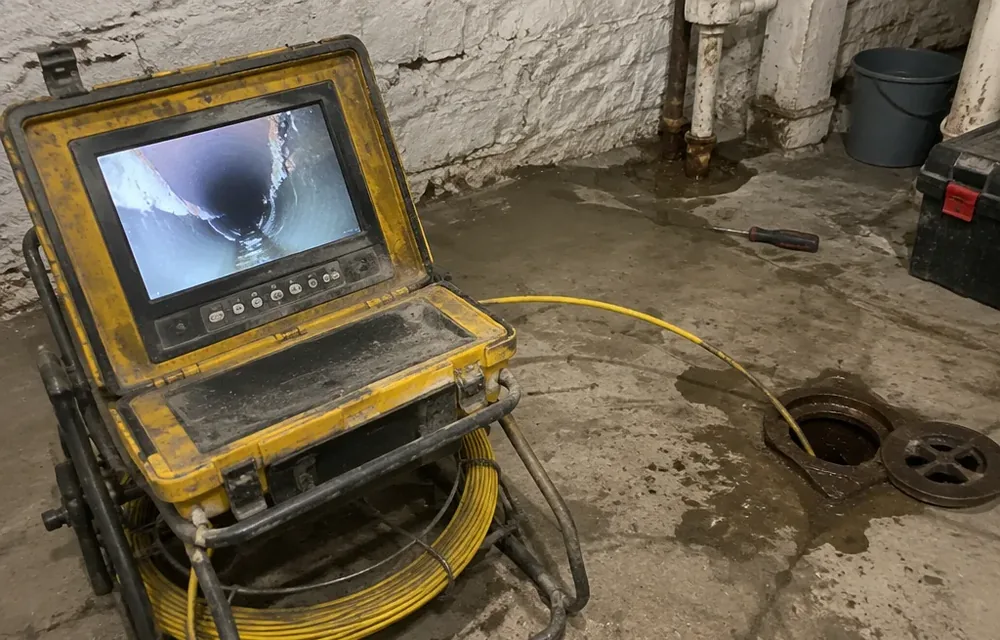
Sewer Camera Inspection
Every expensive sewer decision in Philadelphia — jet, repair, line, replace — depends on one thing: what the pipe actually looks like inside.
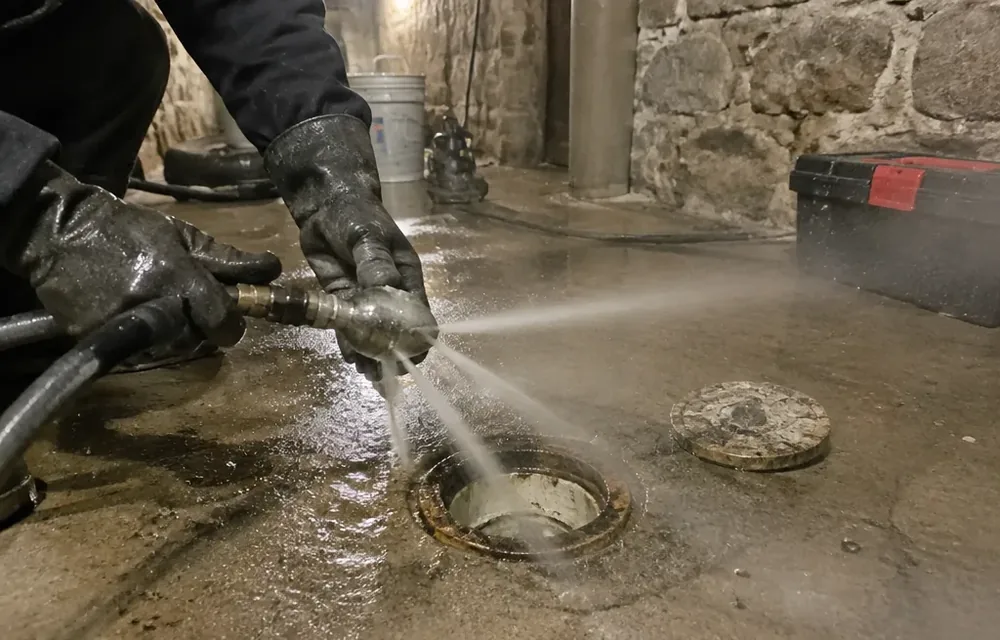
Hydro Jetting
A cable bores a hole through the clog.
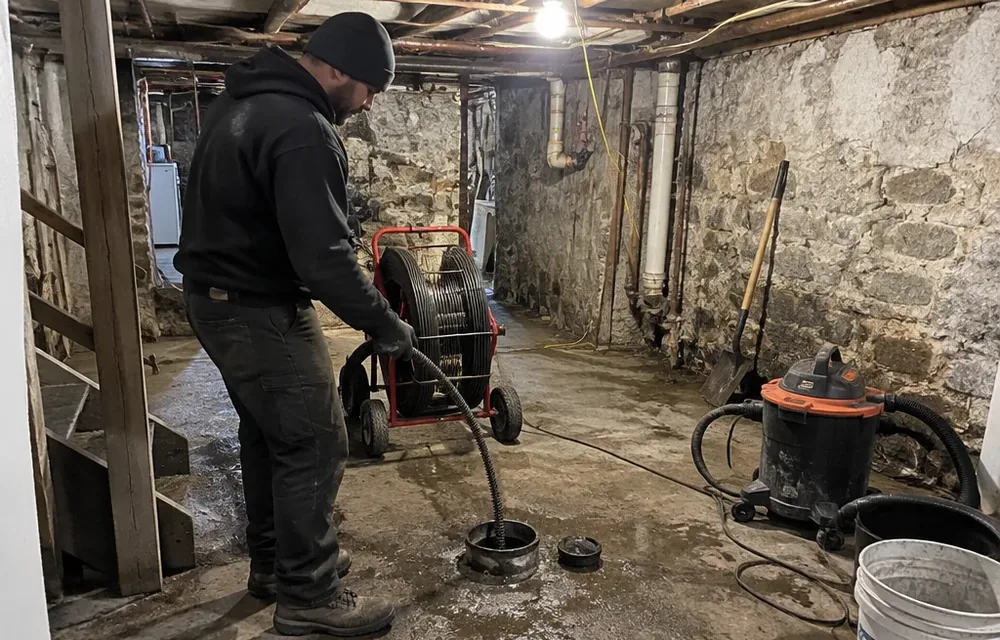
Main Sewer Line Cleaning
The lateral is the most expensive drain you own — a 60-to-100-foot clay run from your rowhouse to the street main, shared with stormwater, hunted by street-tree roots.
Free tools that help with this exact problem
Jetting vs snaking
Snaking costs less and jetting lasts longer, but that is not the real decision.
Clog diagnostic
The difference between a fixture clog and a main line failure is a factor of three in price and the difference between "book it next week" and "stop using water now".
More guides
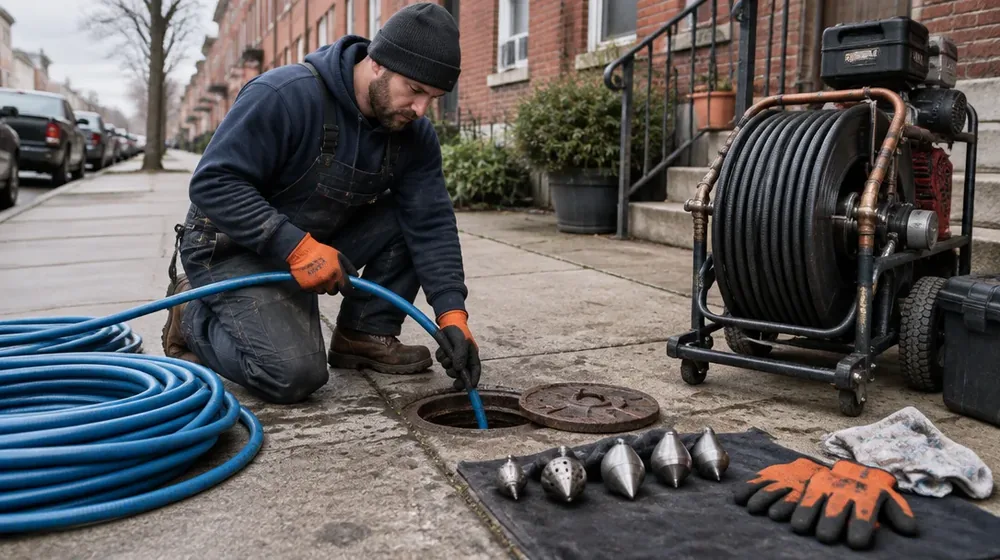
Hydro Jetting vs Snaking: What Philly Homes Need
A cable bores a hole through the blockage so water moves again. A jetter scours the whole pipe wall back toward bare m…

Hydro Jetting Cost in Philadelphia: 2026 Guide
Most Philadelphia homeowners budget around national jetting ranges, then discover access, lateral length, and root cut…
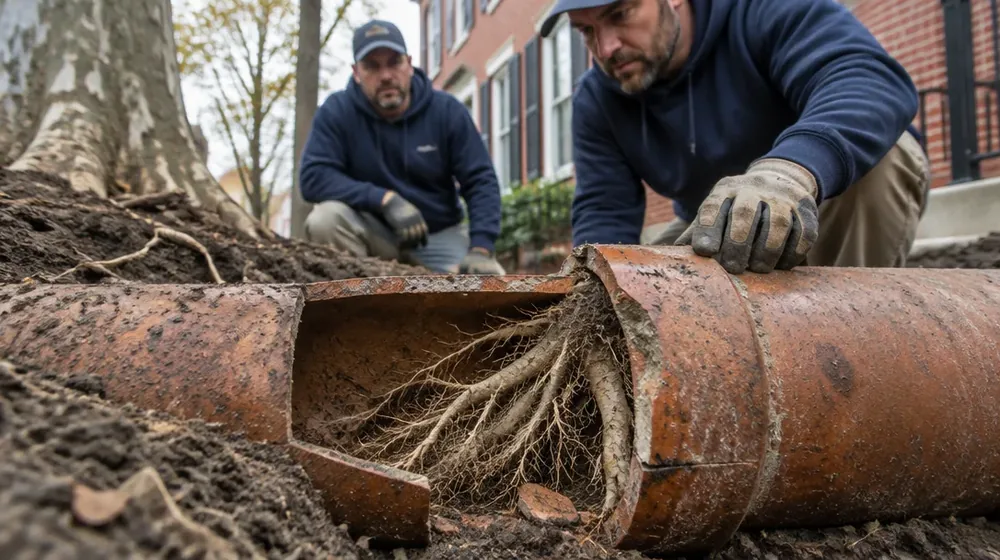
Tree Roots in Philadelphia Sewer Lines Guide
Roots do not break into sound pipe. They find the clay joint that is already leaking, thicken in the flow, and become …
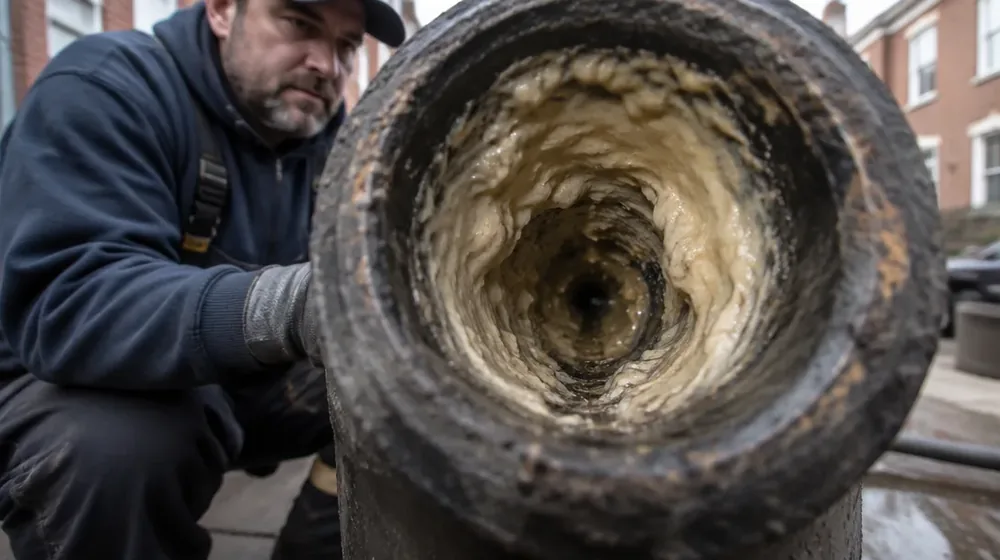
Grease Lines: Philly Rowhouses & Restaurants
Grease goes down warm and liquid, meets cold iron, and becomes a wall coating rather than a plug. That is why the same…