Sewage Smell in Your Philadelphia Basement: Causes
Most basement sewage odor in Philadelphia comes from a dry floor-drain trap or a failed seal, both cheap fixes. The dangerous minority comes from a cracked lateral or combined-sewer backpressure pushing gas past those same seals, so the first job is telling the two apart by timing and location.
- Symptom guide
- Philadelphia area
Understanding sewage smell in the basement
Where basement sewer odor comes from mechanically
Every drain opening in your basement is separated from the sewer by a trap seal, a U-bend holding a few inches of water that gas cannot cross. Floor drains, laundry standpipes, capped shower rough-ins, and ejector pits all depend on that water barrier. When the water evaporates from a drain nobody uses, the barrier vanishes and the basement gets a direct air path to the lateral and the city main beyond it. This is the single most common cause, and it follows seasons: dry winter air and summer dehumidifiers both evaporate idle traps faster.
The second tier is failed seals and joints inside the house. A toilet wax ring that has compressed with age, a cleanout cap left loose after a previous service, a Fernco coupling drying out on an old cast iron joint, or an ejector-pit lid whose gasket has flattened all leak gas without leaking water, which is why the basement can smell strongly while every floor stays dry. Rowhouse basements concentrate these joints in one small room, so even a minor leak reads as a major stink.
The third tier is the line itself. A cracked clay lateral under the slab or yard vents soil gas and sewage odor upward through the path of least resistance, which is often the basement. Combined-sewer backpressure during heavy rain does the same thing from the other direction: the surcharged public main pressurizes your lateral, and gas forces past weak trap seals and imperfect joints. Odor that arrives with rain and leaves with it belongs to this tier, and it shares plumbing with the backup problem described in basement backups and combined sewers.
How to trace the smell to its source at home
Start with the pour test, which costs nothing and resolves half of all cases. Slowly pour a half gallon of water into every basement floor drain, shower drain, and laundry standpipe, then add a teaspoon of cooking oil to the least-used ones to slow future evaporation. If the smell fades within a day and stays gone, you had dry traps, and the fix is a monthly pour or a trap primer. Mark which drain you suspect most by taping over it loosely for a day; if the odor drops, you have found your leak path.
Next, map the smell in space and time. Crouch at each fixture and cleanout in turn rather than sniffing the room as a whole, because the strongest point is usually within a few feet of the source. Note whether the odor is constant or episodic: constant odor points to a dry trap or failed seal inside the house, while odor that spikes during heavy rain or when the washing machine discharges points to backpressure or a partial downstream restriction. Check the ejector pit lid and any grinder pump basin for a loose or cracked cover, since those read as a whole-basement smell from one failed gasket.
Look for the quiet companions of a lateral break. A persistent musty-sewage note near one wall or floor section, efflorescence or damp staining that never fully dries, and drain flies clustering around one drain all suggest gas and moisture entering through a cracked pipe rather than through room air. Do not pull toilets, open cleanouts, or pour chemicals while investigating; an open line turns a smell problem into a spill problem, and caustic products sitting in a basement line are a hazard for whoever eventually opens it.
What fixes it, and when to call now versus wait
Dry traps and loose caps are homeowner territory. Keep idle traps charged monthly, tighten any cleanout cap you find loose, and replace a visibly flattened toilet base seal only by scheduling the reset as real work, since pulling a toilet without a new wax ring and flange check trades a smell for a leak. A plumber can fit an automatic trap primer on a chronically dry floor drain so the seal maintains itself, which is the permanent answer for drains that serve no regular fixture.
Schedule a visit when the pour test fails, when the smell localizes to a toilet base or ejector pit, or when odor recurs every time it rains. Those patterns need eyes on the seals and, for rain-linked cases, an assessment of backpressure protection such as a backwater valve. See basement floor drain cleaning for private-lateral work at the lowest opening in the house and sewer camera inspection for documenting a suspected lateral break before anyone talks repair.
Call now when the odor arrives suddenly and strongly with any of the following: water rising in a floor drain or shower pan, gurgling across multiple fixtures, or a neighbor mentioning their basement is taking water too. That combination means sewage may be moving the wrong direction through the lateral, and every gallon you run adds to it. Stop water use, keep people and pets out of any standing water, and read emergency drain service for after-hours help. For prevention between storms, how to prevent basement backup lays out the valve, grading, and sump measures in the right order.
Sewage Smell in the Basement: questions
Why does my basement smell like sewage but nothing is backing up?
Because odor and water travel differently. A dry trap or failed seal passes gas freely while the line still drains, so the basement can smell for months with no visible backup. The pour test resolves the most common version: charge every idle trap and see whether the smell fades within a day.
Why does the sewage smell get worse when it rains?
Much of Philadelphia runs on combined sewers, so heavy rain surcharges the public main and pressurizes your lateral. That pressure pushes sewer gas past weak trap seals and imperfect joints that hold fine in dry weather. Rain-linked odor is worth a professional assessment even without a backup, because it shares a cause with rain-linked backups.
Can a dry floor drain really smell that bad?
Yes. A basement floor drain connects straight to the lateral, and with its trap evaporated the basement has an open air path to the sewer. Winter heating air and dehumidifiers accelerate evaporation in exactly the rooms where floor drains sit unused. A monthly pour, or a trap primer fitted once, ends it.
Services that fix this
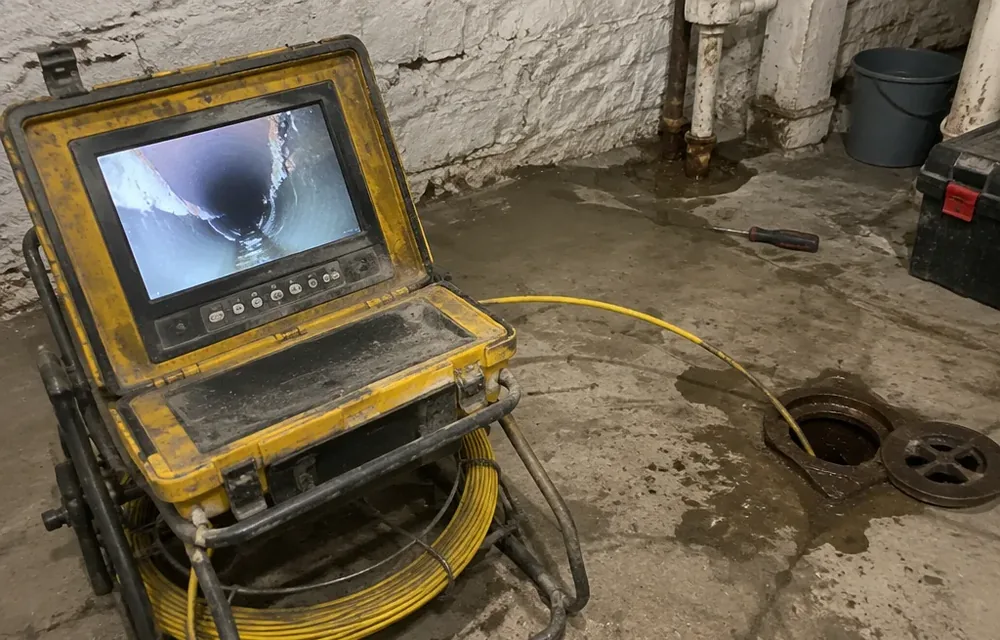
Sewer Camera Inspection
Every expensive sewer decision in Philadelphia — jet, repair, line, replace — depends on one thing: what the pipe actually looks like inside.
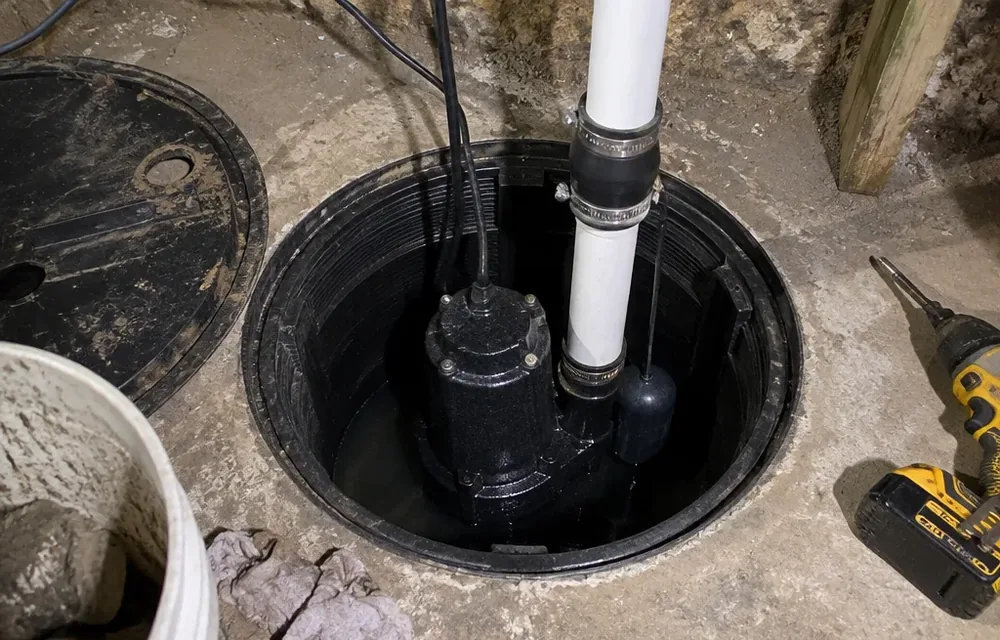
Basement Floor Drain Cleaning
The basement floor drain is the lowest opening in your rowhouse — which makes it the relief valve for every downstream restriction.
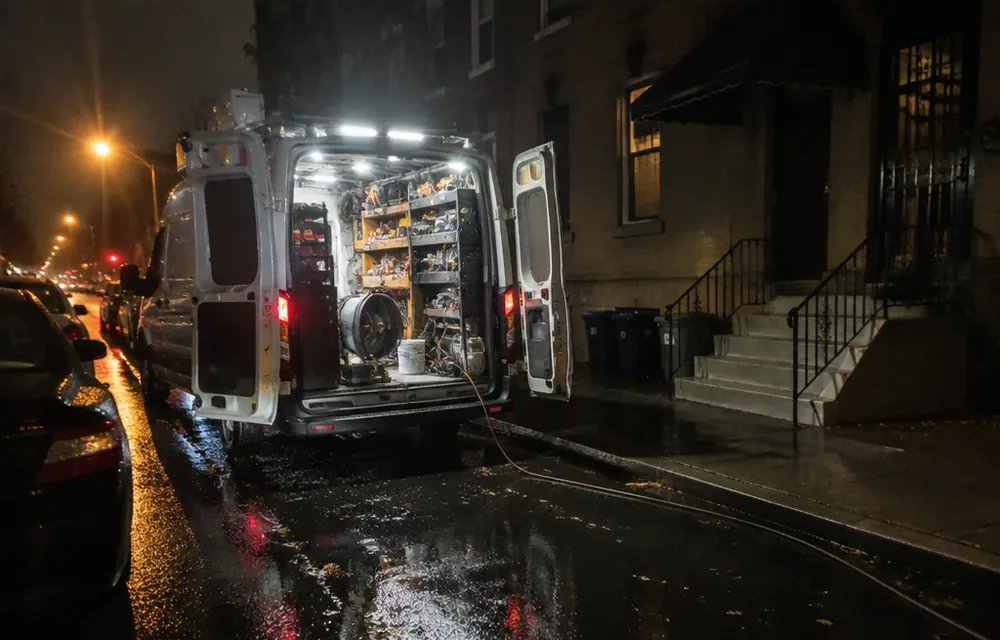
Emergency Drain Service
Sewage on the basement floor does not wait for business hours, and neither do we.
Guides on this symptom
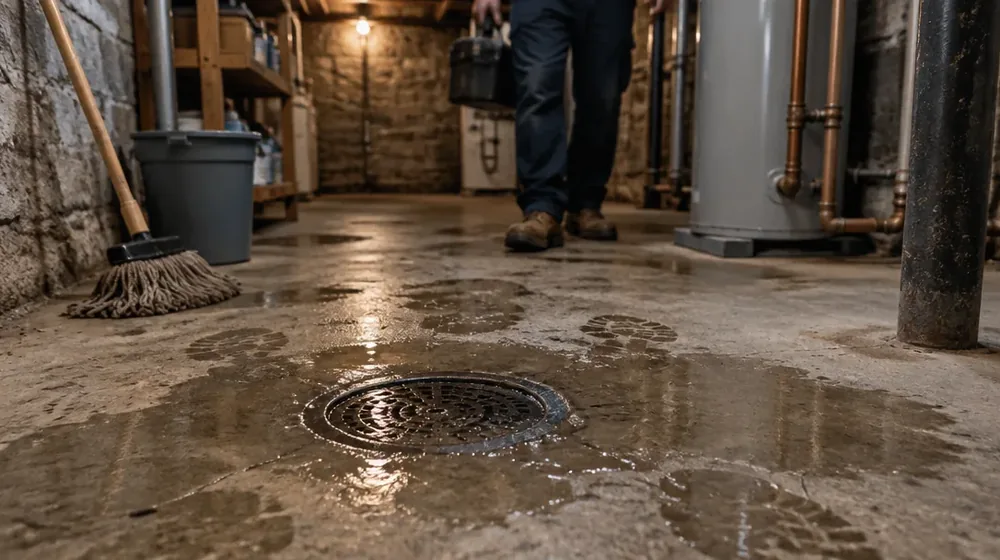
Basement Backup in Philly: Combined Sewers
When rain and sewage share the same Philadelphia main, a cloudburst can push water backward through the lowest drain i…
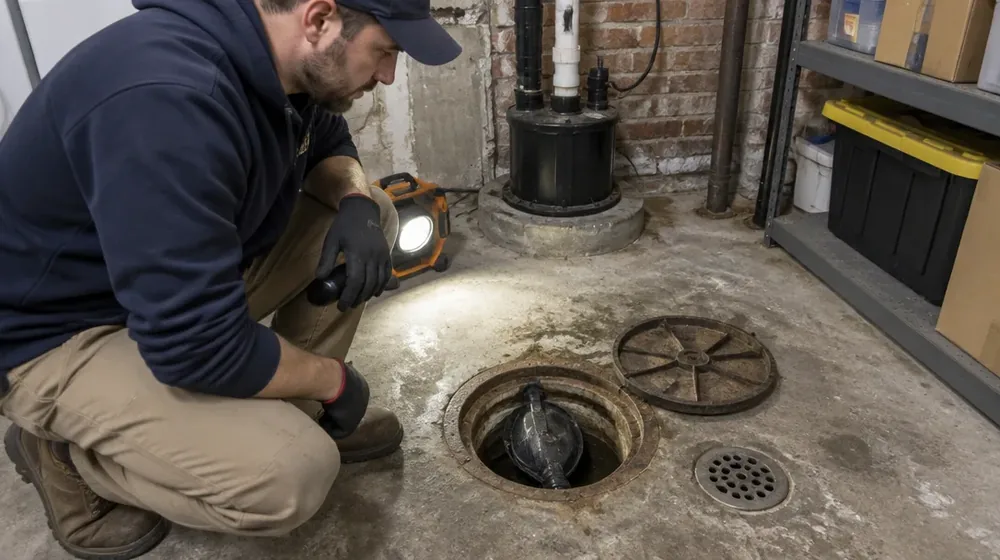
How to Prevent Basement Backup in Philadelphia
Prevention on a combined-sewer block means giving surcharge water no low opening to use and giving your own discharge …