How to Unclog a Main Sewer Line: Safe Triage for Philadelphia Homes
When a main sewer line blocks, every drain in the house shares one failing exit. Safe homeowner triage means stopping water use, testing whether one fixture or the whole house is affected, checking the cleanout without opening a charged line, and calling for professional help the moment sewage, storm backup, or fragile old pipe enters the picture.
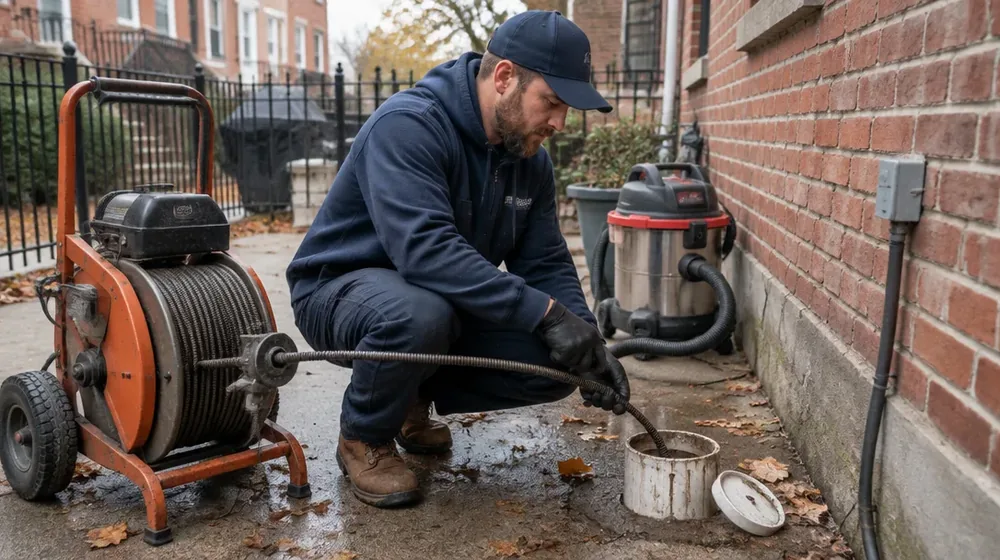
First, confirm it is the main line and not one fixture
| Signal | Likely a branch clog | Likely a main line blockage |
|---|---|---|
| Fixtures affected | One sink, tub, or toilet only | Several fixtures across rooms |
| Gurgling pattern | None or local to one trap | Toilet gurgles when sink drains and vice versa |
| Lowest drain | Dry while one fixture stands full | Water or sewage appears at floor drain or tub |
| Cleanout behavior | Cleanout dry and quiet | Cleanout holds standing water or overflows |
| Outdoor signs | No change at curb lawn | Soggy strip or odor near lateral path |
| Timing | After one heavy use at one fixture | Across normal use, often worsening over days |
The distinction controls everything that follows, because a branch clog and a main blockage call for different tools and different urgency. A single slow bathroom sink with no symptoms elsewhere is a fixture run that a plunger or a small hand auger often resolves. A main blockage announces itself across the house: the toilet burps when the washing machine drains, the tub fills when the toilet flushes, the basement floor drain shows water first because it is the lowest opening, and the problem worsens with every gallon sent down any drain. Philadelphia rowhouses make the pattern vivid, since stacked bathrooms and kitchen runs share a short path to one lateral, so a main restriction echoes through every fixture within minutes.
Run a controlled whole-house test before touching any tool. Start with all fixtures off and the lowest drain observed. Flush one upstairs toilet once and watch the lowest drain for several minutes. If it stays dry, run a bathroom sink for two minutes and watch again. If symptoms appear only when volume flows, the line passes small flows but fails under load, which points to a partial main restriction such as grease, sludge, or root hair rather than a hard collapse. If water rises at the lowest drain without any new use, the line is holding back already-discharged water or the city main is surcharged, and the correct move is to stop all use immediately rather than adding test volume.
Note the weather and the block context while testing. Much of Philadelphia operates on combined sewers where sanitary flow and stormwater share the same mains, so a summer cloudburst off the Schuylkill or Delaware corridor can surcharge the main and push water back toward the lowest house openings even when the private lateral is sound. If neighbors report simultaneous backups during heavy rain, or the Philadelphia Water Department main is known to be surcharged, the event is a system backup first and a cleaning decision second. Adding water, opening caps against pressure, or running machines during that window converts a waiting situation into a flooding one.
Write down what you observe with times, because that log shortens the professional visit that may follow. Record which fixtures were used, how long until symptoms appeared, whether the lowest drain showed water, what the cleanout area looked like from outside without opening it, and whether rain was falling. A note that reads that two toilet flushes raised the basement floor drain within five minutes during dry weather points a technician straight at the lateral with the right machines on the truck. Guessing from memory after the fact wastes the first half hour on re-testing what the household already witnessed.
Safe DIY triage: stop water, protect the space, check access
Stop all water use the moment a main blockage is suspected. That means no toilet flushing, no laundry, no dishwasher, no long showers, and no running taps to test repeatedly. Every gallon sent down a blocked main has only two places to go: back into the lowest fixture or out through a cleanout. Households that keep using water while deciding what to do turn a contained restriction into an active overflow. Post a simple note at each fixture so nobody runs a load out of habit, and hold use until the line is proven clear under controlled flow rather than until one fixture looks briefly better.
Protect people and the basement space before handling anything. Keep children and pets away from standing water, since main-line water carries sewage pathogens even when it looks like cloudy tap water. Shut off basement electrical devices sitting in or near water only from a dry position at the breaker, never by stepping into water to unplug equipment. Move stored goods off the slab onto blocks, open basement windows for ventilation where safe, and lay towels only as a monitoring aid rather than as a fix. If water is rising quickly, leave the space and wait for professional help instead of wading in to save belongings.
Check the cleanout location without forcing anything open. Many Philadelphia rowhouses have an exterior two-way cleanout near the foundation or a basement fitting with a square or round cap, sometimes buried under mulch, paving, or basement storage. Find it visually, note whether the area is wet, odorous, or heaving, and clear access so a technician can work. Do not break a corroded cap free with a large wrench, do not stand over the cap while loosening it, and never open a cleanout that is bulging or seeping under pressure, since a charged line can release a column of sewage the moment the seal breaks. Locating and exposing the fitting is the helpful homeowner step; opening a charged fitting belongs to the pro with containment ready.
Use only gentle fixture-level methods while the main is suspect, and only on one isolated fixture. A cup plunger on a single sink with the overflow stuffed can move a soft local plug, provided the rest of the house stays dry and no sewage is present. A small hand auger through a sink trap can retrieve hair near the fixture. What stays off the list is equally important: no repeated chemical pours that sit against the blockage and heat the pipe, no large rental drum machines driven blindly into a main of unknown material and age, and no garden hose run full-blast into a floor drain to force passage. Philadelphia laterals in clay, thin cast iron, and occasional Orangeburg do not forgive blind force, and chemicals left standing complicate the professional cleaning that follows.
Hard stop rules: when to call now and do nothing more
Sewage is present anywhere
Water with solids or strong odor at any drain, floor, or cleanout ends DIY work. Pathogens plus pressurized flow demand professional containment and cleaning.
Storm backup is active
Water rising during heavy rain with neighbors affected signals a surcharged combined main. Stop use, stay clear, and wait for the system to recede before any line is opened.
No accessible cleanout exists
Without a proper entry point there is no safe way to relieve or clean a main. Improvising through fixtures risks damage and indoor flooding.
Pipe is old, fragile, or unknown
Pre-1970 clay, thin cast iron, or Orangeburg of unknown condition can collapse or perforate under force. Scope on camera before any aggressive work.
Water rises with no new use
A line filling on its own is charged from downstream or from the main. Opening caps or adding test volume releases that column indoors.
Backup returns within days
A blockage that clears briefly then returns is a coated or defective line, not a soft plug. Repeated DIY passes waste days and risk the pipe.
Treat the list above as absolute, not advisory. Sewage exposure is the clearest stop because main-line water carries bacteria and viruses that household gloves and mops cannot make safe, and agitating it spreads contamination across finished space. Storm backup is the second stop because a surcharged Philadelphia combined main pushes back with municipal volume behind it; no household tool outlasts that pressure, and opening a cap against it invites the street main into the basement. Either condition converts the job from cleaning a pipe to managing a health and building exposure, which is professional work with containment, disinfection planning, and drying that follows the clearing.
Missing access and fragile pipe form the next pair of stops. A main without a cleanout offers no controlled entry or exit, so every attempt must go through a fixture trap, a vent, or a pulled toilet, each of which is undersized, indirect, and prone to flooding the room when the blockage releases suddenly. Old Philadelphia laterals compound the risk: clay joints shifted by settlement, cast iron thinned by tuberculation, and Orangeburg fiber runs deformed into ovals all fail differently under force, and none of them can be evaluated from the surface. A camera survey with footage marks and depths is the step that prices the risk before water or steel is committed, and on pre-1970 lines it is standard diligence rather than delay.
Repeated quick relief followed by return is the final stop, and the most commonly ignored. A line that runs for two days after plunging or light cabling, then slows again, is coated or defective along its length rather than plugged at one point. Grease lamination inside cast iron, root hair trapping paper at a clay joint, or a belly holding sediment each rebuild the restriction within days of a partial opening. Each additional DIY pass through the same coating removes a smaller fraction while wearing the pipe and delaying the scoped cleaning that would end the cycle. Two cycles of brief relief is the signal to scope, clean thoroughly, and verify on camera rather than to attempt a third opening.
What a professional does differently on a main line
A competent main-line visit follows a fixed sequence that starts with confirmation rather than with a machine. The technician verifies branch versus main with fixture tests and cleanout observation, stages containment at the lowest opening, and opens the cleanout carefully and from the side in case the line is charged. On older or repeat-offender Philadelphia laterals the camera goes in before aggressive cleaning, documenting material boundaries, diameter changes, footage to each defect, and depth at the curb and at repair candidates. That survey decides whether the line gets cable work, jetting, or a repair conversation first, and it protects Orangeburg, paper-thin iron, and separated clay from pressure they cannot survive.
Clearing itself is staged by what the camera showed. A soft plug of paper and sludge may clear with a properly sized cable head run to full diameter, followed by volume flushing that proves flow under load. Grease-bound cast iron responds to a scouring water pass with a spinning head that peels the wall around its full circumference and carries the load out to the cleanout. Root masses from London plane, silver maple, or honey locust street trees need mechanical cutting to full diameter first, then a flushing pass that removes hair and pulp so it does not re-lodge downstream. Each method ends the same way: a post-clean camera pass proving bare wall and round bore, with footage marks logged for the record the household keeps.
Proving the fix under load is the step most DIY efforts skip and the one that prevents callbacks. A line that passes a cable or a hose at rest can still fail when a washing machine discharges a full slug or when a storm surcharges the combined main. Technicians run a full tub or laundry discharge while watching the cleared line, confirming that water carries through without hesitation or upstream rise. On wet-weather backup histories they also discuss backwater protection and maintenance timing, since a cleaned lateral still faces the next cloudburst with whatever diameter the storm finds. The visit is complete when the line carries real demand on camera, not when a tool reaches the main.
The paperwork matters as much as the water. Expect a video file with footage marks, a written note of material, length to the tap, depths at key defects, what was removed and from which footage interval, and a maintenance-versus-repair recommendation with the reasoning stated. That packet lets any future bidder price cutting, cleaning, spot repair, or lining without re-exploring, which compresses later visits from investigation into execution. On Philadelphia rowhouse blocks where laterals share age, material, and tree exposure, the file also becomes the household reference for interval planning: grease extent this year predicts next cleaning, root entries with depths price eventual joint work, and a logged belly ends debate about whether cleaning or regrading comes next.
After the line runs again: keep it open in a rowhouse
Sink discipline decides how fast a kitchen lateral recoats, and Philadelphia rowhouse kitchens recoat quickly because short cast iron runs carry concentrated fat loads. Scrape plates to the trash, pour cooking fat into a jar for disposal with household waste, wipe pans before washing, and run hot water with dish soap after greasy loads so fat stays suspended past the lateral rather than congealing on the first cool iron. Garbage disposals compound the load by suspending solids that settle wherever flow slows, so households with chronic grease histories do better treating the disposal as a convenience for small scraps rather than as a food waste system. The coating begins rebuilding the same week cleaning ends; habits decide whether the interval is measured in months or years.
Paper and wipe discipline decides how fast a root-active or sludge-prone main re-mats. Only human waste and standard toilet paper belong in a lateral with known root entries or combined-system settling, because wipes labeled flushable, paper towels, and hygiene products snag on root hair and offset lips and rebuild the plug that was just flushed out. Laundry lint and basement utility sinks add fibers and grit that settle at bellies and joints, so spacing large discharges and avoiding simultaneous multi-fixture slugs during storm peaks reduces the load when the main is already stressed. Small habit changes at every fixture outperform any single cleaning over a three-year horizon.
Access and records decide how routine the next visit feels. Keep the exterior cleanout cap accessible and properly seated, with mulch and paving clear of the lid and basement storage pulled back from the indoor fitting. Store the inspection video, the footage and depth log, and the maintenance note where they can be found in minutes, and note the interval the technician recommended with the reason stated. Schedule the next check before symptoms return on lines with known grease or root exposure, and ahead of spring storm season on combined laterals with wet-weather histories. Philadelphia freeze cycles punish caps left loose in January, and summer cloudbursts punish narrowed laterals in July, so a line maintained ahead of both windows faces each with full diameter ready.
Frequently asked questions
How do I know the main line is blocked and not one sink?
Several fixtures failing together points to the main: toilets gurgling when sinks drain, tubs filling when toilets flush, or water at the lowest floor drain. One slow fixture with everything else normal points to that branch. A controlled test with one toilet flush while watching the lowest drain confirms which pattern you have.
What should I do first during a suspected main backup?
Stop all water use at every fixture, keep people clear of standing water, find the cleanout location without forcing it open, and note symptoms with times. Avoid repeated flushing, chemical pours, and rental machines. If sewage is present or water rises during rain, call for professional help immediately.
Can I open the sewer cleanout myself?
Locating and exposing the cleanout for access is helpful, but opening a charged line is hazardous. A main holding water can release a column of sewage the moment the seal breaks. Stand clear of bulging or seeping caps and leave opening, cleaning, and containment to a technician with the right gear.
Why does the main clog again days after it clears?
Because the line is coated or defective rather than merely plugged. Grease lamination, root hair trapping paper, or a belly holding sediment rebuilds the restriction within days of a partial opening. Two cycles of brief relief mean the next step is a camera survey plus a thorough scoped cleaning, not another partial opening.
What does a professional main-line visit include?
Confirmation of branch versus main, careful cleanout entry with containment, camera documentation on older or repeat lines, cable cutting or water scouring matched to the defect, post-clean camera verification, and a load test with a full tub or laundry discharge. You should receive video with footage marks and a written maintenance note.
Services mentioned in this guide
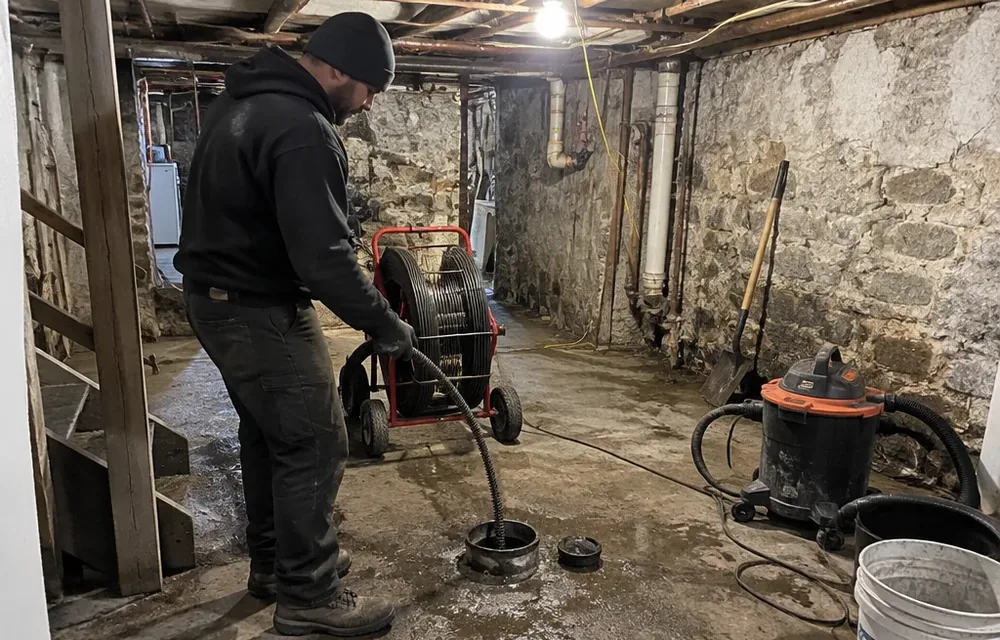
Main Sewer Line Cleaning
The lateral is the most expensive drain you own — a 60-to-100-foot clay run from your rowhouse to the street main, shared with stormwater, hunted by street-tree roots.
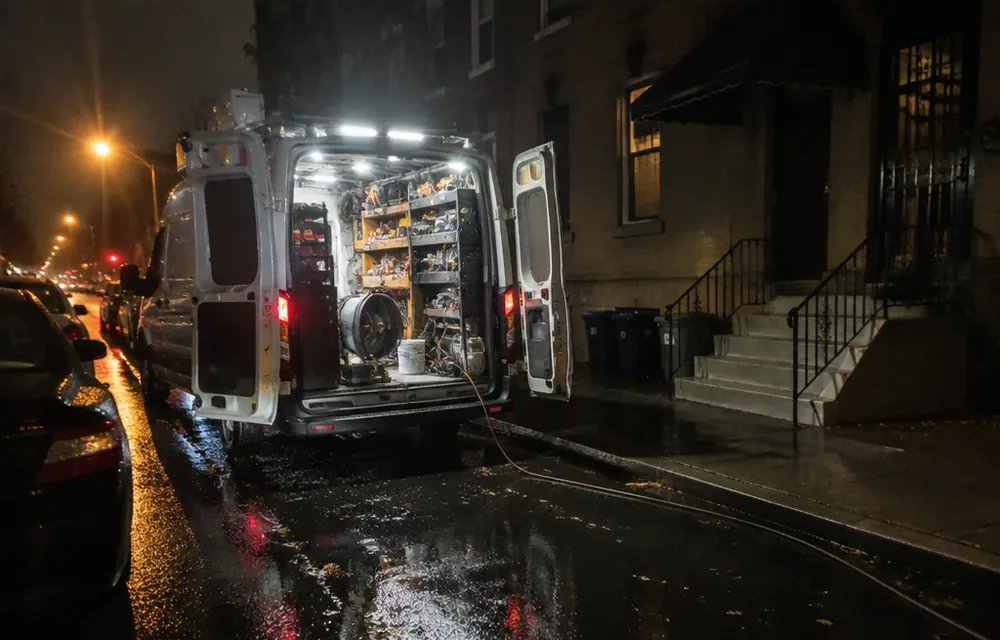
Emergency Drain Service
Sewage on the basement floor does not wait for business hours, and neither do we.
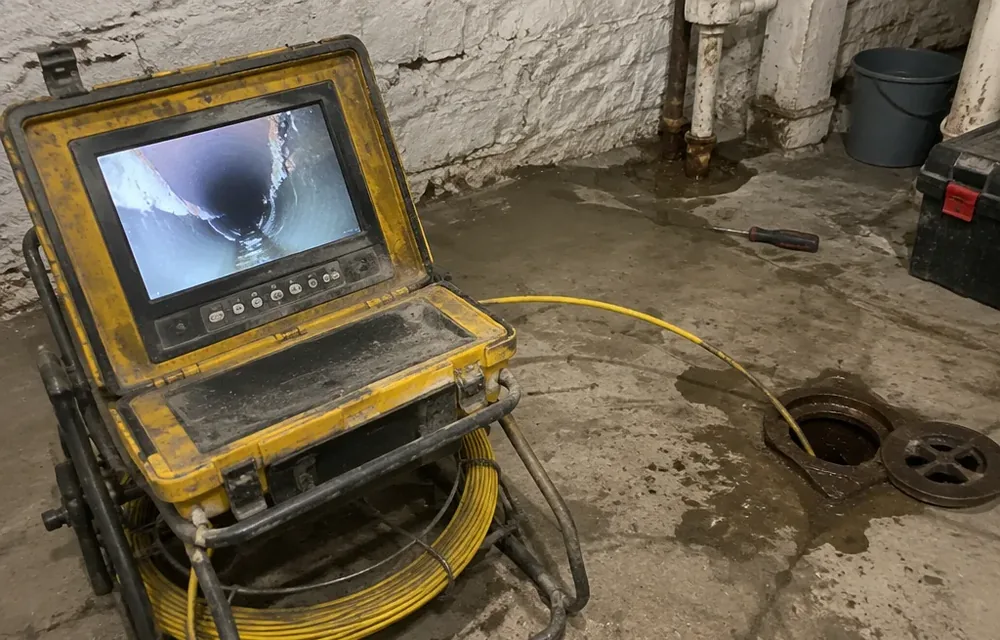
Sewer Camera Inspection
Every expensive sewer decision in Philadelphia — jet, repair, line, replace — depends on one thing: what the pipe actually looks like inside.
Free tools that help with this exact problem
More guides
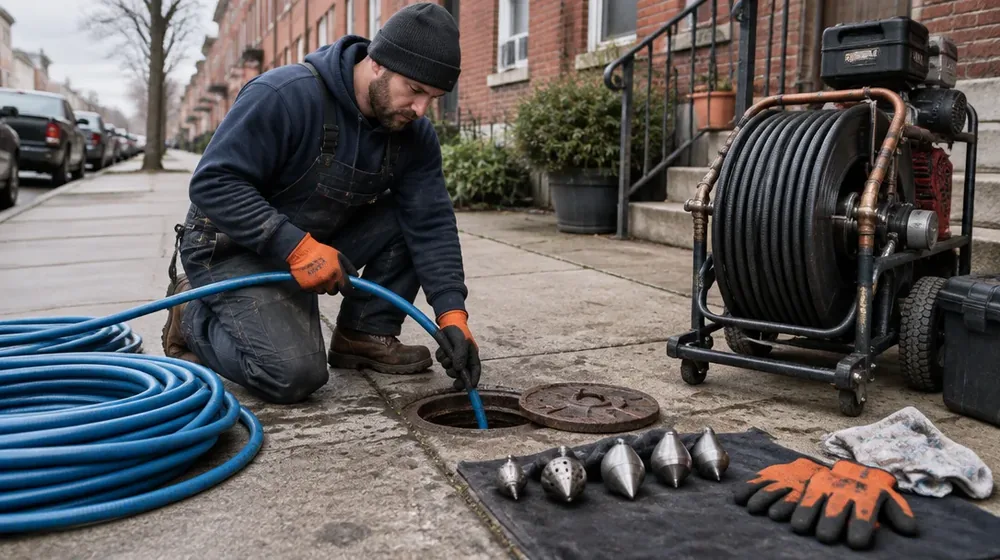
Hydro Jetting vs Snaking: What Philly Homes Need
A cable bores a hole through the blockage so water moves again. A jetter scours the whole pipe wall back toward bare m…

Hydro Jetting Cost in Philadelphia: 2026 Guide
Most Philadelphia homeowners budget around national jetting ranges, then discover access, lateral length, and root cut…
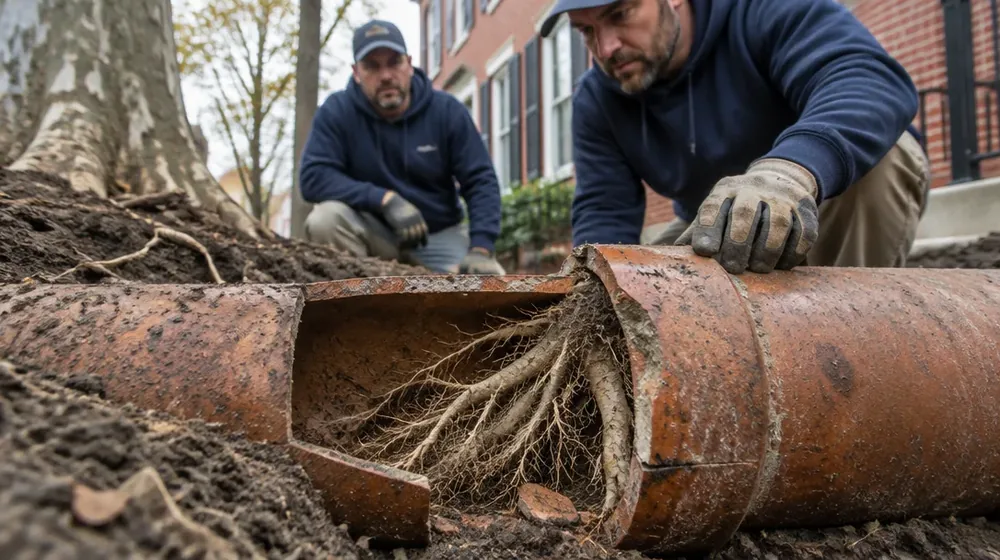
Tree Roots in Philadelphia Sewer Lines Guide
Roots do not break into sound pipe. They find the clay joint that is already leaking, thicken in the flow, and become …
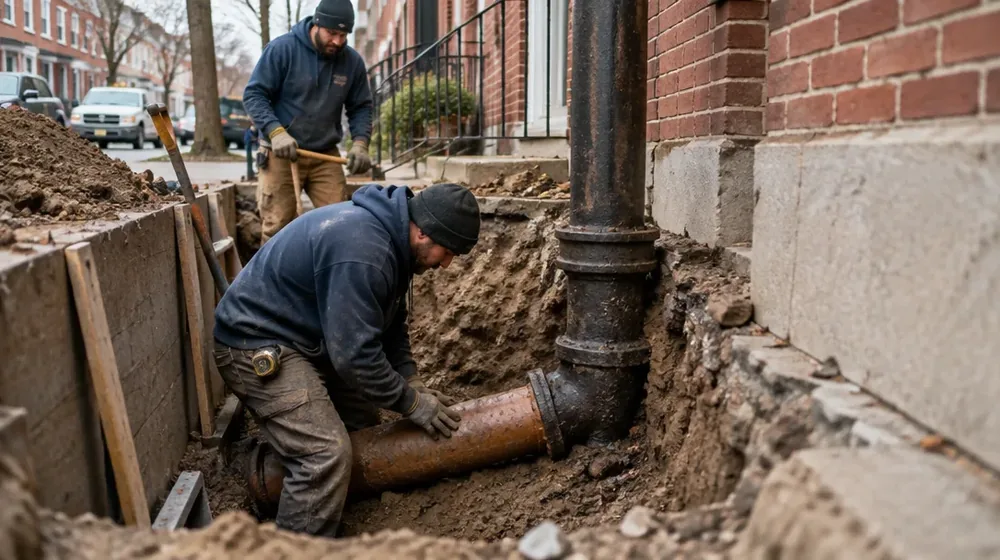
Philly Rowhouse Laterals: Clay, Iron & More
The year your Philadelphia rowhouse was built predicts what is buried in front of it. Clay joints admit roots, cast ir…