HOA Community Drain Jetting in Philadelphia Suburbs — Shared Lines & Lots
HOA drain problems are never one owner's problem. Shared laterals, common-area catch basins and parking-lot storm runs belong to everyone — which means every backup becomes a board meeting. Preventive jetting on a scheduled, documented cycle keeps shared lines flowing and turns drainage from a recurring dispute into a budgeted line item.
- Half day to full day
- Philadelphia Area
- 7 days a week
Signs you may need hoa community drains
Most people arrive here describing a symptom rather than naming a service. These are the three that point this way.
Lowest unit flooding from a line nobody owns alone
Damage surfacing in a ground-floor unit from a shared lateral is the classic association dispute. Camera footage by distance proves the shared restriction, and scheduled jetting keeps the diligence file current before lawyers get involved.
Parking lot ponding days after rain has stopped
Standing lot water that outlasts the storm means basin sumps are packed or storm connectors are silted. Autumn plus mid-year vacuuming and jetting restores design flow before the next cloudburst tests garages and entries.
Mature trees lifting walks above the shared lateral path
Heaving pavement and lush strips tracing the shared run mark root intrusion at every clay joint the roots can reach. Mapped cutting on a one-to-two-year rhythm with jetting keeps the joint-managed lateral working for years.
What community drain responsibility actually covers
The split surprises most boards the first time it matters. Unit interiors — fixture arms, trap assemblies, branch lines inside walls — typically belong to owners. Everything shared belongs to the association: building-to-main laterals, common-stack sections, parking-lot catch basins and their connecting storm runs, courtyard and garage drains, and any shared tie-in to the municipal main.
That split is exactly where disputes breed. A backup surfacing in a ground-floor unit usually originates in a shared lateral the owner neither owns nor controls — yet the owner experiences the damage. Without a documented maintenance record, the association cannot show diligence and the owner cannot show cause, so everyone pays lawyers for what a camera file would have settled.
Suburban Philadelphia communities add their own mix: condo clusters in King of Prussia and Conshohocken with long shared laterals under parking courts, townhouse rows in Abington and Cheltenham with common storm connections, and garden-style complexes across Delaware County where mature street trees load shared clay with roots. The inventory differs by community; the ownership pattern does not.
A baseline survey converts assumptions into an asset map: which lines are shared, what condition each is in, and what interval each needs. That map is the document every future budget, dispute and reserve study references.
Shared laterals and parking-lot catch basins
Shared laterals fail from combined load. Multiple units discharging grease, wipes, hair and solids into one aging clay or cast iron run narrow it from every connection at once — and the lowest unit floods first regardless of who contributed most. Camera footage by distance identifies the narrowed sections so cleaning targets the restriction instead of the whole map.
Root intrusion concentrates at shared joints. Mature oaks, maples and London planes lining suburban courts seek joint moisture along the longest shared runs, entering at every mortar joint they reach. Scheduled cutting on a one-to-two-year rhythm keeps joint-managed laterals working for years; see rooter service for the cutting cycle that pairs with jetting.
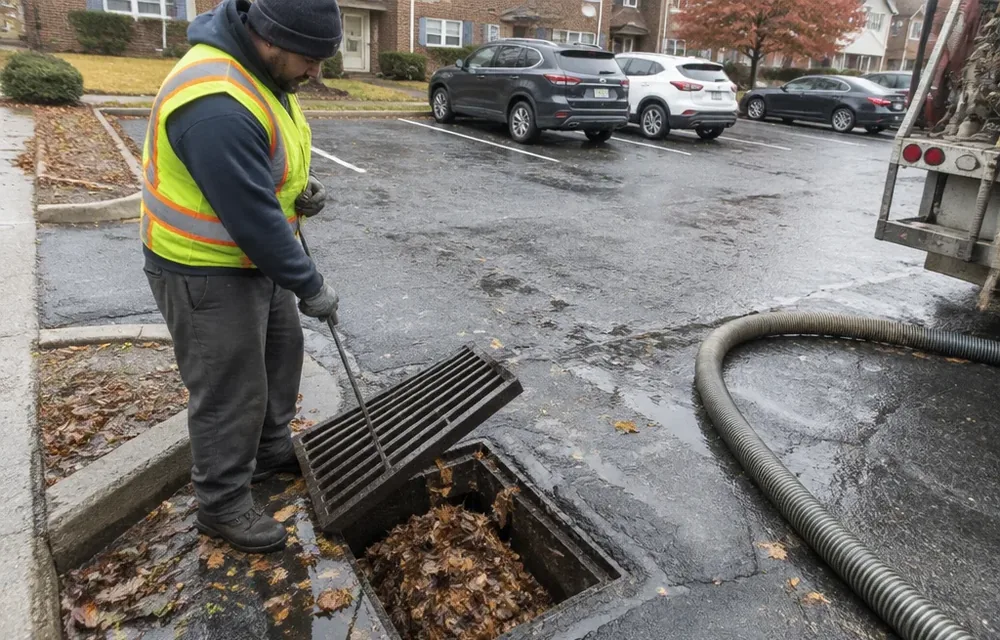
Parking-lot catch basins and their connecting storm runs pack with grit, leaves and winter traction material. A basin sump filled to its outlet cannot admit design flow, so runoff ponds across the lot and sheets toward garages and ground-floor entries. Pre-winter clearing plus a mid-year pass keeps cloudburst flooding off association property — full scope at storm drain & catch basin cleaning.
Courtyard, garage and loading-area drains connect the two systems on many sites. Silted connectors that drain slowly in ordinary rain become the failure point in cloudbursts, and because they sit in common areas the association owns both the problem and the liability for slip exposure around ponded water.
Preventive schedules boards can approve
Boards approve what they can budget. A preventive program translates pipe condition into line items: annual lateral jetting for high-load shared runs, semi-annual to annual stack service for dense buildings, autumn plus mid-year basin and storm service, and root cutting on its own mapped cycle. Each line carries a footage-backed reason and a fixed visit cost.
Intervals come from the baseline, not from a template. A ten-unit shared lateral with sound PVC holds a longer cycle than a thirty-unit clay run under mature maples — and the proposal says which is which, with footage marks to prove it. Boards should be skeptical of any program that prices every community identically.
Seasonality shapes the calendar. Autumn leaf loading fills basins fastest under mature canopy, winter traction grit packs sumps, spring root flushes seek joints, and summer cloudbursts test the whole storm path. Scheduling basin service before leaf season and lateral verification before storm season puts maintenance ahead of weather instead of behind it.
Multi-year programs earn tuning. Footage comparisons across visits show which intervals can stretch and which must tighten, so the association stops paying for jetting it no longer needs and starts paying sooner for cleaning it does. That trend line belongs in the reserve study file.
How a community visit works
Walk the site and map the shared system
Every maintained line — shared laterals, stacks, basins, storm connectors — camera-surveyed, footage-marked and graded. The board approves a program built on evidence.
Schedule around residents
Daytime common-area work staged to keep lots, garages and walkways usable; unit-access phases noticed in advance where stacks require entry. No blocked driveways, no surprise shutoffs.
Jet with containment and verification
Laterals flushed toward the municipal main, stacks scoured top-down, basins vacuumed and connectors jetted — every pass camera-verified with before-and-after footage.
Cut roots on their own cycle
Where shared clay shows intrusion, cutting passes join the program on a mapped one-to-two-year rhythm, documented joint by joint for the maintenance record.
Deliver the board packet
Dated findings, footage evidence, condition grades, next due dates and budget-ready interval recommendations — written for directors to read, approve and file.
Board-friendly reporting
Every visit closes with a packet written for non-plumbers: what was serviced, what the footage showed, what grade each shared line carries, when each is next due and what it will cost. A director opening the file two years later understands the program without calling anyone — which is precisely what reserve studies, insurer reviews and owner questions require.
Condition grades travel across visits and into capital planning. Improving grades justify stretching an interval; declining grades justify tightening it or budgeting a spot repair or lining section. When a five-figure lateral project eventually appears in a budget proposal, the footage trend behind it has been accumulating for years — no surprise assessment ambush.
Dispute support comes standard. When a backup damages a unit and the question of association diligence arises, the dated maintenance file with camera evidence answers it. Documented preventive care is the strongest position a board can hold; an empty file is the weakest.
Portfolio managers overseeing multiple communities get one reporting format across sites, consolidated scheduling that shares mobilisation cost, and comparable condition grades that let them prioritise capital across the portfolio instead of reacting to whichever board shouts loudest.
Cost and budgeting, plainly
Community programs typically run $500 to $2,000 per visit: single-lateral townhouse rows and small basin counts at the low end, multi-lateral condo complexes with parking-court storm systems at the high end. As a rule of thumb: single interior/branch lines $250 to $550 (usually owner), main residential lines $350 to $1,100 (per CC&Rs), shared laterals/stacks $500 to $1,500, and community storm networks $500 to $2,500+ by footage and diameter. Baseline survey, camera verification and the board packet are part of the scope, quoted per community after walkthrough.
Budget logic favors the program over the emergency. One shared-lateral backup floods the lowest unit, triggers remediation and contents claims, fills a board meeting with dispute, and still leaves the narrowed pipe in the ground. A year of scheduled service costs a fraction of one such event — and produces the diligence record the next dispute will demand. In the Delaware Valley, aging clay, heavy roots and freeze-thaw cycles make that record a reserve-fund question, not just a maintenance one.
Structure the program as an operating line item with capital implications, not as a series of one-off approvals. Fixed per-visit pricing, published intervals and annual footage review let treasurers forecast accurately — and let the reserve study carry real pipe data instead of round-number guesses.
Frequently asked questions
How much does HOA drain jetting cost in the Philadelphia suburbs?
Typically $500 to $2,000 per visit depending on shared-lateral count and footage, basin count, building density and site access. A small townhouse row sits low; a multi-building condo complex with parking-court storm systems sits high. Quoted per community after walkthrough and baseline survey.
What drains does the HOA own versus individual owners?
Generally, owners hold fixture arms and branches inside their walls while the association holds shared laterals, common stacks, catch basins, storm connectors and the tie-in to the municipal main. A baseline survey maps exactly which lines are shared so responsibility stops being a debate.
How often should a community jet its shared lines?
Annual lateral jetting for high-load shared runs, semi-annual to annual stack service for dense buildings, and autumn plus mid-year basin service under mature canopy. Intervals come from baseline footage and tune across visits — identical pricing for every community deserves skepticism.
Can you work without blocking lots and driveways?
Yes. Common-area work is staged to keep parking, garages and walkways usable, with unit-access phases noticed in advance where stacks require entry. No blocked driveways and no surprise shutoffs.
What reports does the board receive?
A board packet per visit: lines serviced, footage evidence, condition grades, next due dates and budget-ready interval recommendations — written for directors to approve and file. The trend across visits feeds reserve studies and capital planning.
Do you service multiple communities for one manager?
Yes. Portfolio programs share one reporting format, consolidated scheduling and comparable condition grades across communities, which lowers per-site cost and lets managers prioritise capital across the portfolio.
Related services
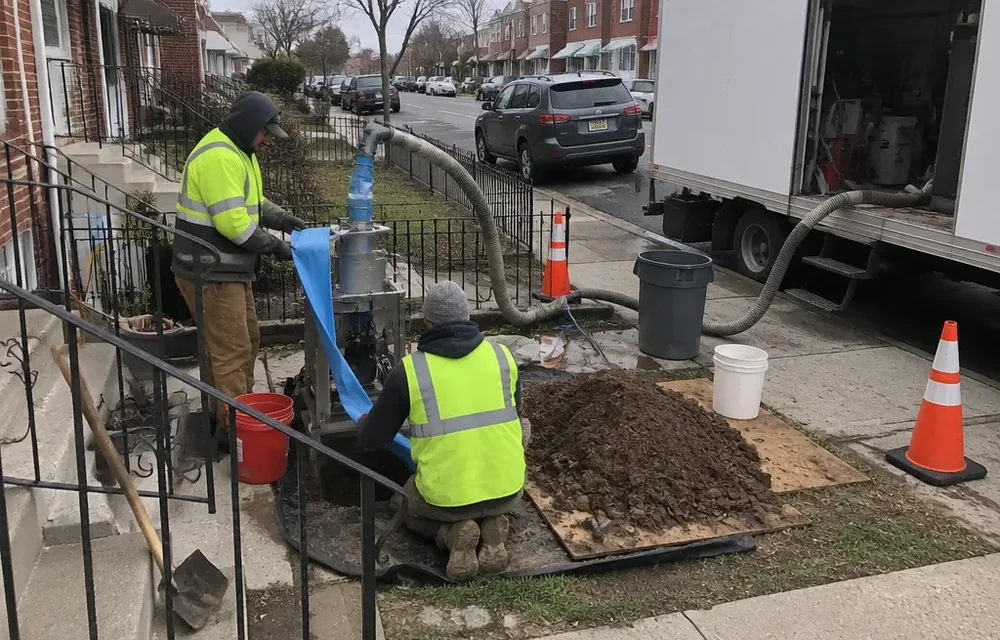
Commercial Hydro Jetting
Commercial drains fail on schedule — fryer volume, tenant count, storm season — so they should be serviced on schedule.
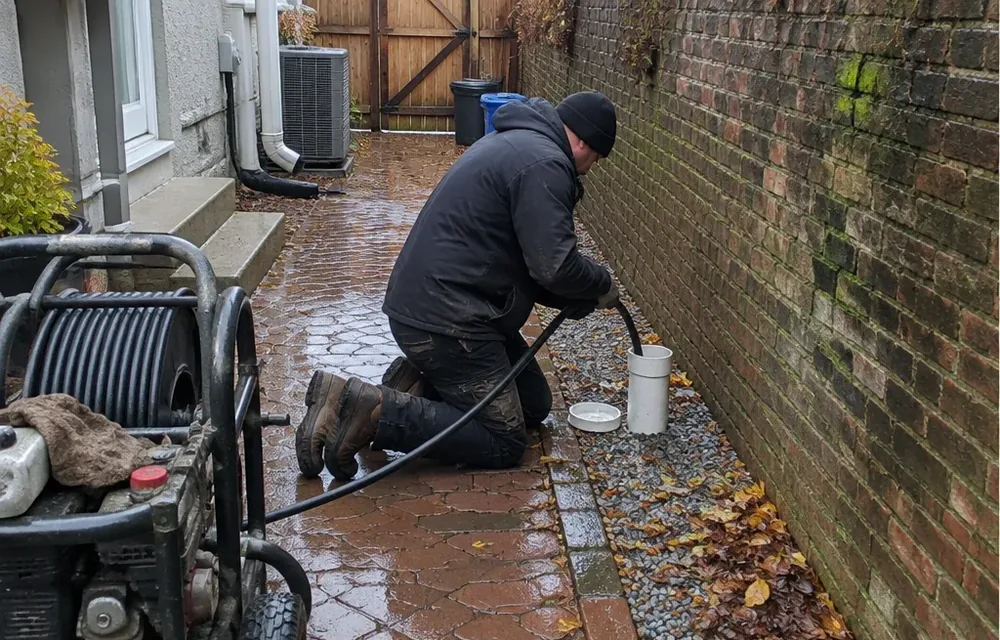
Storm Drain & Catch Basin Cleaning
A flooded loading dock or parking lot is rarely a rain problem.
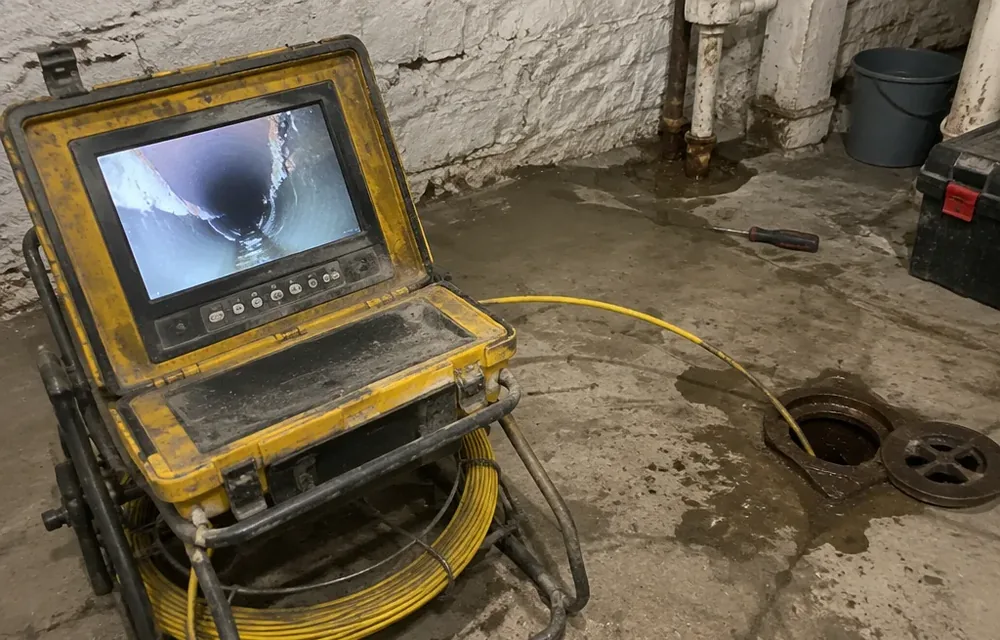
Sewer Camera Inspection
Every expensive sewer decision in Philadelphia — jet, repair, line, replace — depends on one thing: what the pipe actually looks like inside.
Property Manager Multifamily Drains
Nobody treats a rental drain like an owner does.
HOA Community Drains across Philadelphia and its suburbs
We provide hoa community drains in 32 Philadelphia-area towns. Local pages cover the housing stock and pipe materials specific to each area.
Philadelphia
Delaware County
- Upper Darby
- Media
- Yeadon
- Lansdowne
- Havertown
- Springfield (Delco)
- Chester
- Drexel Hill
- Ridley Park
- Swarthmore
- Darby
Montgomery County
- Norristown
- Abington
- King of Prussia
- Ardmore
- Bala Cynwyd
- Conshohocken
- Plymouth Meeting
- Jenkintown
- Cheltenham
- Willow Grove
- Lansdale
- Pottstown
- Ambler
- Horsham
- Hatboro