Same Clog Keeps Coming Back: Philadelphia Causes
A clog that returns to the same line within months was never fully removed; a channel was bored through it and the coating or defect closed back in. Repeat clearings that get closer together are the signature of a pipe-wall problem, and the durable fix cleans or repairs the wall instead of re-boring the channel.
- Symptom guide
- Philadelphia area
Understanding same clog keeps returning
Why cleared lines clog again: coating versus defect
A cable machine clears by boring. Its cutter head spins through the blockage and restores flow, but on a coated pipe it bores a channel through the middle of the coating and leaves the coating itself on the wall. Grease laminated around a kitchen lateral, cast iron scale roughening a century-old stack, and biofilm plus soap layering a bathroom branch all survive cabling intact. Flow resumes through the fresh channel, debris catches on the remaining roughness immediately, and the channel narrows again, each time a little faster than the last.
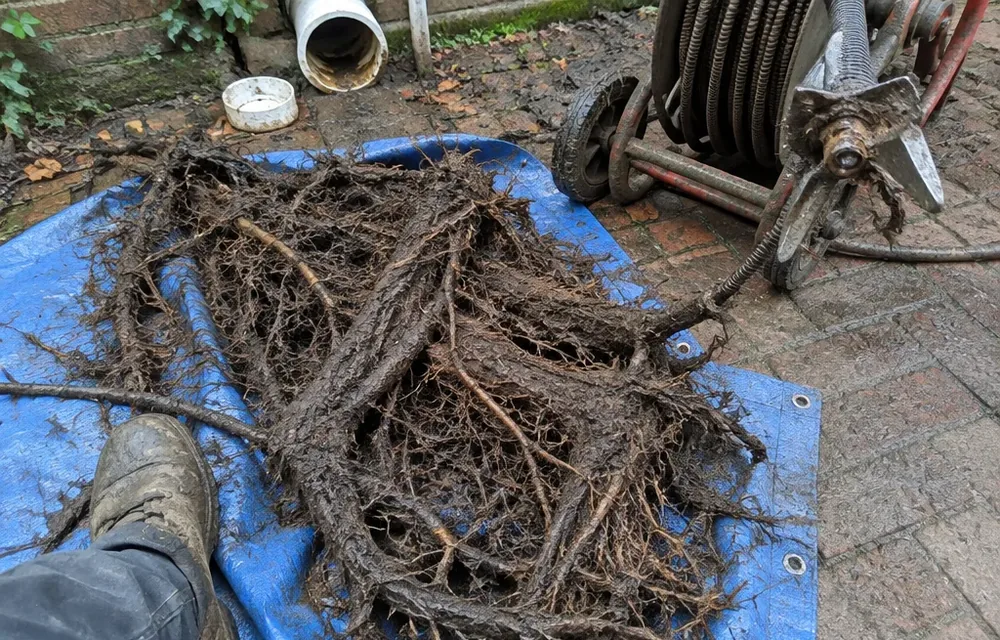
The second mechanism is structural rather than chemical. Root masses regrow from the joint they were cut from because the joint is still open and still weeping. A belly holds a permanent puddle that fresh solids settle into within weeks. An offset clay joint or a deformed Orangeburg section snags paper at the same lip every time. In all three cases the cable passes the defect, restores flow, and leaves the defect exactly as it found it, which is why the interval between calls shortens with metronome regularity.
Philadelphia housing concentrates both mechanisms. Long cool laterals give kitchen grease fifty feet to congeal onto roughened cast iron; pre-1920 clay joints plus London plane street trees guarantee root pressure on nearly every block; and the 1945 to 1972 Orangeburg window scattered deformable pipe through the Northeast and Southwest. A first clog is an event, but a second clog in the same line within eighteen months is a diagnosis waiting to be written down. The three clearing methods and their honest jurisdictions are laid out in drain cleaning.
How to read your own clog history at home
Pull together the service history before anyone touches the line again. Dates of each clearing, which company did it, what machine they used, what they reported pulling back, and how many months of peace each visit bought: these five facts contain the diagnosis. Intervals that shrink visit to visit, from fourteen months to eight to four, describe a coating thickening or roots re-thickening, not bad luck. Identical stoppage footage reported twice, where the cable hung at the same distance both times, describes a fixed defect at that mark, a joint, belly, or collapse, rather than a wandering clog.
Match the history to the fixture. A kitchen sink that slows every few months while bathrooms run fine is grease until proven otherwise, especially with a disposal and cool-water dishwasher habits feeding the line. A main line that fails on a roughly annual cycle, often after spring root growth or autumn rain, is root intrusion at a joint. A bathroom group that keeps slowing despite careful hair discipline is scale or biofilm narrowing old cast iron branch arms. Each pattern points at a different durable fix, which is why the history questions precede every honest recommendation.
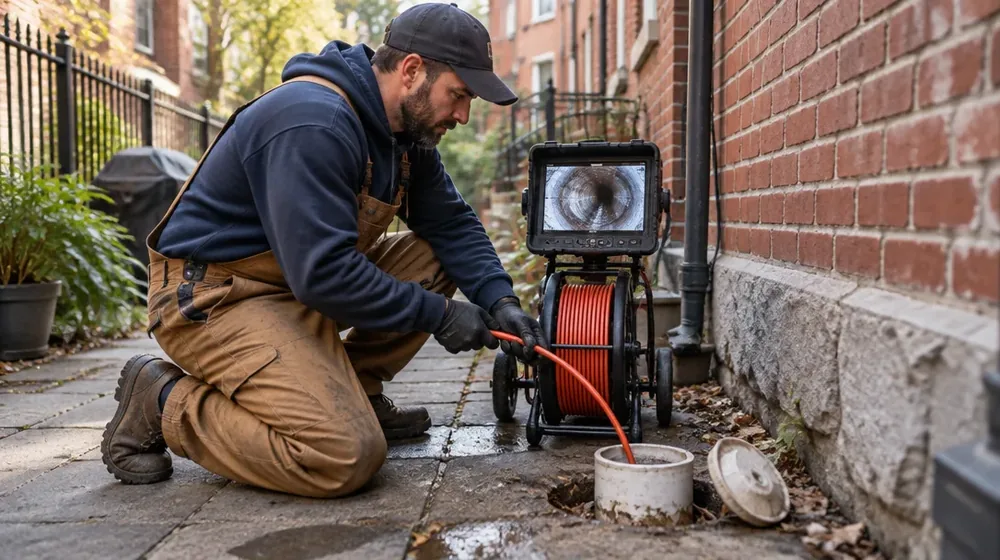
Ask what the last technician actually saw, and get it in writing this time. Cable work without a camera leaves no record, so repeat visits start from zero every time; insist on footage with distance marks once a line has failed twice. Compare any quote against the pattern using the drain cleaning cost calculator, and run the method question through hydro jetting vs snaking, which will tell you when the right answer is a camera rather than either machine.
What ends the cycle, and when to call now versus wait
A repeat clog with drains still moving can be scheduled, but schedule the right appointment: diagnosis with a camera, not a third blind clearing. The interval history buys you this planning window; use it to get footage, a surface locate, and a firm price for each option instead of spending the same money on another temporary opening. Keep water use moderate in the meantime and avoid the chemical aisle, since caustic products cannot dissolve a wall coating at useful strength and only add hazard to the eventual service.
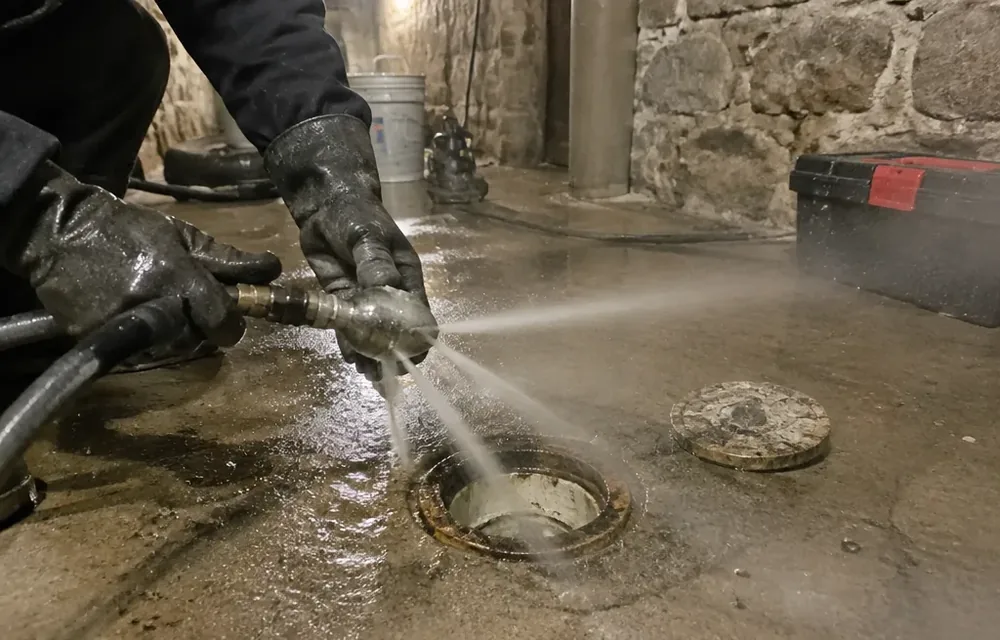
Coating problems end with hydro jetting, which scours the wall back to bare pipe instead of boring through the deposit. Grease, scale, grit, and biofilm are all jetting territory, and a properly jetted line measures its next interval in years rather than months. See hydro jetting for how the method works and when it is refused, and rooter service for the cutting half of root cases, since roots need cutting first and flushing after for the full interval.
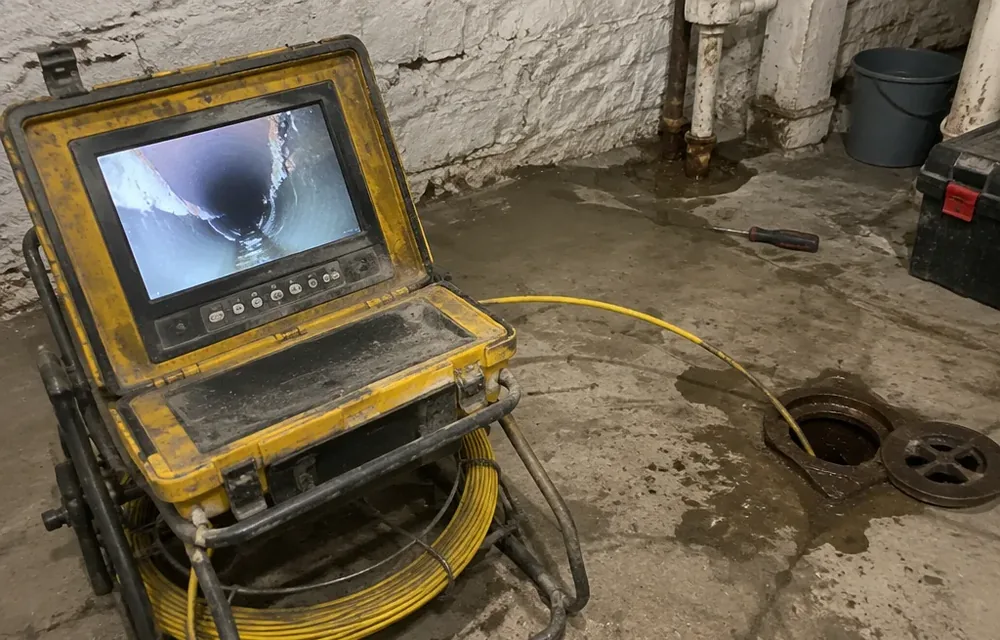
Defect problems end with repair, and only the camera can separate the two cases, which is why sewer camera inspection is the hinge of this whole page. A single offset joint is a spot repair; a deformed Orangeburg run or a collapsed clay section is lining or replacement territory. Call now rather than scheduling if the line is currently backing up or the intervals have collapsed to weeks. For the full method comparison, what is hydro jetting and camera inspection before jetting explain the sequence that protects old pipe.
Same Clog Keeps Returning: questions
Why does my drain clog again a few months after snaking?
Because snaking bores a channel through the deposit and leaves the deposit on the wall. Grease, scale, and biofilm coatings close the fresh channel back in within months, and each cycle runs slightly shorter than the last. A line on this schedule needs its wall cleaned by jetting or its defect repaired, not another channel bored.
How many times should a line be cleared before a camera inspection?
Twice in eighteen months is the threshold. The first clearing is a reasonable response to an event; the second clearing of the same line is the moment to look, because repeat failure marks a coating or structural cause that no amount of blind clearing resolves. Clearing a third time without footage spends full price to learn nothing.
Will hydro jetting permanently stop repeat clogs?
For coating causes, it resets the clock by years rather than months, which is as close to permanent as maintenance gets. For structural causes such as open root joints, bellies, or offsets, jetting buys a longer interval but the defect remains, and lining or repair is the lasting answer. The camera footage decides which case you are in.
Free tools before a service call
Jetting vs snaking
Snaking costs less and jetting lasts longer, but that is not the real decision.
Clog diagnostic
The difference between a fixture clog and a main line failure is a factor of three in price and the difference between "book it next week" and "stop using water now".
Services that fix this
Hydro Jetting
A cable bores a hole through the clog.
Sewer Camera Inspection
Every expensive sewer decision in Philadelphia — jet, repair, line, replace — depends on one thing: what the pipe actually looks like inside.
Rooter Service
Roots do not break your pipe to get in.
Guides on this symptom
What Is Hydro Jetting? Philly Homeowner Guide
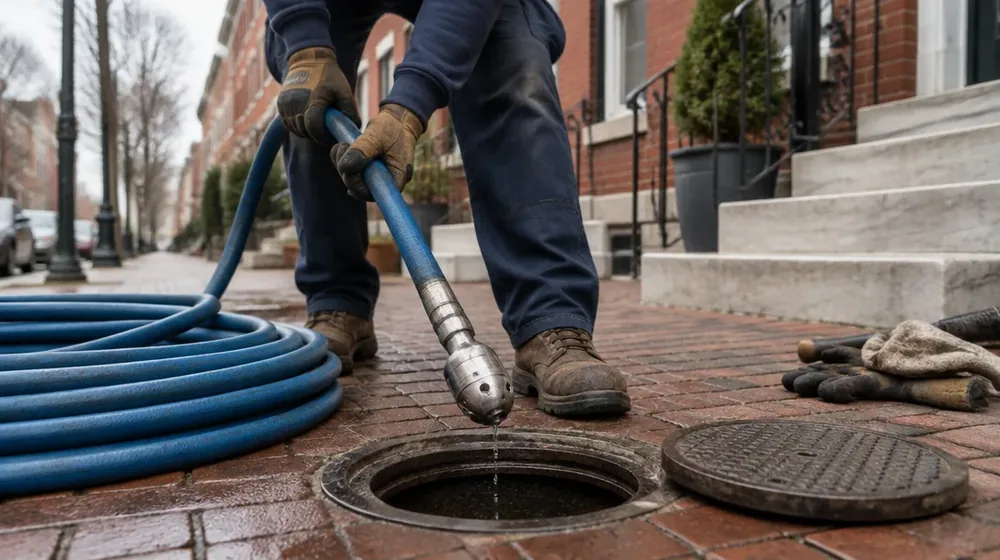
Hydro jetting is a drain cleaning method that uses high-pressure water, sent through a hose and a specially drilled no…
Camera Inspection Before Hydro Jetting Guide
Nobody can price pressure honestly without seeing the pipe first. On Philadelphia laterals of unknown age and material…