Soggy Strip in the Yard: Philadelphia Sewer Leak Signs
A persistently soggy or suspiciously lush strip of ground between your house and the street usually marks where a sewer lateral is leaking underground. Wastewater fertilizes grass and saturates soil along the pipe path, drawing a map of the break on the surface for anyone who knows how to read it.
- Symptom guide
- Philadelphia area
Understanding soggy strip in the yard
How a leaking lateral marks the surface
A sound lateral is watertight along its whole run, carrying everything to the street main without losing a drop. A failed one leaks at its weakest points: separated clay tile joints, cracked bells, bellies that hold standing effluent against the pipe wall, or Orangeburg sections that have deformed into ovals. Each leak releases nutrient-rich water into the surrounding soil, and soil ecology does the rest: grass above the leak grows faster, darker, and longer into dry spells than the rest of the lawn, while the ground itself stays soft and spongy underfoot.
Philadelphia geology and housing patterns shape where this shows. Front yards on blocks with deep setbacks carry long lateral runs with more joints to fail, and rowhouses with rear yards often run the lateral beneath additions, patios, or parking pads where the surface evidence appears as damp pavers or efflorescence rather than green grass. Combined-sewer blocks add a seasonal rhythm: leaks worsen after heavy rain as groundwater and storm inflow raise the water table around the pipe, then partially mask themselves as the whole yard goes soft.
The strip pattern itself is diagnostic. A line of lush growth or sogginess running straight from house toward curb follows the lateral trench, while a round isolated patch suggests a single failed joint or a downspout issue instead. Depressions or minor sinkholes along that line mean soil is washing into the pipe through the break, a structural failure rather than a mere seep, and exposed aggregate or undermined pavers above the trench confirm the ground is losing support from below.
How to confirm it without digging anything up
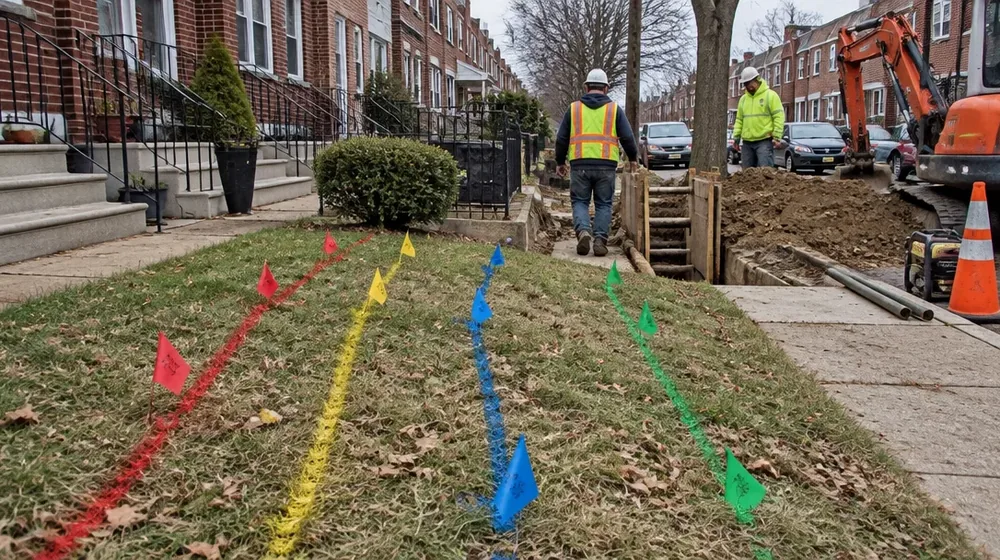
Walk the line in dry weather, at least three days after rain, so that ambient wetness cannot confuse the reading. Pace from your foundation toward the street along the likeliest lateral path and feel for the soft strip underfoot, photograph the grass contrast from an upstairs window where the line pattern shows best, and mark the edges with landscape flags. A strip that persists through a dry week while the rest of the yard firms up is strong evidence of an active underground discharge rather than grading or drainage quirks.
Cross-check with the indoor symptoms, because a leaking lateral rarely leaks silently inside as well. Slow drainage across multiple fixtures, gurgling at the lowest drain, sewage odor in the basement near the lateral wall, and a history of repeat clearings all corroborate the yard evidence. Ask neighbors on either side whether they have had lateral trouble; Philadelphia blocks were often built out in single campaigns with the same pipe and the same street trees, so joint failures arrive in cohorts along a block.
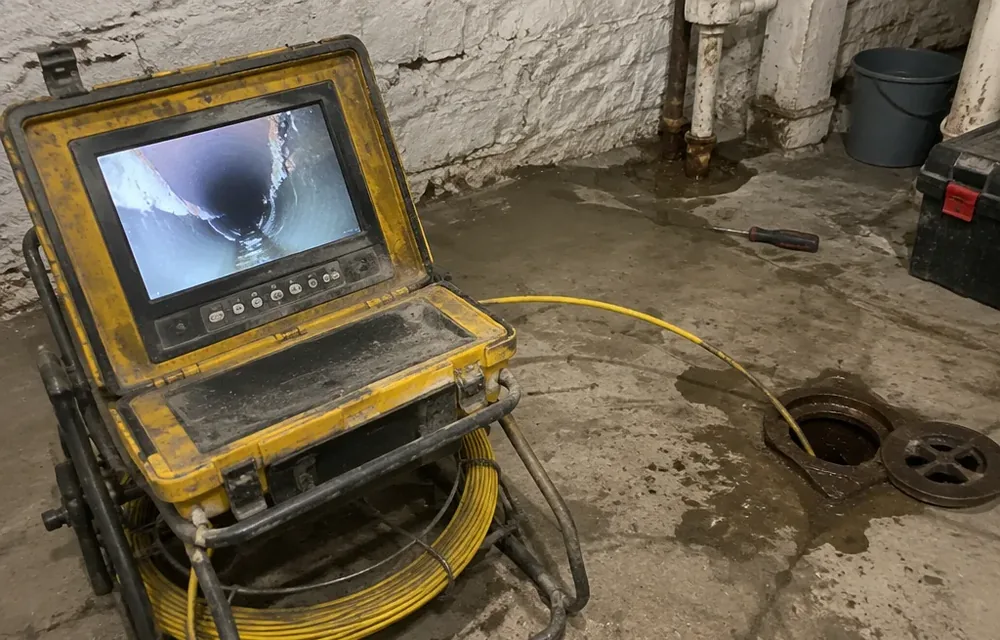
Then stop, and call for looking before digging. Pennsylvania law requires utility marking through PA One Call before any excavation, and a lateral location plus camera footage with distance marks will show exactly which joint fails at what depth. Probing with a shovel or hiring trench work on a guess routinely misses by feet and multiplies the restoration bill. Background on what the camera is likely to find sits in rowhouse laterals: clay, cast iron and Orangeburg, and the dig-safety steps in call 811 before digging.
What fixes it, and when to call now versus wait
A mildly lush strip with no indoor symptoms and no sinking can be assessed on a scheduled timeline, but do not ignore it through a rainy season. The break admitting water out also admits roots and soil in, so seepage becomes blockage and blockage becomes backup on a predictable schedule. Keep heavy vehicles and new plantings off the marked strip, note whether the area grows after storms, and get the line located and camera-inspected before planning any patio, driveway, or addition work above it.
The repair follows the footage, not the grass. One failed joint in an otherwise sound line is a spot repair: one excavation, one section replaced, trench restored. Roots entering through open joints without pipe deformation may be managed with cutting plus a maintenance interval while you budget. A line with multiple offsets, bellies, or Orangeburg deformation has no clearing-based future, and lining or replacement is the honest recommendation. See sewer camera inspection for how the defect gets documented and main sewer line cleaning for keeping the line flowing while you decide.
Call now if the strip is actively sinking, if sewage odor or surfacing effluent appears, or if indoor drains are slowing at the same time. Surfacing sewage is a health exposure and, on shared blocks, a neighbor relations problem, and soil loss into the pipe can undermine pavers, steps, or foundation plantings. When roots are the entry mechanism, rooter service clears the intrusion so the camera can see the joint condition underneath. For what comes after diagnosis, trenchless repair after jetting explains the no-dig options in the order they should be considered.
Soggy Strip in the Yard: questions
Why is one strip of my lawn greener than the rest?
Because something underground is fertilizing and watering it. A leaking sewer lateral releases nitrogen-rich effluent along the pipe path, producing a straight band of faster, darker growth. A straight strip from house to curb is the lateral signature; a round patch is more often a downspout, spring, or single joint.
Can I just keep mowing over a soggy strip?
For a while, but the break works in both directions: effluent leaks out while roots and soil wash in. In-washing soil narrows the bore and eventually blocks it, while soil loss above the pipe undermines the surface. What starts as a lawn quirk reliably becomes a backup or a sinkhole if left through a few storm seasons.
Do I have to dig up the whole yard to fix a lateral?
Rarely. A camera inspection with a surface locate marks exactly which joint fails at what depth, so a single sound line with one bad joint needs only one excavation. Even multi-defect lines are often candidates for trenchless lining, which rehabilitates the pipe through small access pits instead of an open trench.
Services that fix this
Sewer Camera Inspection
Every expensive sewer decision in Philadelphia — jet, repair, line, replace — depends on one thing: what the pipe actually looks like inside.
Main Sewer Line Cleaning
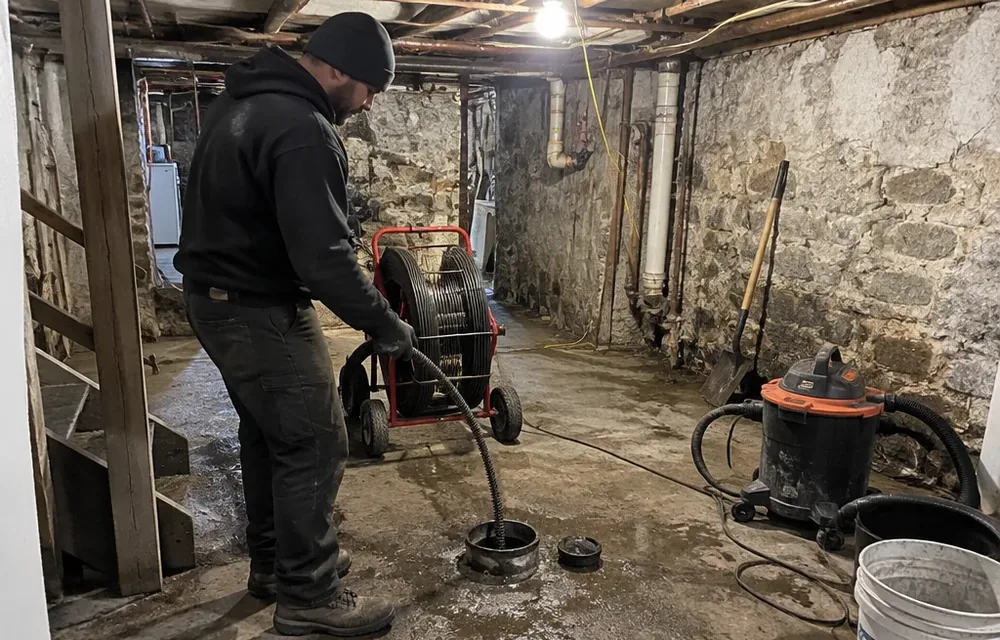
The lateral is the most expensive drain you own — a 60-to-100-foot clay run from your rowhouse to the street main, shared with stormwater, hunted by street-tree roots.
Rooter Service
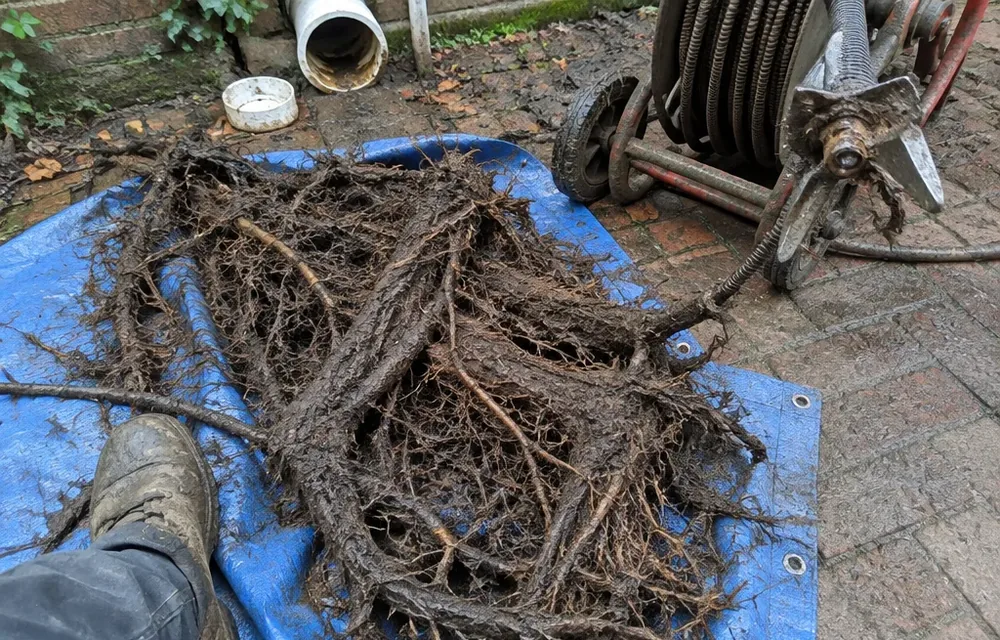
Roots do not break your pipe to get in.
Guides on this symptom
Philly Rowhouse Laterals: Clay, Iron & More
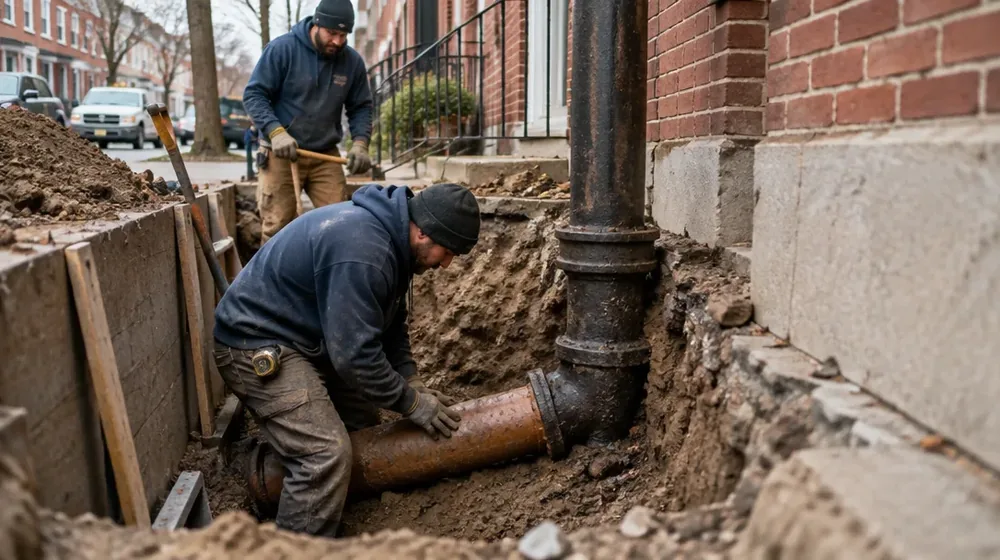
The year your Philadelphia rowhouse was built predicts what is buried in front of it. Clay joints admit roots, cast ir…
Call 811 Before Digging in Philadelphia: PA Guide
Any digging for sewer or drain work in Philadelphia, from a full lateral replacement to a small cleanout excavation, l…