All Drains Slow in Philadelphia: Main-Line Causes
One slow drain is a fixture problem, but every drain slowing together means the restriction sits where all branches meet: the building drain or the lateral to the street. In Philadelphia that line is usually old clay tile with root-intruded joints or scaled cast iron, and confirming the pattern takes ten minutes.
- Symptom guide
- Philadelphia area
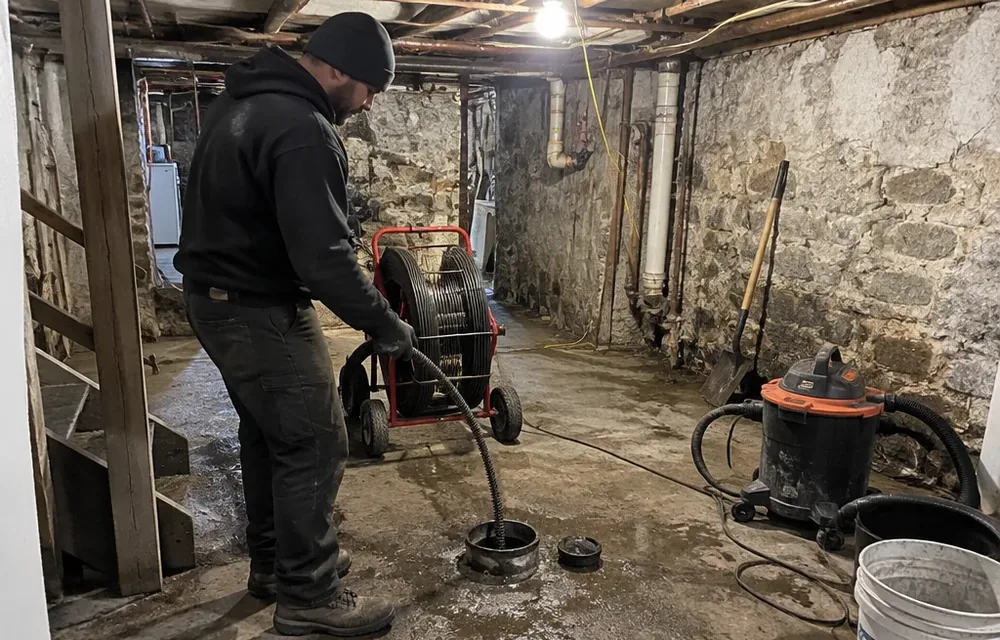
Understanding all drains slow
Why whole-house slowness means the main line
Think of your drainage as a tree. Fixtures are leaves, branch arms are twigs, and the building drain plus the lateral to the street main is the trunk. A problem in one leaf never slows the others, but a narrowing trunk slows everything uphill of it at once. When sinks, tubs, and toilets across multiple floors all drain lazily together, geometry alone rules out every fixture trap and points at the trunk.
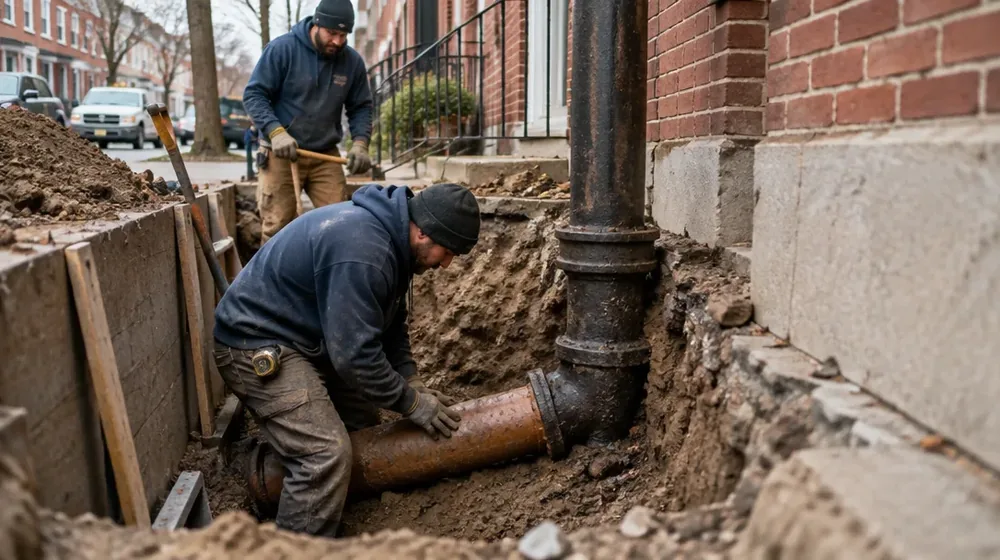
In Philadelphia the trunk fails in locally predictable ways. Tree roots from London plane street trees and backyard maples find the weeping joints of pre-1920 clay tile laterals and thicken there until the line strains like a colander. Cast iron scale narrows the building drain inside 1890s to 1940s rowhouses as the interior rusts into a rough surface that grabs solids. Grease congeals along long, cool laterals on blocks with deep setbacks, and storm grit re-packs every belly and flat spot through the same failed joints, because combined sewers carry roof and yard drainage alongside sanitary flow.
Whole-house slowness is the early stage of a spectrum that ends in backup. A line that drains slowly today still passes water; the same line after one heavy rain or one bad grease week stops passing it, and the lowest opening becomes the overflow. That is why this symptom deserves diagnosis while it is still cheap: you are catching the restriction before it becomes an emergency. The distinction between branch and trunk is also the price distinction, covered plainly in drain cleaning.
How to confirm the pattern at home
Run the two-fixture test. Time a full bathroom sink draining on the top floor, then flush the nearest toilet while it drains and watch both. If the sink slows further or the toilet bubbles during the flush, the shared downstream path is restricted. Repeat at the lowest level: run the washing machine and watch the basement floor drain or ground-floor shower. Water appearing where it should not be is a definitive main-line reading, and at that point stop testing and stop running water.
Separate age from accident by asking the house three questions. Has this line ever been camera-inspected, and if so, what did the footage show at which footage marks? How many times has any part of the system been cleared in the last two years, and did the intervals shorten? Does the slowness worsen during or just after heavy rain? Shortening intervals plus rain sensitivity is the classic signature of roots or a belly in a clay lateral, while steady slowness unaffected by weather leans toward scale or grease coating the pipe wall.
Check the exterior clues while you are at it. Walk the lateral path from house to curb and look for an unusually lush or sunken strip of grass, surfacing dampness, or a cleanout cap that weeps after heavy use. Inside, lift the basement cleanout cap area only to look, never to open under pressure, and note any odor or dampness around it. Write the findings down with dates, because a dated symptom log turns a vague service call into a targeted diagnosis. Running the clog symptom diagnostic captures the same pattern in six questions.
What clears it, and when to call now versus wait
Whole-house slowness with no backup in progress can be scheduled within days rather than hours, but do not file it under someday. Reduce water use in the meantime: space out showers, hold the dishwasher until the line is cleared, and never run the washing machine unattended, since its pump volume is what converts a slow line into a flooded basement. Skip chemical cleaners entirely; they cannot reach a trunk restriction in useful concentration and they turn the eventual opening of the line into a chemical-handling job.
The fix depends on what the restriction is, which is why the second clearing of any line should be preceded by looking. A discrete root mass or soft blockage clears with a cable machine, while grease, scale, and grit coatings need hydro jetting to scour the wall rather than merely bore through it. When the line has failed twice in eighteen months, sewer camera inspection stops being optional: clearing a third time without footage is paying full price to learn nothing. Full background on the clearing methods sits in main sewer line cleaning.
Call immediately if slowness tips into backup: water rising in any fixture, sewage odor turning sharp, or the lowest drain filling while upper fixtures run. That is an active main-line failure and every gallon used makes it worse. For the longer view once flow is restored, rowhouse laterals: clay, cast iron and Orangeburg explains which pipe eras fail how, and how to unclog a main sewer line walks the full sequence from symptoms to verified flow.
All Drains Slow: questions
If every drain is slow, is the problem definitely the main line?
Almost always. Fixtures do not conspire; a shared downstream restriction is the only single cause that slows all of them at once. The rare exception is a vent fault affecting a whole stack, which is why the cross-fixture test matters: fixtures affecting each other during use confirms a drain-side restriction rather than a vent issue.
Can I keep using water while all drains are slow?
Lightly and attentively, but not normally. A slow main line has limited spare capacity, and one high-volume discharge such as a washing machine cycle can exceed it without warning. Until the line is cleared, stagger water use and never run large discharges unattended.
Why does whole-house slowness get worse when it rains?
Because combined sewers carry stormwater and sanitary flow in the same main. Heavy rain surcharges the public main, which backs pressure into your lateral exactly when your line is already narrowed. Rain-sensitive slowness points to roots, a belly, or a partial break that storm flow exposes.
Services that fix this
Main Sewer Line Cleaning
The lateral is the most expensive drain you own — a 60-to-100-foot clay run from your rowhouse to the street main, shared with stormwater, hunted by street-tree roots.
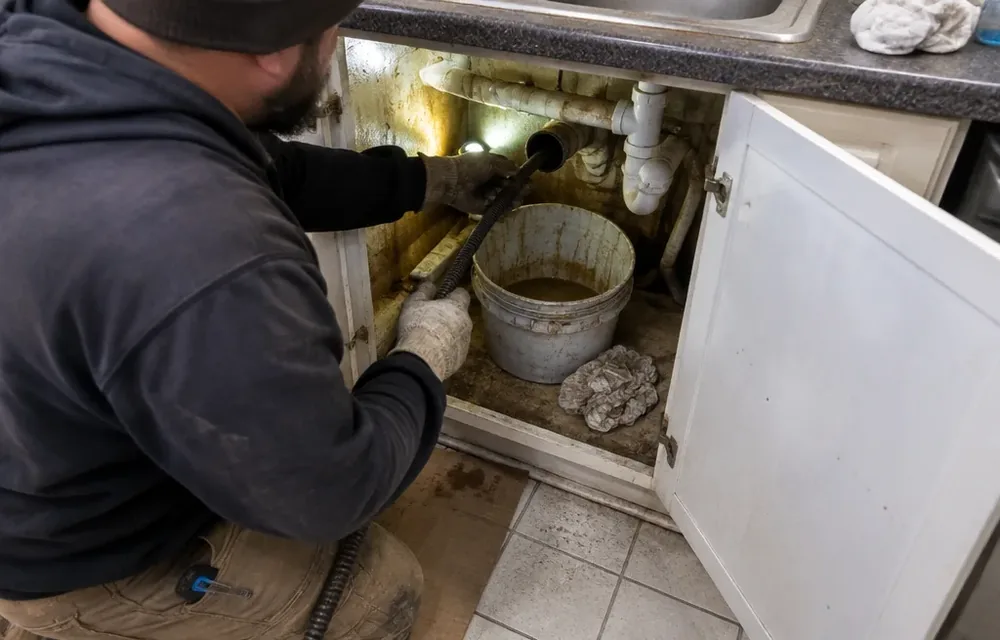
Drain Cleaning
A single slow sink is a nuisance.
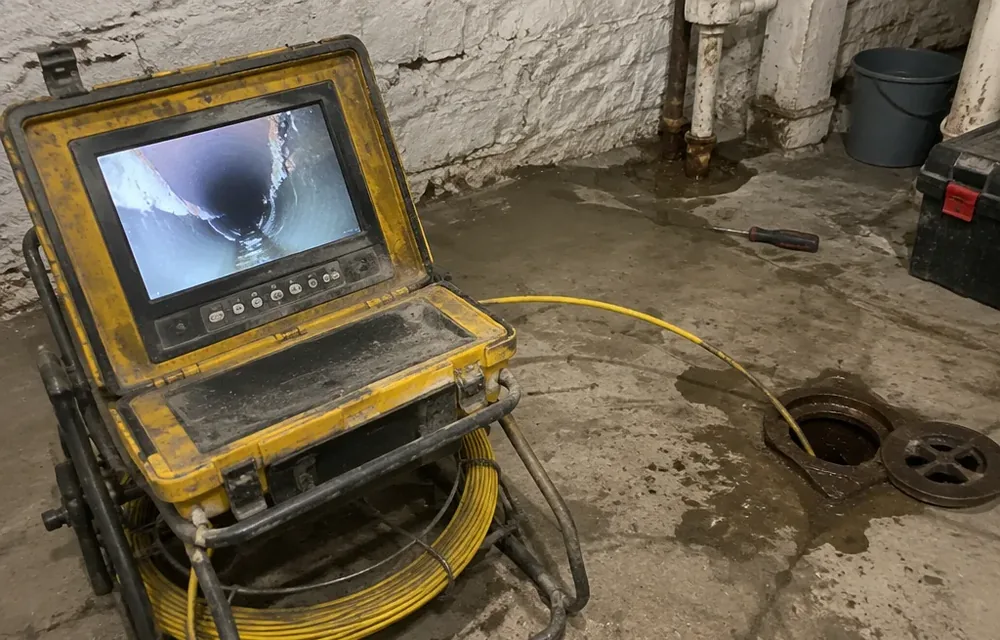
Sewer Camera Inspection
Every expensive sewer decision in Philadelphia — jet, repair, line, replace — depends on one thing: what the pipe actually looks like inside.
Guides on this symptom
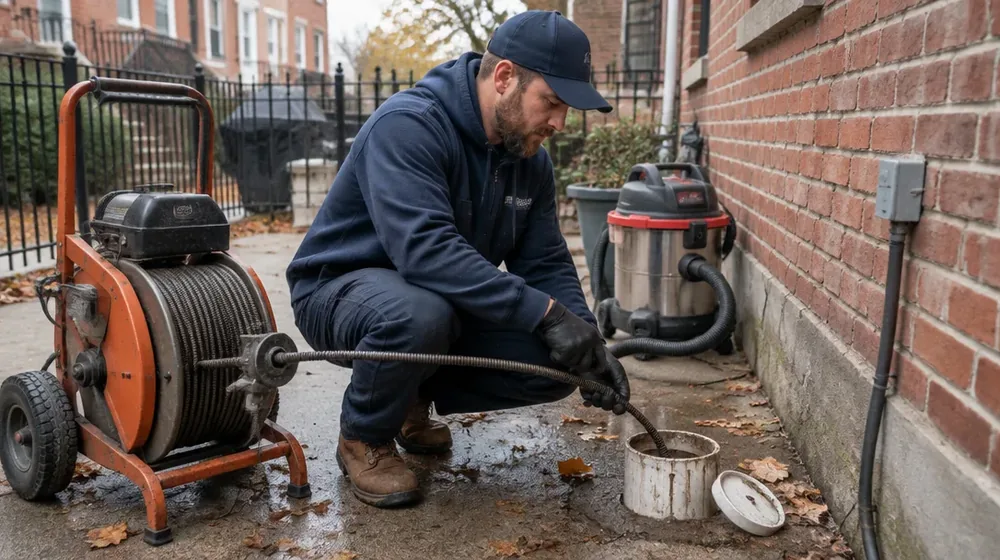
How to Unclog a Main Sewer Line Safely in Philly
When a main sewer line blocks, every drain in the house shares one failing exit. Safe homeowner triage means stopping …
Philly Rowhouse Laterals: Clay, Iron & More
The year your Philadelphia rowhouse was built predicts what is buried in front of it. Clay joints admit roots, cast ir…