Drain cleaning and sewer service in Philadelphia, Pennsylvania
Philadelphia has the oldest and most failure-prone drain infrastructure in southeastern Pennsylvania, and almost every backup in the city traces to one of two legacies: nineteenth- and early-twentieth-century rowhouses on vitrified clay tile with cast iron inside, and combined sewers that carry stormwater and sewage in the same pipe across large parts of South Philadelphia, North Philadelphia, Kensington, and West Philadelphia. When sustained Delaware Valley rain arrives, storm flow consumes capacity in those combined mains and the lowest basement fixture on a marginal lateral becomes the relief point. The housing pattern makes it worse: long narrow rowhouses with the lateral running beneath the full footprint, mature London plane and sycamore street trees over clay joints in districts like Passyunk, Germantown, and Mount Airy, and a century of settlement breaks that roots have been widening for decades.
- Philadelphia County
- Philadelphia
- Same-day and 24/7
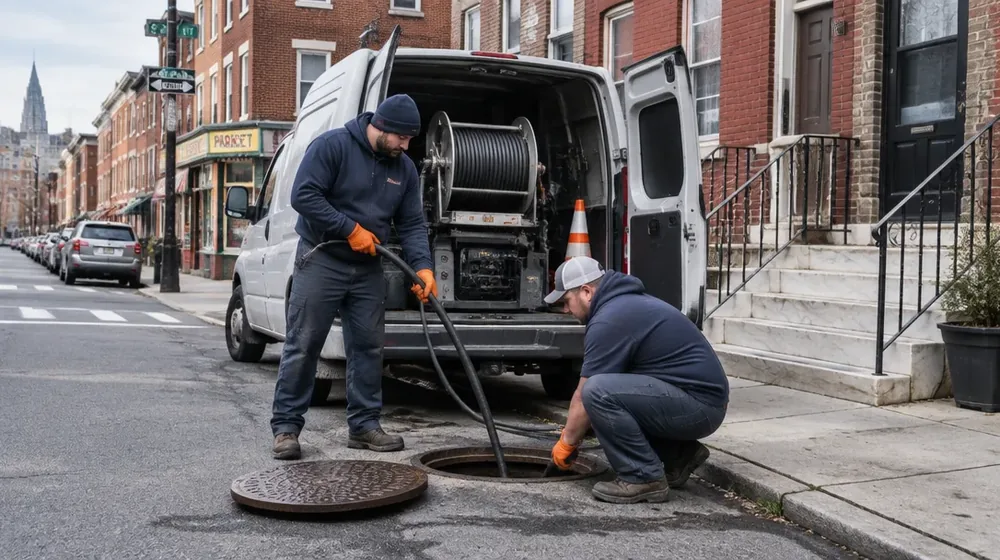
Philadelphia at a glance
County: Philadelphia County · Area: Philadelphia · Neighborhoods covered: 10 · Response: same-day visits usual; 24/7 for backups
Pipes you will find here: Vitrified clay tile on most pre-1940 laterals, cast iron soil stacks and interior drains inside nearly every house built before 1975, with Orangeburg in a narrow band of 1945–1960 rowhouses and PVC/ABS only on post-1980 construction and replacements.
What goes wrong with Philadelphia plumbing
Combined-sewer backups during sustained rain
Large sections of Philadelphia run on combined sewers, so a long steady rain — not just a cloudburst — fills the main with stormwater until household flow has nowhere to go. Philadelphia rowhouses with basement half-baths or laundry sinks sit lowest on the block lateral and take the backup first. The fix is rarely just clearing; backwater protection and sealing infiltration joints on the lateral are what stop the repeat event.
Century-old clay under street trees
South Philadelphia, Passyunk, Germantown, and West Philadelphia streets are lined with mature London planes, sycamores, and maples planted directly over clay-tile laterals with mortared joints. Root intrusion here is the default, not the exception, and many of these are city street trees that cannot simply be removed. Camera work in Philadelphia routinely finds four or five defects on a single run, which pushes the answer toward full-run lining.
Cast iron stacks rotting from the invert
Inside Philadelphia rowhouses from the 1900s through the 1960s, cast iron drain stacks corrode along the bottom of the pipe until the interior goes rough and scaly. The symptom is every drain in the house running slowly and cabling helping for shorter and shorter intervals. Each clearing removes a little more of what is left, so a camera pass decides whether the line is being maintained or merely postponed.
Housing stock and pipe materials
Housing: Dominant stock is 1880s–1930s brick rowhouses across South Philly, North Philly, Kensington, and West Philly, with 1900–1930 twins and porch-front rows in Germantown, Mount Airy, and Overbrook, plus pre-war apartment blocks and newer infill in Fishtown, Northern Liberties, and Point Breeze.
Likely pipe materials: Vitrified clay tile on most pre-1940 laterals, cast iron soil stacks and interior drains inside nearly every house built before 1975, with Orangeburg in a narrow band of 1945–1960 rowhouses and PVC/ABS only on post-1980 construction and replacements.
Who is responsible for the pipe in Philadelphia
Philadelphia Water Department (PWD). PWD owns water and sewer mains to the connection; the building lateral is the property owner’s responsibility and lateral/connection work follows PWD Chapter 5 regs — confirm permit needs with PWD before work in the right-of-way.
Confirm your own boundary with the utility before assuming any part of the run is theirs — and check whether your homeowner's policy carries a service line endorsement, which many Pennsylvania carriers sell cheaply.
A closer look at Philadelphia
Philadelphia breaks into three distinct plumbing markets
Pre-1920 rowhouse core — South Philly, North Philly, Kensington, West Philly. Long brick rows on vitrified clay tile in short mortared segments with cast iron inside, now a century old. Camera runs from Passyunk to Germantown routinely show four or five defects on one lateral — roots, offsets, invert scale together — which pushes the scope from spot repair toward full-run lining.
1945–1960 infill band. Narrow rows and twins from that window can carry Orangeburg fiber pipe rated for 30 to 50 years and now decades past it. Orangeburg goes oval in Philadelphia’s wet ground and generally cannot accept a liner, so discovery means planning a replacement rather than a repair — a five-figure purchase-negotiation item.
Post-1980 infill and rehab. Fishtown, Northern Liberties, and Point Breeze rehabs run PVC and ABS that rarely fails structurally. Their calls are soft clogs and fixture issues, plus century-old shared connections where a rehab tied new pipe to an unscoped old lateral at the property line.
The PWD permit reality, and why it is not optional
PWD owns water and sewer mains to the connection while the building lateral is the property owner’s responsibility, and lateral and connection work follows PWD Chapter 5 regs with permit needs for anything in the right-of-way. The split matters because the lateral beneath a Philadelphia rowhouse runs under the full footprint before reaching the street, and the curb-line transition is where responsibility questions — and inspection requirements — concentrate.
Unpermitted sewer work in Philadelphia resurfaces reliably at resale, and resolving it retroactively costs considerably more than permitting it correctly. Permits are pulled and inspections scheduled as part of the job. A cash price contingent on skipping the permit process buys a liability, not a discount.
Street trees you are probably not allowed to remove
Philadelphia’s London planes, sycamores, and maples along streets from South Philly to Mount Airy were planted directly over clay-tile laterals, and many are city street trees. Homeowners who conclude the tree has to go often discover it legally cannot — and removal would not repair the joints roots already opened in any case.
That makes CIPP lining the practical answer rather than merely the convenient one. A liner creates a continuous jointless pipe inside the old clay, eliminating every root entry at once while the tree stands. On Philadelphia rows where excavation must cross the full footprint plus sidewalks, it is frequently also the less disruptive and less costly scope all-in.
Where we work in and around Philadelphia
Within Philadelphia we cover South Philadelphia and Passyunk, Fishtown and Kensington, Northern Liberties, West Philadelphia and University City, Germantown, Mount Airy, Northeast Philadelphia (Mayfair, Tacony), Roxborough and Manayunk, Point Breeze and Grays Ferry, Port Richmond and Bridesburg and the surrounding area. Same-day drain cleaning and rooter service is usually available across Philadelphia, and dispatch runs around the clock for an active backup.
Nearby cities we also serve
What we do in Philadelphia
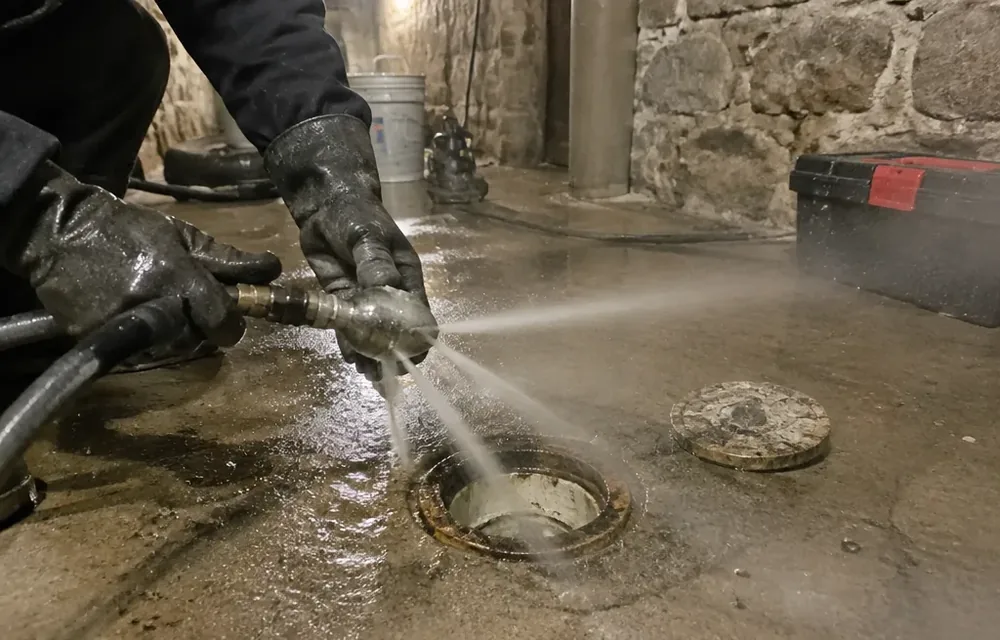
Hydro Jetting
A cable bores a hole through the clog.
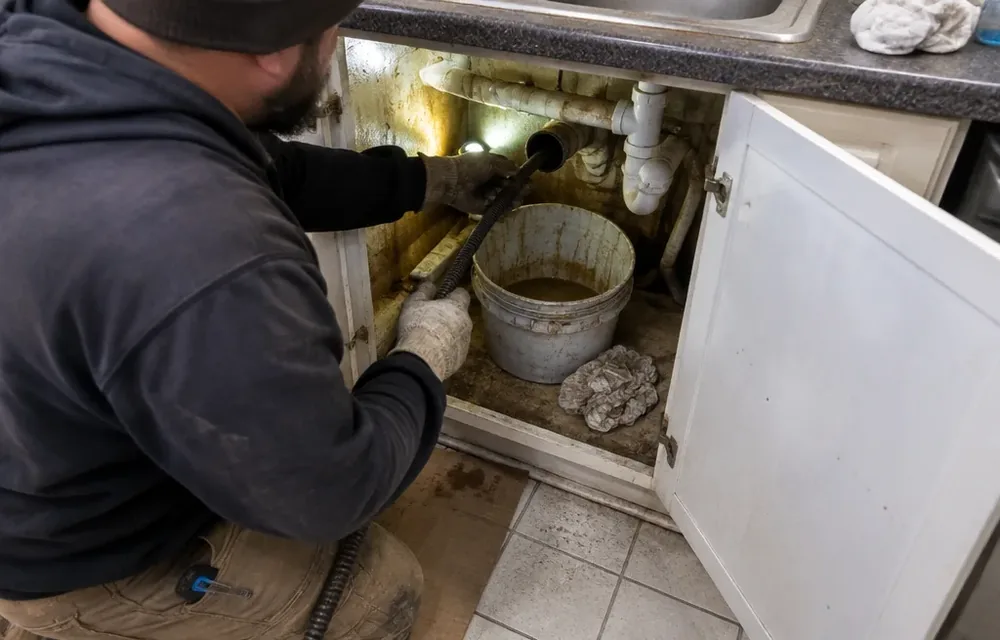
Drain Cleaning
A single slow sink is a nuisance.
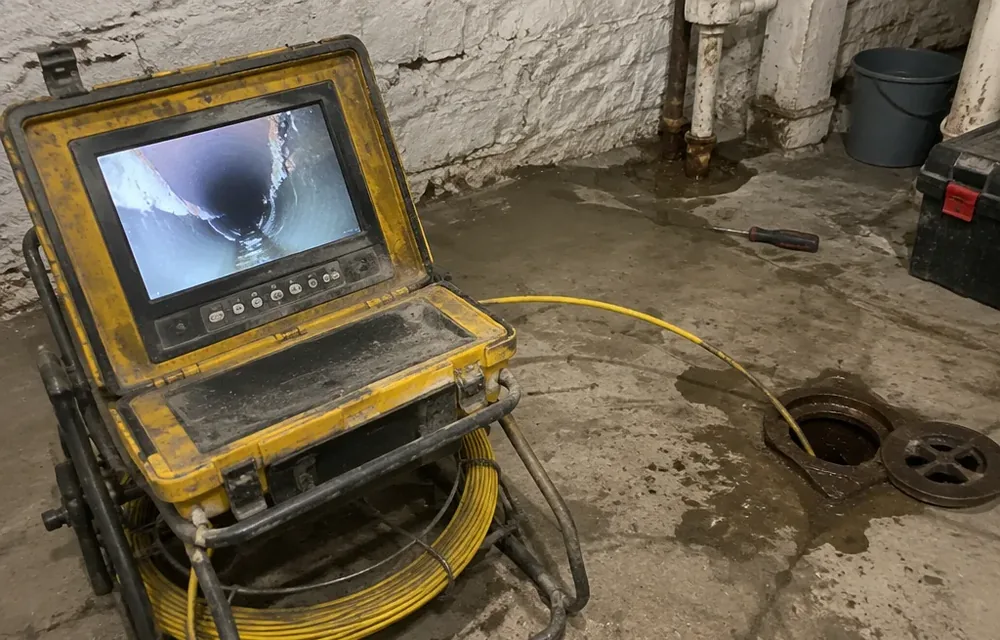
Sewer Camera Inspection
Every expensive sewer decision in Philadelphia — jet, repair, line, replace — depends on one thing: what the pipe actually looks like inside.
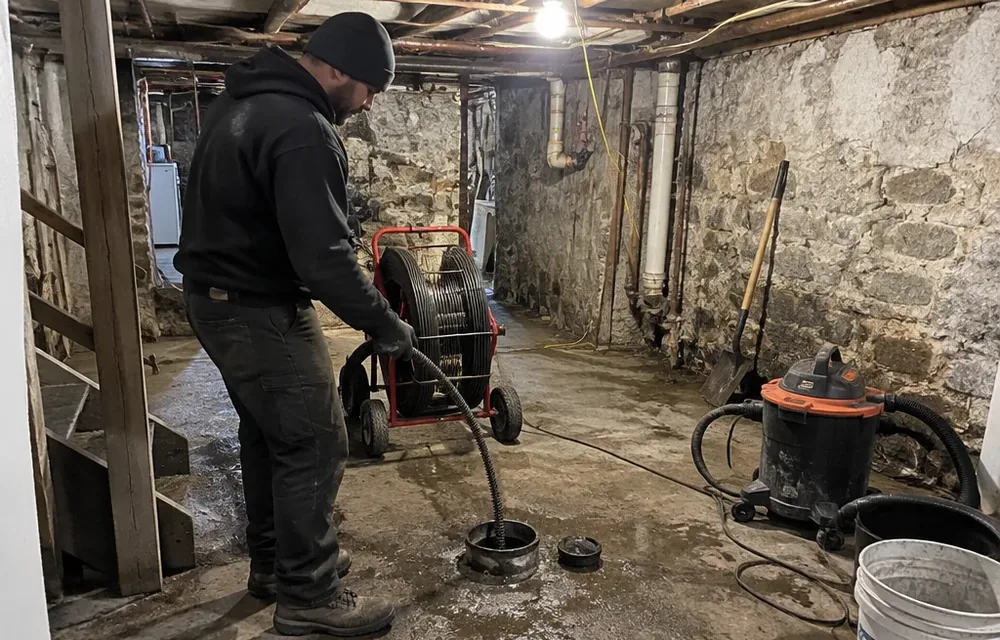
Main Sewer Line Cleaning
The lateral is the most expensive drain you own — a 60-to-100-foot clay run from your rowhouse to the street main, shared with stormwater, hunted by street-tree roots.
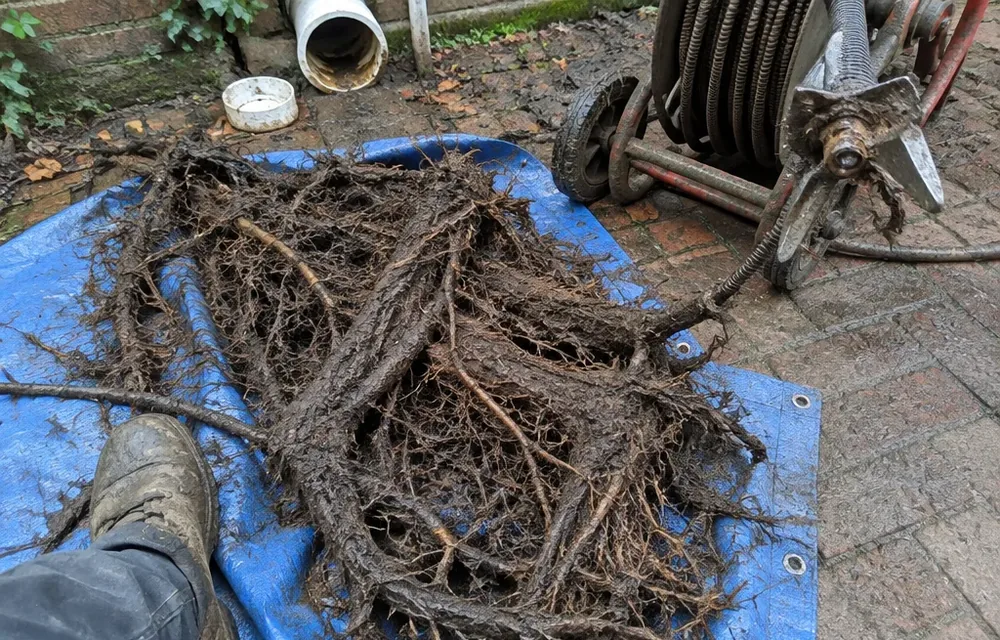
Rooter Service
Roots do not break your pipe to get in.
Kitchen Grease Line Jetting
Grease is the one clog material a cable cannot fix.
Bathroom Drain Cleaning
Bathroom clogs are almost never mysterious: hair, soap scum and toothpaste solids, wrapping around cast iron scale in a century-old branch arm.
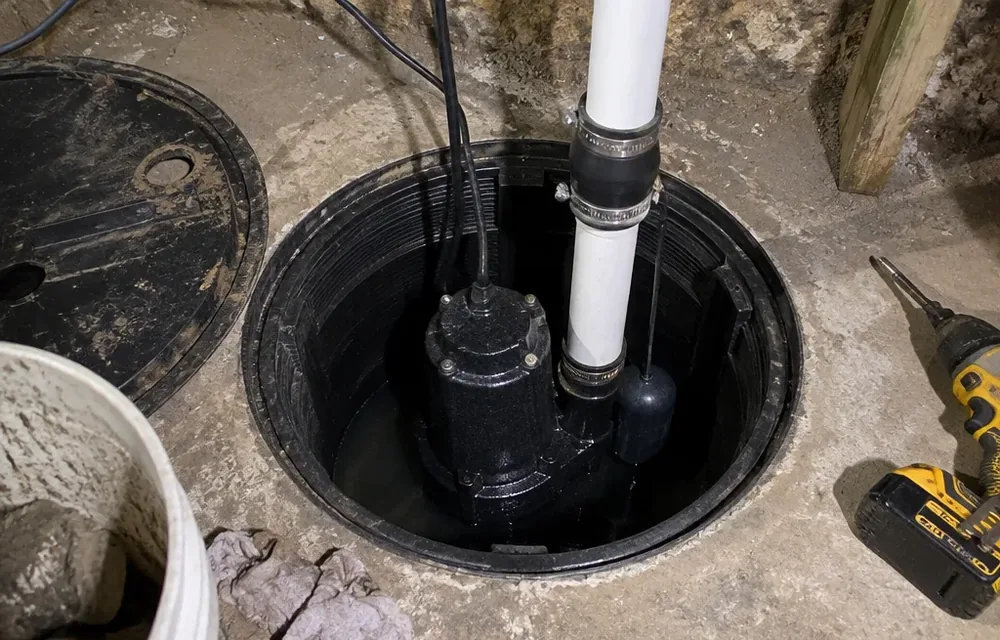
Basement Floor Drain Cleaning
The basement floor drain is the lowest opening in your rowhouse — which makes it the relief valve for every downstream restriction.
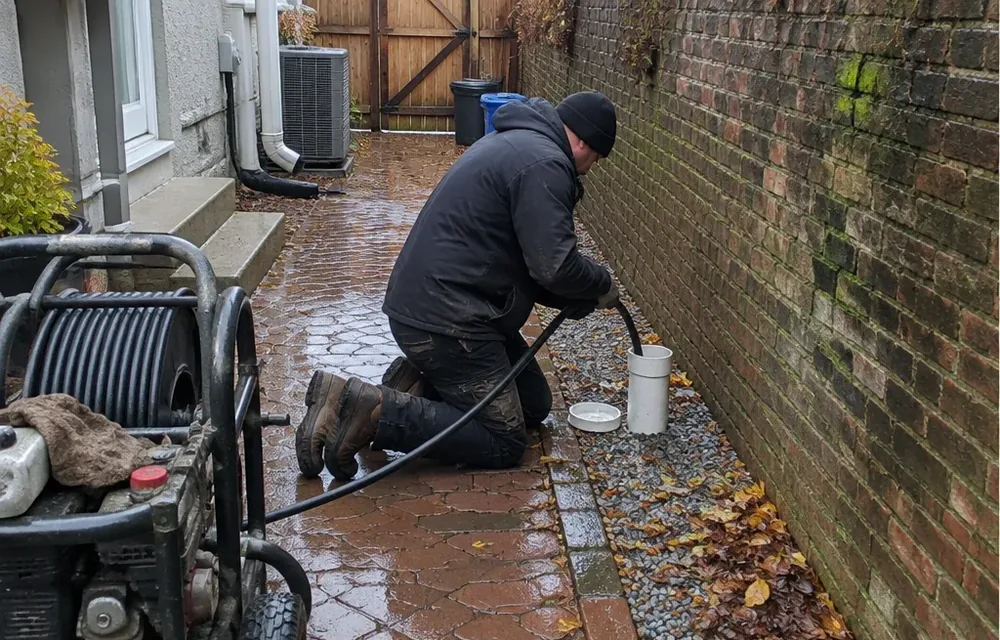
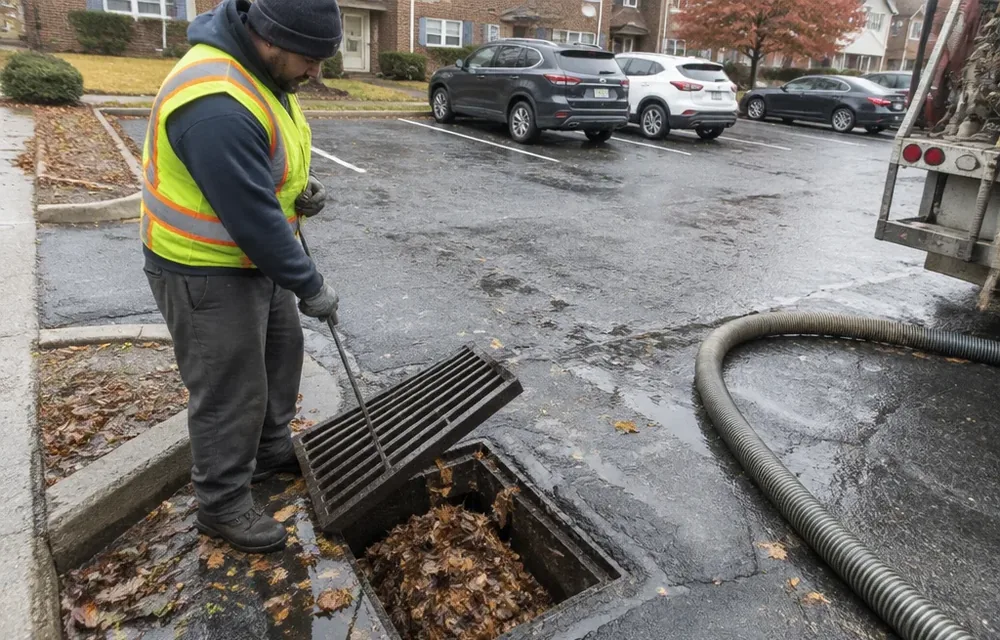
Storm Drain & Catch Basin Cleaning
A flooded loading dock or parking lot is rarely a rain problem.
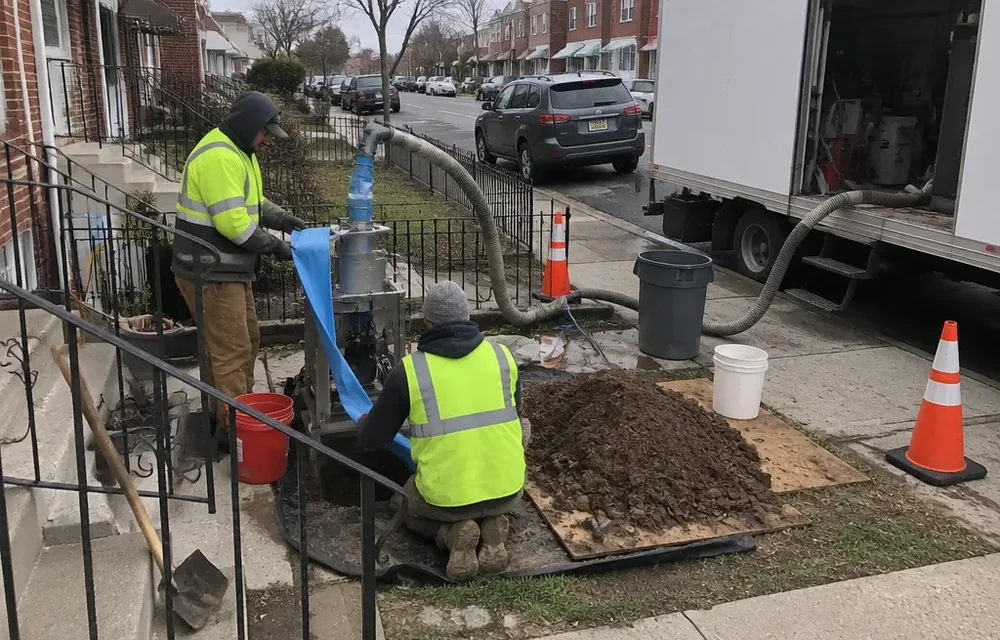
Commercial Hydro Jetting
Commercial drains fail on schedule — fryer volume, tenant count, storm season — so they should be serviced on schedule.
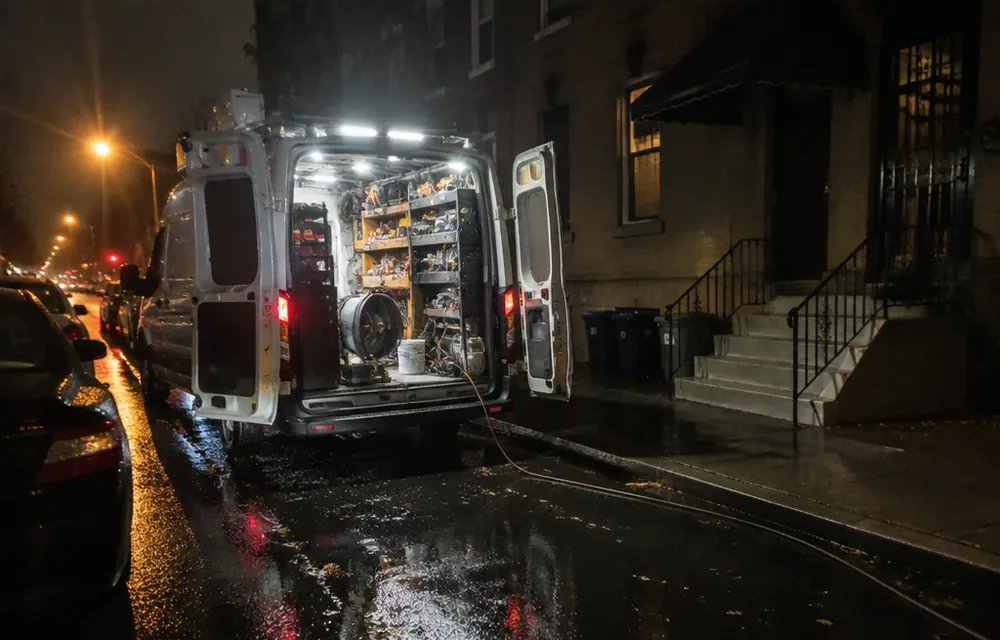
Emergency Drain Service
Sewage on the basement floor does not wait for business hours, and neither do we.
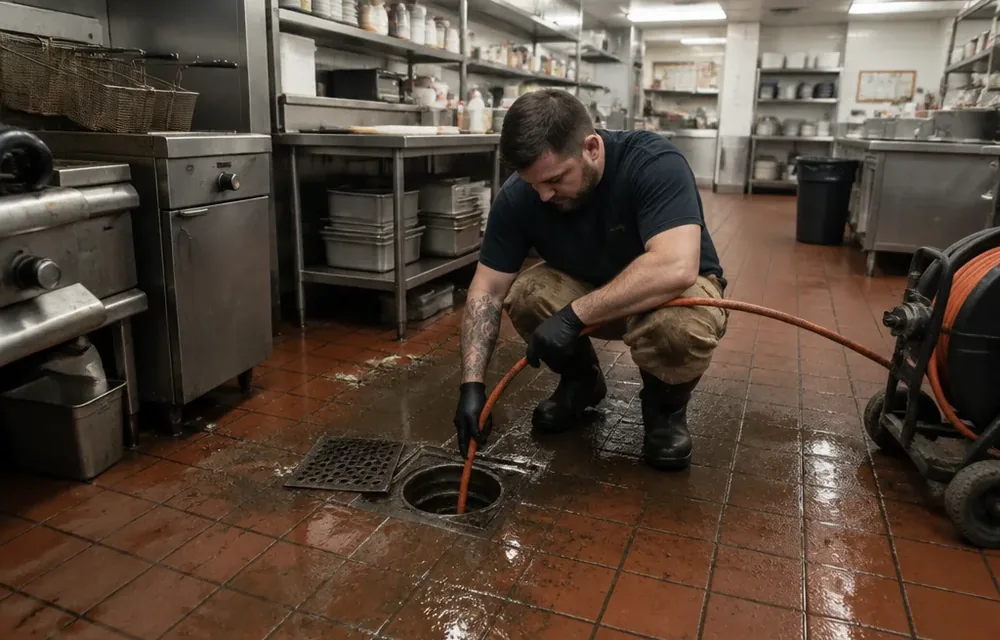
Restaurant Food-Service Jetting
A restaurant drain never fails at 2 p.
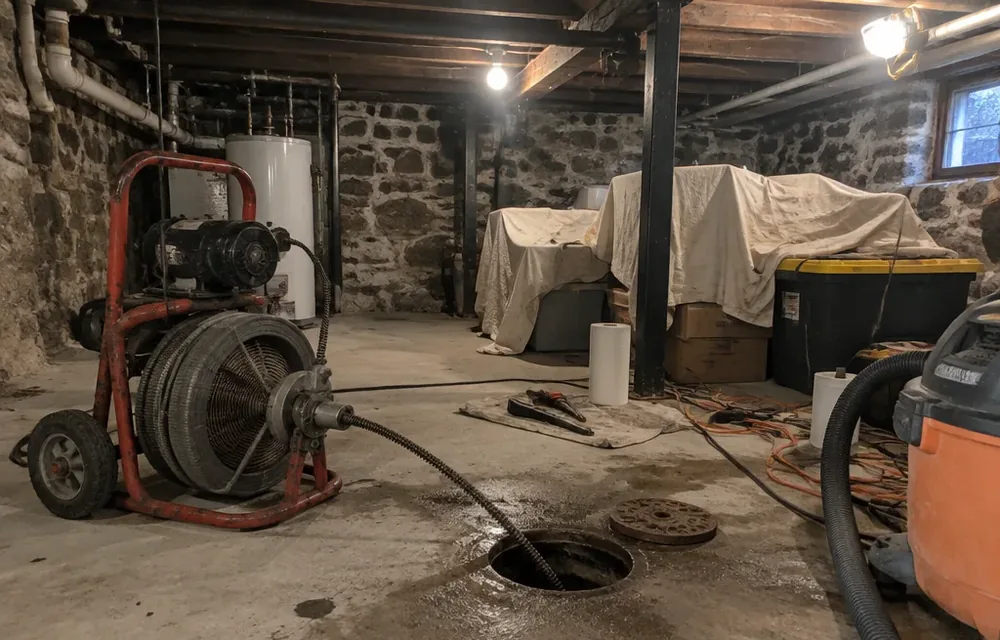
Property Manager Multifamily Drains
Nobody treats a rental drain like an owner does.
HOA Community Drains
HOA drain problems are never one owner's problem.
Guides and symptom checks matched to Philadelphia's housing
Guides for this housing stock
- Basement Backup in Philly: Combined Sewers — how shared mains back up basements in sustained rain
- Tree Roots in Philadelphia Sewer Lines Guide — why clay joints open and what the camera should log
- Philly Rowhouse Laterals: Clay, Iron & More — which pipe your build era used and what each needs
Symptoms we trace in Philadelphia
- Water Backing Up Into Fixtures — when one fixture fills another, act fast
- Same Clog Keeps Returning — repeat clogs mean coating or defect, not bad luck
- All Drains Slow — whole-house slowness means main line, not fixture
Philadelphia plumbing questions
Who owns my Philadelphia sewer lateral?
You do, up to the connection with the PWD main. Philadelphia Water Department (PWD) owns water and sewer mains to the connection, and lateral and connection work follows PWD Chapter 5 regs, including permit needs for work in the right-of-way. Confirm the requirement for your address with PWD before anyone digs.
Why does my Philadelphia basement back up only during long rain?
Because much of Philadelphia runs on combined sewers carrying stormwater and sewage in one pipe. A short cloudburst runs off, but days of steady Delaware Valley rain fill the combined main until household flow has nowhere to go, and the lowest basement fixture on a marginal lateral becomes the relief point. Sealing infiltration joints and adding backwater protection stops the repeat event that clearing alone never does.
My Philadelphia rowhouse was built in 1910. What pipe do I have?
Almost certainly vitrified clay tile outside with cast iron soil lines inside. The clay was laid in short mortared segments, and a century of settlement plus London plane and sycamore roots from Passyunk to Germantown have opened hub after hub. A camera inspection of a 1910 Philadelphia lateral routinely finds four or five defects on one run, which is why the scope conversation starts at full-run lining rather than spot repair.
Can the street tree over my lateral be removed?
Often it cannot or should not be. Many Philadelphia street trees are city trees, and even where removal is allowed it does not repair the joints roots already opened. CIPP lining creates a continuous jointless pipe inside the old clay, sealing every entry at once while the tree stands — in Philadelphia’s tree-lined rowhouse districts it is usually both the practical and the property-value answer.
Is a camera inspection worth it before buying a Philadelphia rowhouse?
It carries more weight here than anywhere in the region. A 1900–1930 Philadelphia rowhouse lateral is past a century of service on clay with cast iron inside, and Orangeburg appears in the 1945–1960 band. The finding moves a transaction by five figures when lining or replacement is due, so scoping the lateral before closing belongs alongside the home inspection, not after it.