Trenchless Sewer Repair After Jetting: A Philadelphia Lateral Guide
Trenchless repair fixes the pipe without opening the whole street, but the liner or bursting head can only work with a clean, measured host pipe. Jetting first removes the debris, proves the diameter, and produces the footage that sizes the repair. Skip the cleaning and the repair is priced on guesses and installed over garbage.
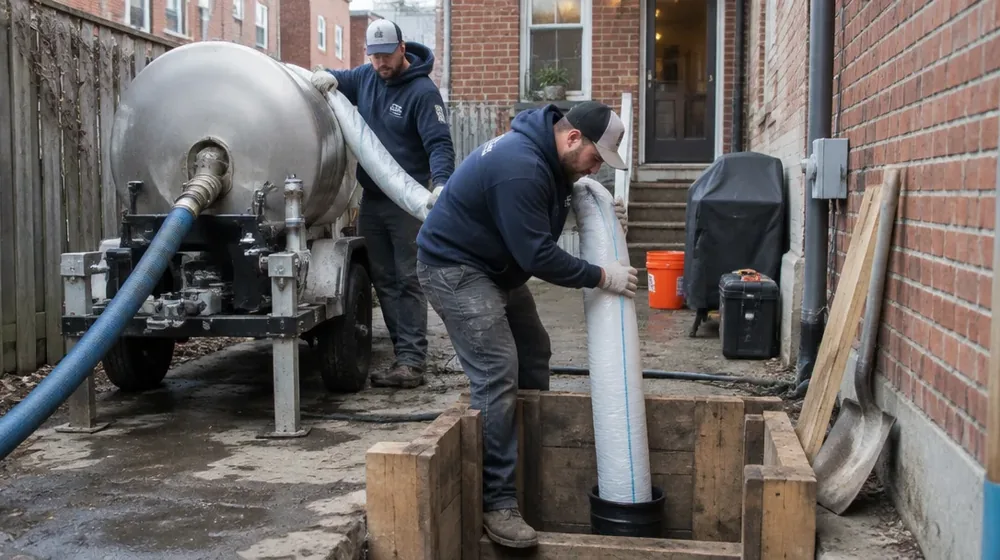
Why jetting always precedes trenchless repair
Every trenchless method assumes a known host pipe: verified material, measured diameter, located defects, and a clear bore the equipment can traverse. A lateral full of grease, sludge, roots, and scale provides none of those. Jetting, usually combined with mechanical cutting and descaling where the camera demands it, converts the unknown obstruction into a documented pipe with footage marks, depths, and flow behavior. That file is the engineering basis the repair is designed from, and no honest lining or bursting figure exists without it.
The cleaning pass also proves the line is a trenchless candidate at all. Collapses that no head can pass, severe offsets that stop the camera, bellies holding deep standing water, and Orangeburg deformed beyond round all emerge during the clean-and-scope sequence. Discovering these conditions before mobilizing lining equipment converts a costly mid-project conversion into a planned open-cut decision. The jetting visit is therefore both preparation and final qualification, and its footage is the gate document.
Resin chemistry adds a physical reason the wall must be bare. Cured-in-place liners bond to and bear against the host wall, and any grease film, biofilm, or loose scale left between liner and pipe becomes a debonded blister or a diameter loss cured permanently into place. Milling and aggressive flushing where the wall qualifies are not cosmetic steps; they are what the liner warranty assumes. Bursting has the parallel requirement of a clear path so the bursting head tracks the existing alignment instead of wandering off line.
Philadelphia laterals make this sequencing especially valuable because mixed-material runs are the norm rather than the exception. A single rowhouse lateral can join cast iron to clay to a mid-century patch and then to plastic at the main, with each transition logged by footage during the cleaning visit. The repair design then assigns each segment its correct treatment: line what qualifies, burst what has lost shape, and open-cut only what neither method can take. Without the cleaned-line footage, that segmentation is guesswork charged at capital rates.
Cured-in-place lining: how CIPP works and where it fits
Cured-in-place pipe lining installs a new pipe inside the old one. A resin-saturated felt or fiberglass tube is inverted or pulled into the cleaned host pipe, pressed against the wall with air or water, and cured with heat, steam, or ultraviolet light into a hard structural liner. The result is a jointless inner pipe that seals cracks, bridges missing fragments, and locks out root intrusion at every joint it spans. Diameter loss is modest, typically a few millimeters of wall, which matters far less than the restored smoothness that improves flow.
CIPP excels on Philadelphia clay laterals with root-active joints and on cast iron with cracks but surviving shape. The liner spans shifted joints, seals the infiltration that feeds roots, and leaves the sidewalk, areaway, and street surface undisturbed above. Long runs under finished surfaces, from marble stoops to rear patios, are where lining earns its largest savings against open cut, since restoration often costs as much as the pipe work it covers. Laterals where the camera shows continuous shape with discrete defects are the textbook candidates.
The method has firm boundaries. It needs a host pipe with enough remaining shape to form against, which rules out collapses, severely oval Orangeburg, and sections with missing invert. It needs access pits sized to the equipment at one or both ends, which constrains tight areaways and finished basements. And it slightly reduces diameter, which matters in already undersized or heavily bellied runs where capacity is marginal. Each boundary is a camera finding, which returns the decision to the quality of the cleaned-line footage.
Lateral connections and reinstatement complete the picture homeowners should understand. Where branch connections join the lined section, robotic cutters reopen them from inside after curing, a step that must be in the scope rather than discovered afterward. The cured liner then gets its own camera verification proving round profile, open connections, and bonded ends. A lining bid that omits reinstatement and verification line items is incomplete on paper and will become expensive in the trenchless pit.
Pipe bursting: how it works and where it fits
Pipe bursting replaces the pipe by destroying it in place. A bursting head, pulled by cable or rod from an exit pit toward an entry pit, fractures the old pipe outward while pulling a new high-density polyethylene pipe into the void behind it. The new pipe is full-diameter or larger, jointless, fused-welded, and rated for a full service life. Where lining sleeves the old pipe, bursting substitutes a brand-new one along the same alignment without a continuous open trench.
Bursting fits the failures lining cannot take: collapsed sections, Orangeburg gone oval, clay runs with missing fragments, and undersized lines where same-size sleeving would leave capacity short. Philadelphia laterals with repeated root failures at every joint sometimes cross the line where sealing joints individually, even jointlessly, leaves a patched relic rather than a renewed asset. A new fused pipe with no joints at all ends the root conversation for the replaced length rather than renegotiating it every few years.
The method demands its own conditions. It needs entry and exit pits with working room, which can be difficult in zero-lot-line rowhouse areaways and under finished rear yards. It needs clearance from adjacent utilities, since the expanded bore displaces soil outward and Philadelphia sidewalk corridors carry dense gas, water, electric, and communications infrastructure. And it needs an alignment worth following, since bursting tracks the existing run including any unfortunate routing. The pre-work utility locate and the camera alignment survey are therefore structural parts of the bid, not paperwork.
Upsizing is bursting’s distinctive commercial advantage and its distinctive risk in the same package. Replacing a four-inch lateral with a larger pipe adds capacity that helps where the household load has grown or where the line serves combined flows during storms. But the larger bore demands larger pits, greater pull forces, and more soil displacement near neighboring services. The upsizing decision belongs in the engineering discussion with the footage on screen, sized to the actual load rather than installed as a reflex.
CIPP versus bursting at a glance
| Factor | CIPP lining | Pipe bursting |
|---|---|---|
| Result | New jointless pipe inside the old one | Brand-new larger-or-equal pipe on the same alignment |
| Best host condition | Continuous shape with cracks and open joints | Collapse, ovalization, missing fragments, undersize |
| Diameter outcome | Slightly reduced, much smoother | Same or larger than original |
| Surface disruption | Minimal; access pits only | Entry and exit pits plus working room |
| Roots afterward | Locked out along the lined length | Eliminated; fused pipe has no joints |
| Needs from cleaning | Bare wall for bond, true diameter | Clear path tracking existing alignment |
| Philadelphia watch item | Reinstatement of branch connections | Utility clearance in sidewalk corridors |
Read the table as a triage aid rather than a product ranking, because the footage picks the method and not the reverse. Continuous-but-cracked clay with root joints wants lining. Collapsed or ovalized runs want bursting or open cut. Scattered failures across mixed materials may want lining on one segment and bursting on another, with the cleaned-line footage marks defining where each method starts and stops. Bids that propose one method for the whole run before scoping the cleaned line have reversed the sequence.
Service life expectations separate the methods honestly. A properly installed structural liner carries a multi-decade design life that competes with new pipe on paper, while a new fused polyethylene pipe from bursting is new pipe with new-pipe life. The practical difference for most Philadelphia homeowners is not the laboratory number but the failure mode: liners depend on host shape and bond quality, while burst pipe depends on correct installation and bedding. Both want the verification camera that proves what was actually built.
Philadelphia lateral considerations that shape the plan
Rowhouse geometry constrains equipment before it constrains method. Narrow areaways, finished basements with limited headroom, marble stoops and party-wall foundations, and rear yards reachable only through the house all limit pit size and equipment access. A lining rig that needs a straight shot at the cleanout may require temporary removal of a basement fixture, while a bursting setup needs pit locations the property can actually host. The site visit that measures access is as important as the camera visit that measures pipe, and both belong in the file before figures are compared.
Combined sewers add a hydraulic dimension. Laterals that carry stormwater from areaway and roof tie-ins in addition to sanitary flow see surge loading during cloudbursts, and a repair sized only for dry-weather flow inherits the backup problem it was meant to solve. The repair discussion should account for connected storm sources, whether any can be separated, and what diameter the combined load actually demands. This is also where upsizing through bursting earns consideration on the merits rather than as an upsell.
Street trees return as a planning factor rather than just a cleaning problem. A liner that seals every joint along its length locks roots out permanently for the lined footage, which makes lining the durable answer on root-active clay where the shape qualifies. Where the shape does not qualify, the replacement pipe should be jointless fused material for the same reason. Either way the repair should end root maintenance on the treated length, and any proposal that leaves joints open to known street-tree roots should state plainly why.
Sidewalk, curb, and street restoration costs shape the economics of every option. Open-cut work that crosses the footway implicates surface restoration whose cost can rival the pipe work, which is exactly where trenchless methods earn their premium. But trenchless pits in the footway are still excavations with restoration of their own, and access through finished interiors carries make-good costs too. Complete figures state restoration explicitly for each option so the comparison is pipe-to-pipe and surface-to-surface rather than pipe against a trenchless figure that omits its own digging.
Permits and approvals: the generic-but-true path
Sewer lateral work in Philadelphia runs through the Philadelphia Water Department for the sewer connection side and through the Streets Department where the work opens the footway or cartway. Repairs that stay entirely within the property and inside the existing pipe, which describes most cured-in-place lining, generally present the lightest approval path. Any work that excavates in the sidewalk or street, which includes bursting pits and open-cut repairs in the public right-of-way, typically needs street-opening permits with restoration obligations attached. Homeowners should confirm the current requirements with the departments before work starts rather than relying on any guide as the final word.
Chapter 5 of the Philadelphia Water Department regulations addresses sewer connections and related drainage work, and lateral repairs that alter, renew, or reconnect the house lateral to the city main fall within the subject matter those rules govern. The practical reading for a homeowner is straightforward: the contractor should identify which approvals the planned method needs, carry the qualifications the departments require for that work, and produce the permits and sign-offs as part of the contracted scope. A bid that is silent on approvals for work crossing the right-of-way has left a cost and a liability unassigned.
Utility coordination is the parallel obligation that protects the project. Pennsylvania One Call notification before any excavation is the baseline, and dense rowhouse utility corridors often warrant private locating beyond the public marks where laterals, service lines, and abandoned infrastructure interleave. Bursting in particular wants documented clearances before the head moves, since soil displacement near gas and water services is unforgiving of assumptions. The locate tickets and clearance notes belong in the project file alongside the camera footage.
Record-keeping closes the loop. The kept package for any trenchless project should include the pre-clean and post-clean camera files with footage marks, the as-built alignment with depths, the liner cure records or the new pipe fusion and pressure records as applicable, the verification camera proving round profile and open connections, and the permit sign-offs. That package is what future buyers, future bidders, and any warranty discussion will all ask for, and assembling it after the pits are backfilled is reconstructive rather than documentary.
The full sequence from first backup to verified repair
Clear and scope the line
Cut roots, jet and flush the bore, then camera the cleared line with footage marks, depths, and flow behavior under load.
Segment the run by condition
Assign each segment its treatment from the footage: lineable, burstable, or open-cut, with transitions marked in feet.
Compare complete figures
Pipe work plus pits, restoration, connections, reinstatement, verification, and permits stated for every option.
Confirm access and approvals
Pit locations measured on site, utility clearances documented, and department approvals identified before mobilization.
Clean again immediately before install
A final jetting and flush pass so the liner bonds to bare wall or the bursting head tracks a clear alignment.
Verify and keep the file
Post-repair camera proving profile and connections, cure or fusion records, sign-offs, and the full video package handed over.
The second cleaning immediately before installation surprises homeowners who watched the first one, but the interval between design and mobilization lets grease and grit re-coat the wall and lets roots re-enter open joints. Liner bond and bursting alignment both assume the pipe the footage showed, and the refresh pass restores exactly that condition. It is the cheapest line item in the project and the one most directly tied to the outcome.
Comparison shopping works only between complete figures. A lining figure that omits connection reinstatement competes falsely against a bursting figure that includes everything, and either competes falsely against open cut when restoration sits outside all of them. The footage-segmented scope with every cost inside it is the document that makes competition honest, and any bidder unwilling to price against it has explained how the project would be managed.
Frequently asked questions
Why must the line be jetted before trenchless repair?
The repair is designed from the cleaned pipe: verified material, measured diameter, located defects, and proven candidacy. Resin liners bond only to bare wall, bursting heads track only a clear alignment, and collapses or offsets that disqualify trenchless methods surface during the clean-and-scope sequence rather than mid-project.
How do I choose between lining and pipe bursting?
Continuous shape with cracks and open joints favors CIPP lining; collapse, ovalization, missing fragments, or undersized diameter favors bursting or open cut. The cleaned-line footage assigns each segment its method. Diameter needs, access constraints, and utility clearances refine the choice from there.
Will lining stop tree roots permanently?
Along the lined length, yes: the jointless liner seals every entry joint the roots used. The protection ends where the liner ends, so the design must span the full root-active footage and the replacement material beyond it should be jointless as well. Roots outside the treated length remain a maintenance item.
What permits does lateral work need in Philadelphia?
Work touching the sewer connection runs through the Philadelphia Water Department, and excavation in the footway or street typically needs street-opening permits with restoration obligations. Confirm current requirements with the departments before work starts, and make sure the bid assigns every approval explicitly.
What records should I keep after a trenchless repair?
Pre-clean and post-clean camera files with marks, the as-built alignment with depths, liner cure records or pipe fusion records, the verification camera proving profile and open connections, and the permit sign-offs. That package serves future sales, future service, and any warranty discussion.
Services mentioned in this guide
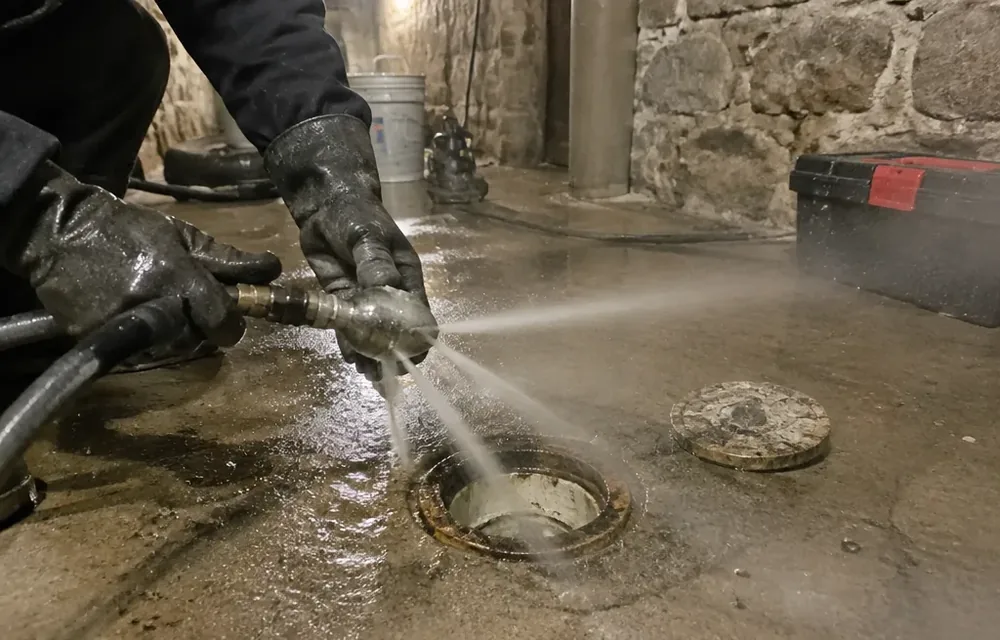
Hydro Jetting
A cable bores a hole through the clog.
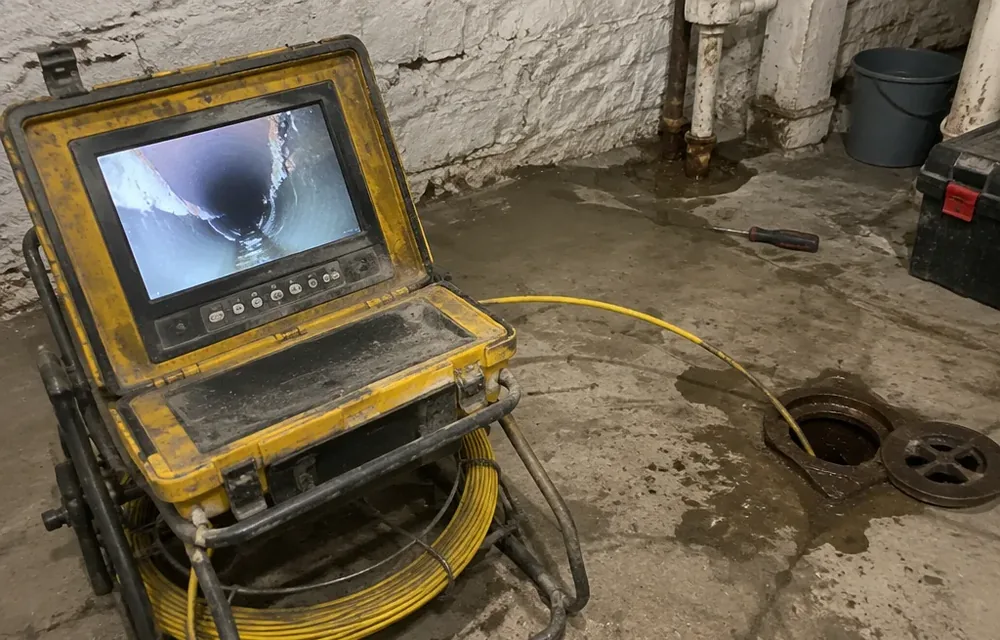
Sewer Camera Inspection
Every expensive sewer decision in Philadelphia — jet, repair, line, replace — depends on one thing: what the pipe actually looks like inside.
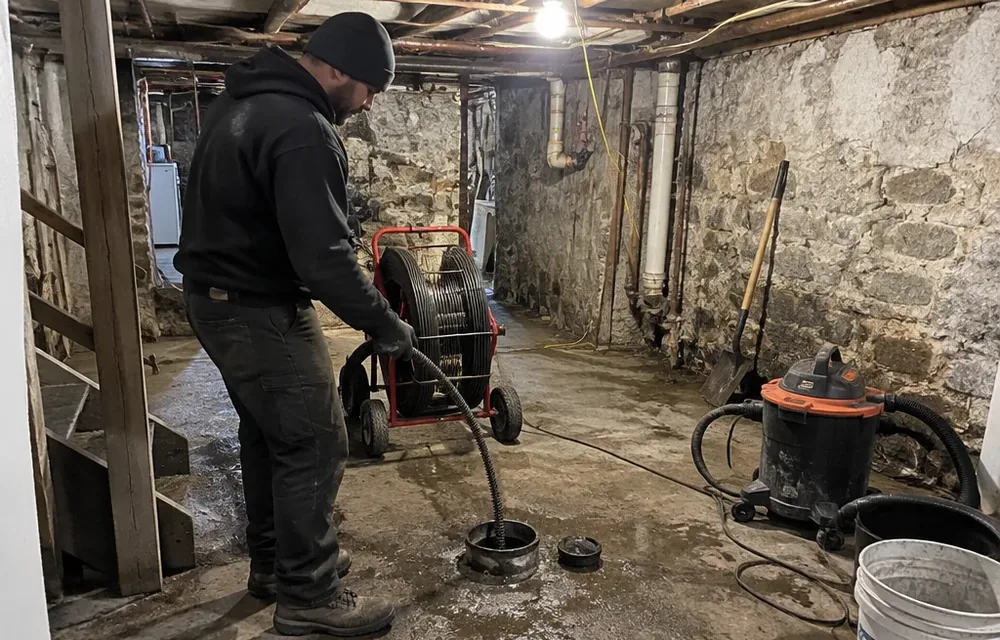
Main Sewer Line Cleaning
The lateral is the most expensive drain you own — a 60-to-100-foot clay run from your rowhouse to the street main, shared with stormwater, hunted by street-tree roots.
Free tools that help with this exact problem
More guides
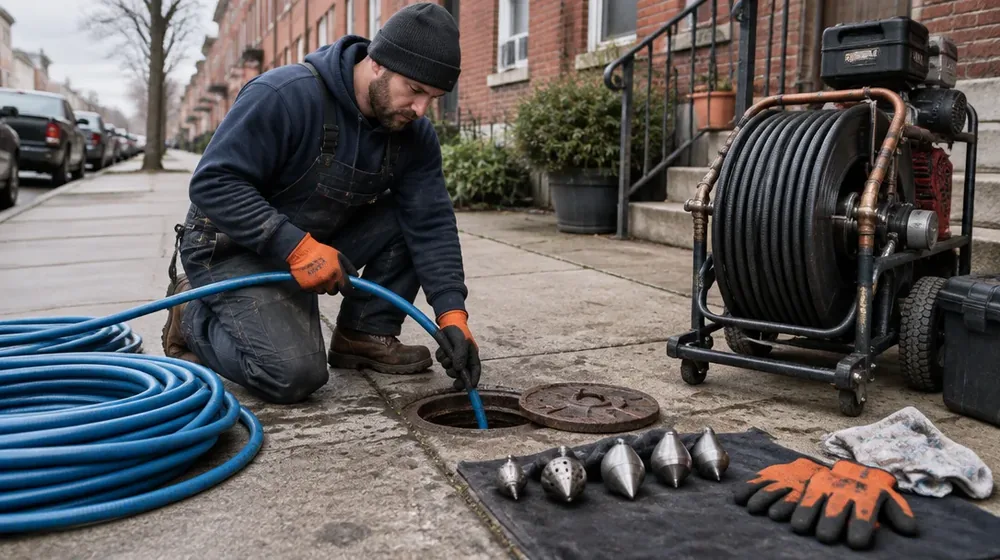
Hydro Jetting vs Snaking: What Philly Homes Need
A cable bores a hole through the blockage so water moves again. A jetter scours the whole pipe wall back toward bare m…

Hydro Jetting Cost in Philadelphia: 2026 Guide
Most Philadelphia homeowners budget around national jetting ranges, then discover access, lateral length, and root cut…
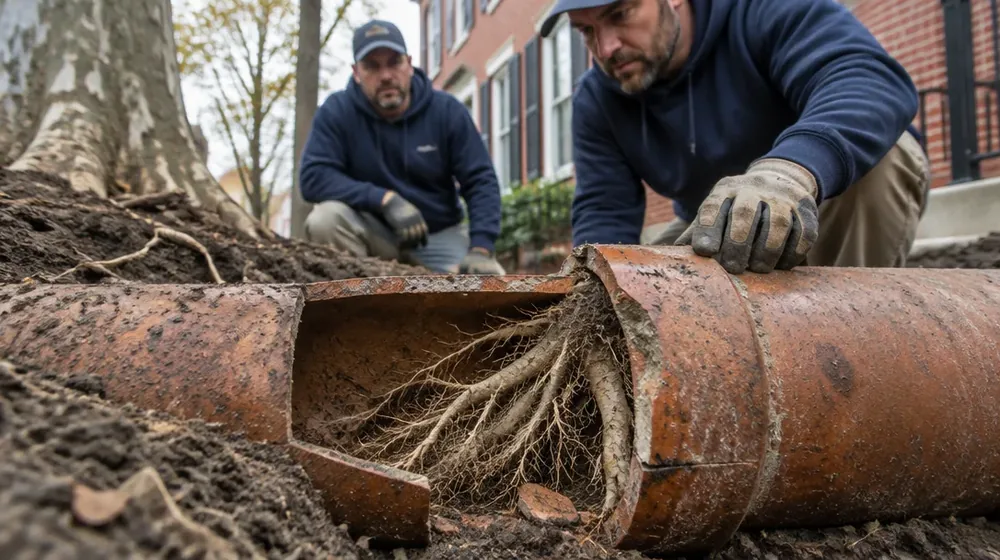
Tree Roots in Philadelphia Sewer Lines Guide
Roots do not break into sound pipe. They find the clay joint that is already leaking, thicken in the flow, and become …
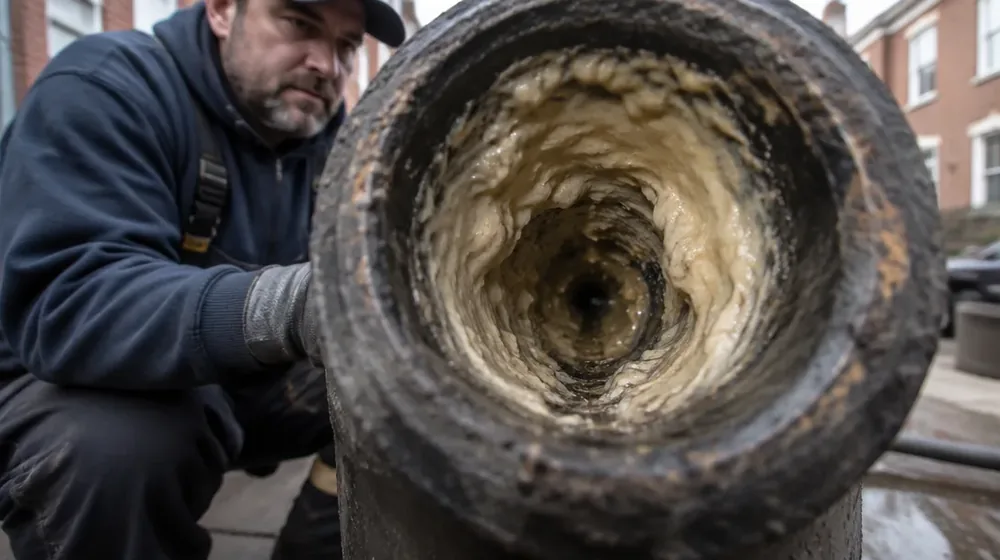
Grease Lines: Philly Rowhouses & Restaurants
Grease goes down warm and liquid, meets cold iron, and becomes a wall coating rather than a plug. That is why the same…