Hydro Jetting in Hatboro, PA — Railroad-Borough Clay & Floodplain Silt Cleared
Hatboro is a railroad borough on York Road — pre-war twins and rows near the station, postwar capes and ranches toward the township edges — sitting in the Pennypack Creek floodplain. Old clay tile with cast iron inside under borough maples defines the core; mid-century clay and iron on flat floodplain ground defines the rest. When the same Hatboro line backs up every wet season, high-pressure jetting strips the silt, roots, and scale the cable keeps tunneling through — provided the camera first proves the pipe can take pressure.
- Hatboro
- Montgomery County
- 24/7 dispatch
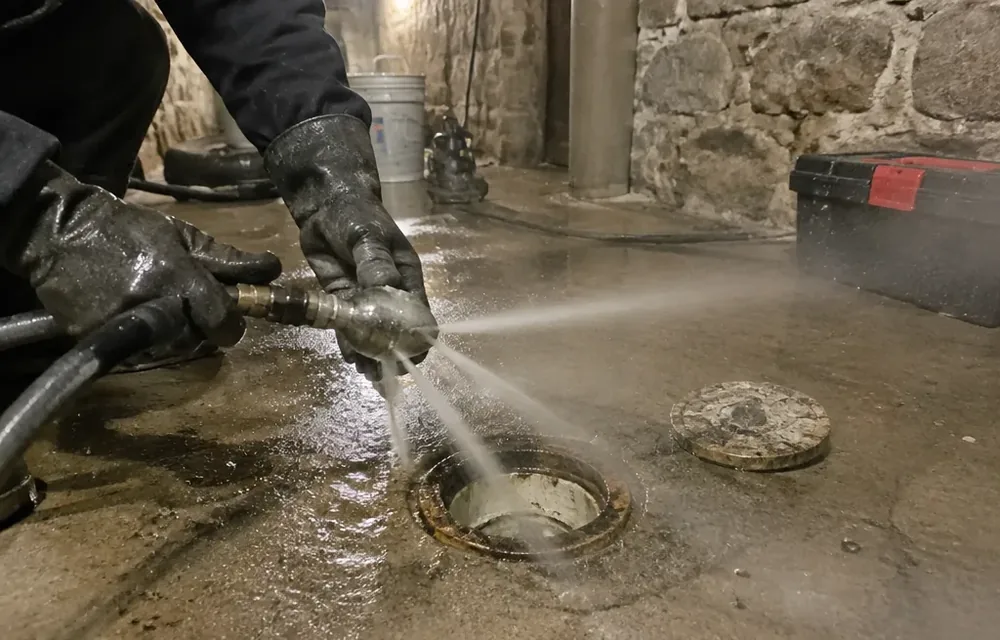
Hydro Jetting in Hatboro
Why hydro jetting matters in Hatboro
The pre-war twins and porch-front rows around York Road, the Hatboro station district, and the streets toward the Pennypack sit on vitrified clay tile laterals with mortared joints, now eighty-plus years old, with cast iron stacks inside and borough maples and oaks over nearly every run. Roots enter at hub after hub, so single spot repairs routinely fail while the next Hatboro joint keeps growing. Flat floodplain ground settles those hubs unevenly, opening lips that snag paper and pond solids where the run loses grade.
Water completes the picture. The Pennypack Creek floodplain holds the winter water table near lateral depth for months, and infiltration pours through cracked clay joints carrying fine silt that re-packs every restriction each wet season. Postwar capes and ranches toward the Hatboro edges add scaling cast iron waste lines to the same floodplain water. That composite — floodplain silt over root hair over invert scale — runs half full for months, backing up in January on lines that behaved all August. Montgomery County floodplain laterals like these are the textbook jetting case: backward-facing jets strip the wall while the forward jet cuts the compacted obstruction the cable merely tunneled.
What a jetting visit looks like in Hatboro
Grade comes first in Hatboro. Flat floodplain runs belie their looks — the camera with grade readings separates standing-water bellies from cleanable coating before pressure is set, because a sag that ponds water needs re-grading, not scouring. Station-district twins stage from basement cleanouts through tight stairwells with full protection, while postwar capes with exterior cleanouts and driveway access move faster. Parking along York Road and the station blocks decides rig placement before a hose is ever uncoiled.
Sound lines get passes from the far end back, flushing silt and cut root mass toward the main rather than packing it into the next Hatboro sag. Cast iron sections get conservative pressure matched to wall condition; sound clay gets what the buildup requires. The closing camera pass is the deliverable: cleaned wall, marked joints, and grade readings that separate a maintainable Hatboro line from one needing open re-grading. Where floodplain seep overloads the lateral, the visit ends with that finding stated plainly.
What affects the price in Hatboro
Residential jetting in this market generally falls between $375 and $950, and Hatboro work tracks depth, access, and loading. Short borough laterals help; multi-joint root loading plus floodplain silt that needs extra passes pushes upward. A reachable cleanout holds the figure down; a Hatboro twin with basement-only access and finished lower levels adds protection labor first. Long edge-of-borough runs add hose time against the in-town advantage.
Condition findings move the number most. A sound clay-and-iron line with heavy but cleanable buildup is a straightforward visit; a line where the camera finds a floodplain belly or failed Orangeburg on late-1940s infill converts the job into diagnosis plus a repair scope, priced separately. Montgomery County owners should expect after-hours dispatch to carry a stated premium, disclosed by phone before the truck rolls — never folded silently into the work figure.
When jetting is the wrong answer in Hatboro
Floodplain bellies top the refusal list. Standing water in a sag on camera means open repair and re-grade — a liner follows existing grade and jetting follows existing shape, so neither corrects slope on flat Hatboro ground. Scattered late-1940s Orangeburg pockets are the second refusal: deformed fiber pipe that pressure can collapse. Cast iron channeled thin along the invert and clay hubs sheared past function complete the structural refusals.
Capacity failures deserve the same honesty. When Pennypack floodplain groundwater fills the lateral for months, January backups with no new clog are the line running out of headroom, not a coating problem. Jetting clears the silt; lining sound clay or replacing failed sections seals the entries. Camera first, then match the spend to the finding: scour the coatable, line the sound-but-leaky, replace the failed, and re-grade the sagged.
Hydro Jetting in Hatboro: questions
How much does hydro jetting cost in Hatboro?
Most residential visits land between $375 and $950. Short borough laterals help; multi-joint roots, floodplain silt loading, and basement-only access push upward. A belly or Orangeburg discovery converts the scope to construction, priced separately.
My Hatboro line only backs up in the wet season — will jetting fix it?
Only if buildup is the cause. Pennypack floodplain groundwater entering open clay joints all season is a capacity failure, and the silt returns with the water. If backups track sustained rain rather than fixture use, the visit should end with a sealing plan — lining sound clay — or the same backup repeats on the water-table schedule.
Is jetting safe on pre-war Hatboro clay?
On sound clay at matched pressure, yes — the camera clearance comes first to rule out Orangeburg pockets, thin iron, offsets, and floodplain bellies. Where the host pipe is sound, jetting plus full-run lining is the standard sequence under the borough maples.
Why do spot repairs keep failing on my Hatboro twin?
Because intrusion is multi-joint and floodplain settlement keeps opening the next hub. Sealing or cutting one joint leaves the neighboring clay — same age, same maples, same Hatboro ground — growing untouched. Full-run mapping, scouring, then sealing every joint at once ends the rotation.
Related services in Hatboro
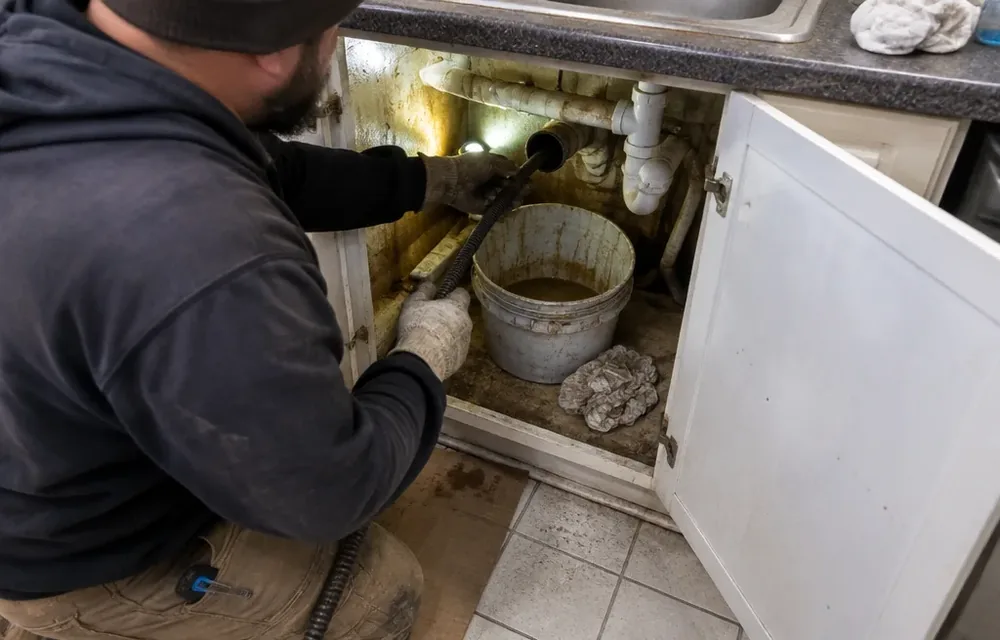
Drain Cleaning
A single slow sink is a nuisance.
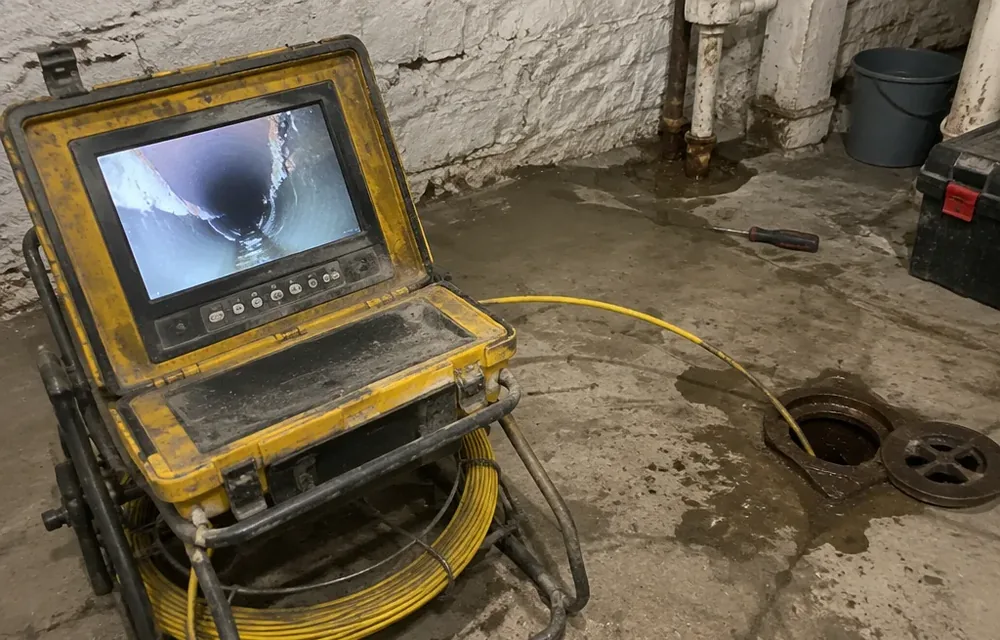
Sewer Camera Inspection
Every expensive sewer decision in Philadelphia — jet, repair, line, replace — depends on one thing: what the pipe actually looks like inside.
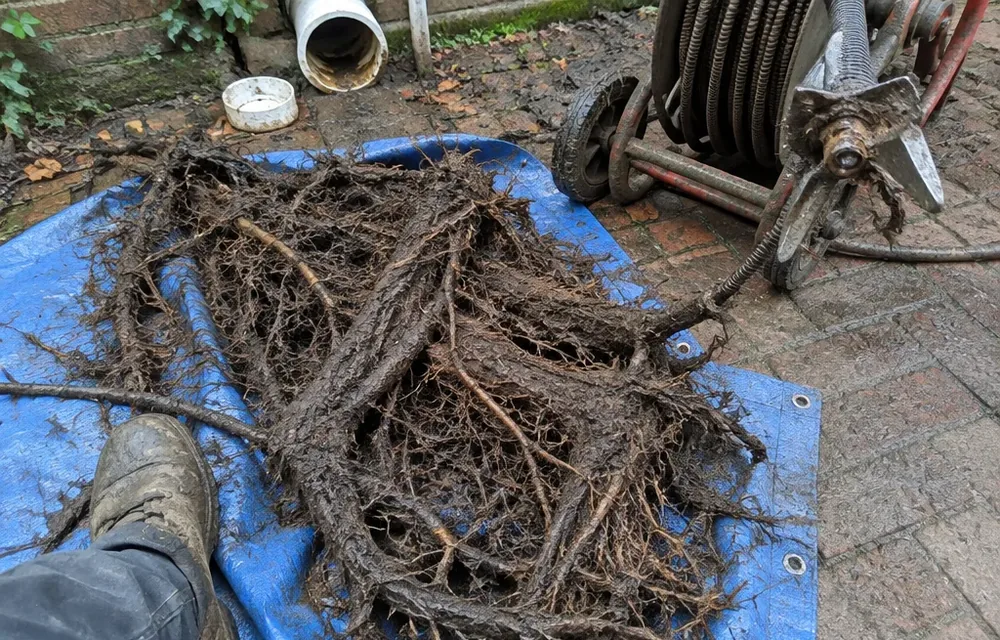
Rooter Service
Roots do not break your pipe to get in.