Sewer Repair and Replacement Cost in Philadelphia: September 2026 Guide
A Philadelphia sewer figure means nothing until camera footage and a locate map define the defect, the depth, and the footage. Once those three facts exist, September 2026 national per-foot ranges plus Philadelphia access and restoration adders turn a mystery into a comparable scope.
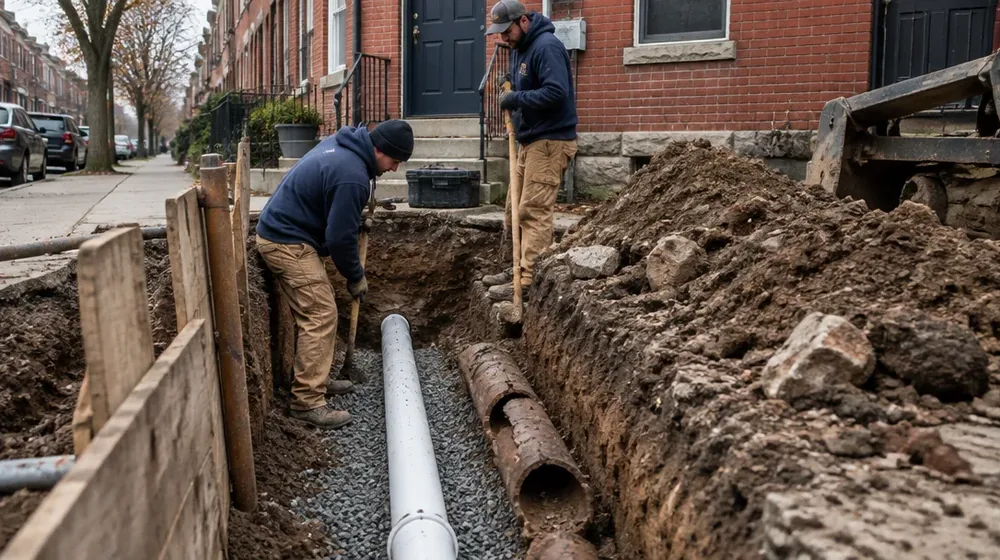
Why September 2026 figures start with camera plus locate, never with symptoms
No contractor can price a lateral correction from a slow drain, a backup story, or a single fixture visit, because symptoms never reveal extent. A ten-foot cracked segment at four feet deep under a rear yard and an eighty-foot failing run under a sidewalk to the combined main can produce identical backups and wildly different projects. Camera footage with footage marks plus a surface locate showing depth at the curb and at each defect is what converts a complaint into a measurable job with a defined start, a defined end, and a defined method.
The pre-work survey has two halves that serve different decisions. The camera pass records material, diameter, defect type at each footage, standing water that marks a belly, root entry points, scale loss, and collapsed or missing segments. The locate pass transfers those footage marks to the surface with depth readings, so the estimator knows whether the defect sits under soil, under brick paving, under a concrete areaway, or under a public sidewalk where restoration standards and pedestrian protection apply. Without both, any per-foot arithmetic is fiction applied to an unknown length at an unknown depth.
Philadelphia rowhouse geometry makes this discipline pay faster than in most cities. Laterals here are short but obstructed: front areaways, marble stoops, party-wall foundations, sidewalk corridors, and combined-main connections in the street compress a great deal of infrastructure into a small footprint. A defect logged at fifty-two feet from a basement cleanout may sit beneath the sidewalk rather than the yard, which changes restoration, coordination, and schedule even when the pipe repair itself is identical. Homeowners who collect footage, depth, and surface marks before collecting figures compare real scopes instead of competing guesses.
Treat any capital figure offered without this survey as a placeholder to decline politely. Honest September 2026 practice prices the survey as its own small project, delivers kept video with a written defect log, and then prices correction against that record. That order protects both sides: the homeowner stops buying blind excavation, and the contractor stops absorbing the risk of unknown soil, unknown depth, and unknown restoration inside a fixed number.
Spot repair: the smallest capital fix and when it fits
A spot repair, also called a point repair or sectional replacement, opens one small excavation over a defined defect and replaces that segment with new pipe, typically PVC with shielded couplings tying into sound existing material on both sides. It fits a single cracked joint, one offset caused by settlement, one root-invaded joint in an otherwise sound clay run, or one crushed segment where a discrete event damaged the line. The camera must show sound pipe with adequate wall and grade on both sides of the defect, because a new segment grafted between two failing ends buys months rather than years.
National homeowner references such as Angi and Bob Vila describe sectional and minor repair work in wide bands that move with depth, access, and restoration, frequently discussed in the low thousands of dollars for simple accessible spots within broader project ranges that climb as depth and surface work grow. Those are cited here as published national orientation ranges rather than any Philadelphia commitment, and the honest use of any such band is to test whether a bid describes the same access and restoration you actually have. A shallow rear-yard spot at three feet deep and a sidewalk-corridor spot at seven feet deep are different projects even at identical pipe length.
Philadelphia spot work lives or dies on access and shoring rather than on pipe material cost. Narrow rear yards with high brick party walls admit only small equipment, hand digging alongside shoring, and careful soil handling, while front-yard and sidewalk work adds pedestrian protection, spoil management, and city restoration standards. Depth governs everything: each additional foot adds excavation volume, shoring duty, dewatering attention where groundwater stands, and time with the trench open. That is why two neighbors with the same diagnosis can receive very different spot figures without either figure being wrong.
The durability question for a spot is always about the remaining pipe. Where the camera shows one failed joint in a clay lateral with tight remaining joints, solid grade, and no belly, a spot plus scheduled jetting maintenance on the retained run is rational and often the lowest ten-year total. Where footage shows failing joints every few feet, scale-eaten iron, or Orangeburg deformation along the run, a spot becomes serial spot work at excavation pricing, and the household should price lining, bursting, or full replacement alongside it before authorizing the first hole.
Cured-in-place lining versus pipe bursting: trenchless paths compared
| Method | What it does | When it fits |
|---|---|---|
| Cured-in-place lining | Resin liner inverted or pulled inside the old pipe, then cured to a new inner pipe | Sound shape with cracks, joints, root entries; needs access pits not full trench |
| Pipe bursting | Bursting head fractures old pipe outward while pulling new pipe behind it | Badly failed or undersized pipe where upsizing or full renewal is wanted |
| Spot repair | Open cut over one defect, new segment tied into sound pipe each side | Single discrete defect with sound pipe and grade on both sides |
| Full open-trench replacement | Excavate the run, bed and lay new pipe at corrected grade | Collapsed runs, bellies, wrong grade, or failed material along the length |
| Cleaning plus monitoring | Cutting and scouring jetting with camera baseline, repair deferred | Sound pipe with maintenance defects like grease or isolated root hair |
Cured-in-place lining earns its place where the old pipe holds its shape but not its integrity. Cracked clay with stable grade, separated joints without major displacement, and root entries in an otherwise aligned run are classic lining candidates, because the liner bridges the defects and presents a smooth jointless interior that roots and scale struggle to grip. The work needs entry and exit pits rather than an open trench along the whole run, which preserves stoops, areaways, and interior slabs that open-trench work would disturb. Pre-lining jetting to bare wall is not optional preparation but structural necessity, since resin bonding against grease or sludge is a failed liner waiting for its first backup.
National references including Angi, Forbes Home, and Bob Vila commonly discuss trenchless lining in per-foot terms often described near eighty to two hundred fifty dollars per foot as a national market band, with pipe bursting frequently discussed in a similar or slightly higher per-foot band, each before access, depth, restoration, and local conditions. Those figures are cited strictly as published national ranges for budgeting orientation, never as any Philadelphia price, and individual jobs move within or beyond them on lateral length, diameter, bends, depth, and how much cleaning and preparation the host pipe demands. A short straight run with clean access reads very differently from a long bent run under a sidewalk with heavy descaling ahead of it.
Pipe bursting answers a different failure: pipe that cannot serve as a host. Collapsed clay, deformed Orangeburg, severely offset joints, or a line the household wants upsized for capacity all point toward bursting rather than lining, because bursting replaces the pipe wall entirely instead of working inside it. The method still needs launch and receive pits with adequate working room, and Philadelphia constraints such as nearby gas, water, and electric services, tight party-wall foundations, and sidewalk-corridor utilities decide whether bursting geometry actually fits the lot. Utility marking, depth confirmation at crossings, and a surface plan showing both pits belong in the scope before anyone prices bursting per foot.
Both trenchless paths share one disqualifier that homeowners underestimate: grade defects. A belly that holds standing water will hold standing water inside a liner or inside a burst replacement laid to the same sag, because neither method corrects elevation on its own. Camera footage showing water sitting mid-line with debris drifting back after flushing is the signature, common where old trench backfill settled beneath rowhouses or delivery traffic compacted soil over the lateral. Where a belly exists, the durable fix regrades that segment by open cut, and trenchless pricing applied to a bellied run buys a smooth new pipe that still ponds.
Full open-trench replacement: what the per-foot number actually contains
Full replacement excavates the failed run, beds new pipe at corrected slope, connects to sound material or to the city main as scoped, backfills in lifts, and restores the surface. It is the right answer for collapsed runs, widespread Orangeburg failure, tuberculated iron with no remaining wall, repeated offsets along the length, and bellies that defeat trenchless renewal. It is also the most disruptive answer, because everything above the pipe becomes project scope: soil handling, shoring, dewatering, utility crossings, foundation penetrations, sidewalk and paving restoration, and landscape repair all ride inside the headline.
National guides from sources such as Angi, HomeAdvisor-style estimators, and Forbes Home commonly frame full sewer replacement in per-foot bands often described near fifty to two hundred fifty dollars per foot as national market context, with total project discussions frequently spanning several thousand dollars into five figures as length, depth, and restoration grow. Those bands are cited here only as published national orientation, and Philadelphia work frequently prices its own reality once depth below the sidewalk, street-corridor coordination, and restoration are counted. The pipe and fittings are a minority of the total; excavation, labor, shoring, spoil, and surface repair dominate every real figure.
Depth is the multiplier that swallows every other variable. A four-foot-deep yard run dug by compact equipment with simple shoring and same-day backfill is routine work; an eight-foot-deep sidewalk-corridor run with engineered shoring, staged spoil removal through a narrow areaway, groundwater control, and multi-day pedestrian protection is heavy civil work at a residential address. Length multiplies that base: Philadelphia rowhouses often run forty to ninety feet from basement cleanout to combined main depending on setback, sidewalk width, and main position in the street, and each foot carries excavation, bedding, pipe, and restoration with it.
Material and diameter choices matter less to the total than homeowners expect but still belong in writing. Four-inch PVC SDR or schedule pipe with shielded couplings, proper bedding stone, verified slope, and correct transitions at the foundation and at the main connection describe competent modern work; larger diameter or deeper burial adds material and trench width. The scope should name the pipe specification, the bedding detail, the slope verification method, the connection detail at each end, and the backfill and compaction approach, because those lines are what separate a fifty-year lateral from a project that settles into a new belly within five winters of freeze and thaw.
Philadelphia adders: access, restoration, and right-of-way realities
Access constraints add real money before any pipe is touched. Narrow rear yards behind brick party walls limit equipment to compact machines or hand work, marble stoops and tight areaways complicate spoil handling, and basement-only access forces material and soil through living space with protection and cleanup time. Exterior two-way cleanouts shorten every future service but installing one inside a repair project still costs excavation, fitting, riser, and surface work of its own. Estimators who walk the spoil path, the equipment path, and the hose path before pricing are doing the job; estimators who price from the curb are guessing at your expense.
Surface restoration in Philadelphia is not cosmetic patching but specified work. Brick pavers, concrete sidewalk panels, areaway slabs, curb cuts, and street cuts each carry city standards for base, thickness, finish, and curing, plus protection and cleanup duties while the work is open. Front-corridor laterals that cross the public sidewalk add pedestrian controls, possible parking and lane coordination, and Philadelphia Water Department awareness where the run meets the combined main. A figure that lumps restoration as a single vague line cannot be compared against a figure that itemizes panels, pavers, planting, and street repair separately.
Coordination duties also separate serious scopes from thin ones. Utility marking through the state one-call system, verification of gas, water, electric, and communications crossings at depth, permit and inspection sequencing with city Licenses and Inspections reviewers, and documentation of depths and connections for the property file all consume calendar time and crew time. Winter work adds frost handling, frozen spoil behavior, and concrete curing constraints, while summer storm-season work must plan around cloudburst flooding of open trenches along the Schuylkill and Delaware corridors. None of these forbids the work in any season; each simply belongs inside the schedule and the number.
The practical way to handle adders is to force them into the open as separate lines: excavation and shoring by depth band, pipe and bedding, dewatering if applicable, utility coordination, permit and inspection fees, sidewalk and surface restoration by unit, landscape repair, and the camera verification after backfill proving slope and joint integrity. When every bidder breaks out the same lines, the per-foot pipe math becomes comparable and the real differences appear where they belong: in depth handling, restoration quality, and schedule honesty rather than in pipe price theater.
The sequence that must precede any number: survey, scope, then price
Camera the full run to the main
Material, diameter, every defect with footage marks, bellies shown by standing water, root entries, collapses, and remaining wall condition.
Locate and map depths to the surface
Transfer footage marks to grade with depth at the curb, at each defect, and at crossings; note what surface sits above each segment.
Classify each defect by fix
Single joint, grade failure, host-candidate cracking, or full-length failure; match spot, lining, bursting, or replacement to what the footage proves.
Define access and restoration
Pit or trench locations, equipment and spoil paths, sidewalk and paving units affected, and utility crossings verified by marking.
Write the scope before the figure
Method, length, depth band, pipe specification, bedding and slope proof, connections, backfill, restoration, and post-work camera proof.
Price the written scope, with contingency stated
Figure tied to the six scope lines plus a written contingency if hidden conditions such as voids or unmarked utilities appear.
Homeowners should enforce that order even when water is standing and pressure to commit feels intense. Emergency response in a backup is mitigation, documentation, and stabilization, not a capital signature while the main is surcharged and the trench would fill. Permanent repair pricing deserves dry weather, marked utilities, a calm estimator walk, and competing figures against the identical written scope. The days spent sequencing correctly cost nothing against a lateral that will serve for decades.
Keep the survey artifacts as property assets alongside the repair record. Pre-work video with footage marks, the locate sketch with depths, the permit card and inspection sign-off, the post-work camera proving slope and joints, and the paid invoice with pipe specification and warranty terms together answer every future buyer, insurer, and service crew question. Rowhouses in Fishtown, Point Breeze, Germantown, and the Far Northeast change hands with lateral history unknown; the file that proves yours is worth real money at negotiation and real time at every future service.
Maintenance math: when to jet and monitor versus when to correct
Not every defective-looking camera deserves excavation. A clay lateral with one root entry joint in otherwise sound aligned pipe, a kitchen line with heavy grease on solid iron, or a scale-coated stack with remaining wall can all return years of service from cutting plus scouring jetting on a defined interval with camera monitoring. The decision rule is interval behavior: stable intervals measured in years favor maintenance, while shortening intervals, spreading defects, or any collapse, belly, or wall loss favor correction. Ten-year arithmetic with one avoided emergency backup often decides the comparison by itself, because a single finished-basement sewage event with mitigation and content loss erases years of maintenance savings.
Set the comparison on paper with the same honesty in both columns. The maintenance column carries the cleaning figure times expected frequency plus monitoring cameras plus the risk-weighted cost of one backup during the period. The correction column carries the repair figure plus restoration plus the reduced maintenance and monitoring that a new or renewed line still needs, since even new pipe wants grease discipline and root awareness where street trees remain. Where the correction column wins within the ownership horizon, repair is investment; where maintenance holds stable and cheap, repair is premature capital spent against a pipe still earning its keep.
Habits and planting decide how long either column holds. Kitchen grease discipline with cooled fat to the trash, wiped pans, and strainers slows re-coating more than any chemical program. Street-tree root pressure from London plane, silver maple, and honey locust along Philadelphia curb lawns never sleeps, so post-repair planting choices and root-barrier awareness where applicable protect the new work. Downspout and grading work that sheds stormwater away from the trench reduces settlement and infiltration loading on the fresh backfill through the first critical winters.
Related reading frames the two halves of this decision: hydro jetting and sewer camera inspection for the maintenance and documentation half, and main sewer line cleaning for the private lateral work that precedes any capital commitment. Price the cleaning, prove the pipe, then price the correction against proof rather than against fear, and September 2026 numbers become a plan instead of a shock.
Frequently asked questions
What does sewer repair cost per foot in 2026?
Published national ranges often discuss lining and bursting near eighty to two hundred fifty dollars per foot and full replacement near fifty to two hundred fifty dollars per foot, cited here as market orientation rather than any Philadelphia price. Depth, access, length, diameter, and restoration move any real job within or beyond those bands.
Is spot repair, lining, or full replacement right for my line?
The camera decides: one discrete defect with sound pipe each side fits a spot, stable cracked pipe with good grade fits lining, failed or undersized pipe fits bursting, and collapse, bellies, or full-length failure fit open-trench replacement. Grade defects defeat trenchless renewal on their own.
Why do Philadelphia sewer figures vary so much between bidders?
Depth, equipment and spoil access through narrow yards and areaways, sidewalk and street restoration units, utility crossings, and whether camera, locate, and post-work proof are included all move the total more than pipe price. Identical written scopes make figures comparable; headline numbers without scopes do not.
Should I repair now or keep jetting on a schedule?
Stable multi-year intervals on sound pipe favor maintenance with monitoring, while shortening intervals, spreading defects, bellies, collapse, or wall loss favor correction. Ten-year math including one avoided backup usually settles it for the ownership horizon.
What must a written sewer scope include before I authorize work?
Camera footage with footage marks, locate depths mapped to the surface, method matched to defect type, length and depth band, pipe specification with bedding and slope proof, connections, backfill, itemized restoration, permit and inspection handling, post-work camera proof, and a written hidden-conditions contingency.
Services mentioned in this guide
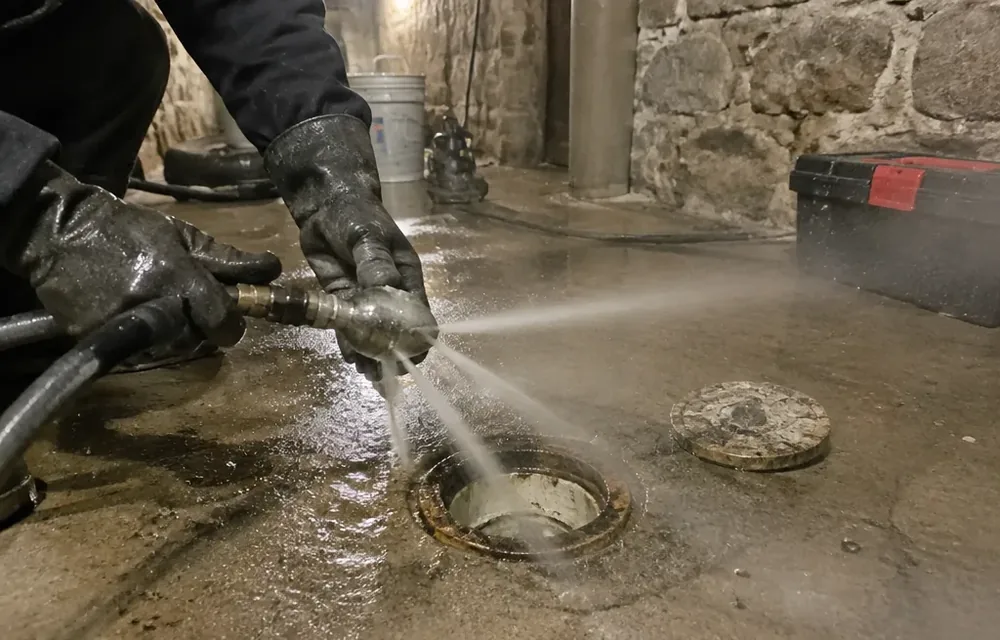
Hydro Jetting
A cable bores a hole through the clog.
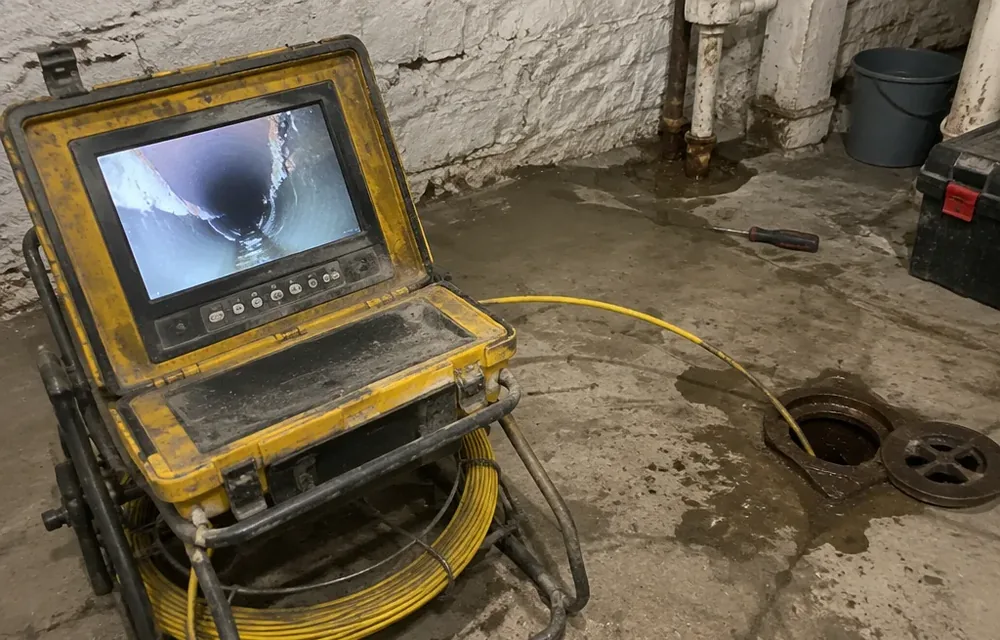
Sewer Camera Inspection
Every expensive sewer decision in Philadelphia — jet, repair, line, replace — depends on one thing: what the pipe actually looks like inside.
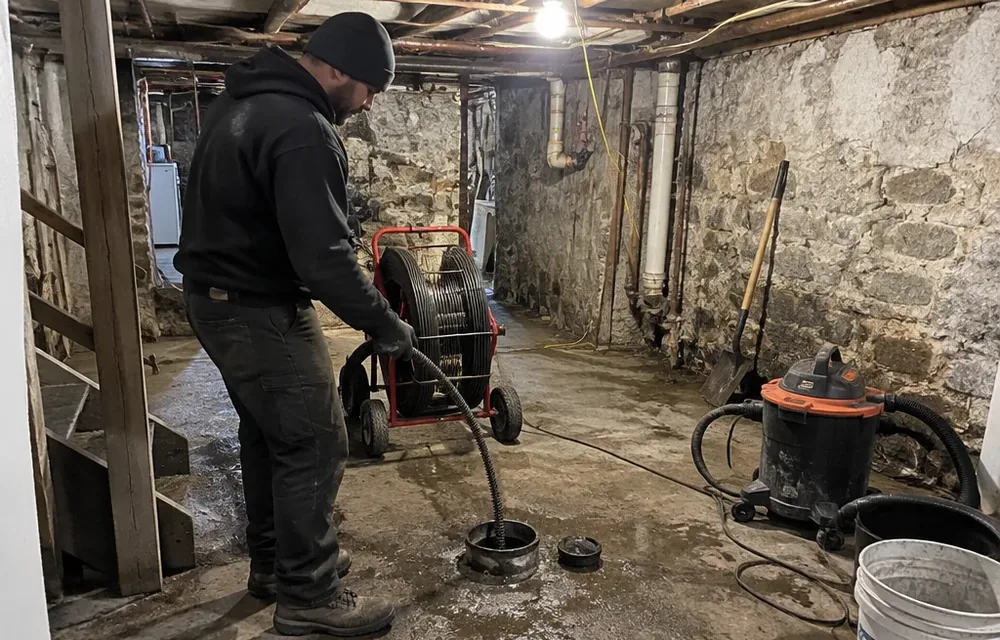
Main Sewer Line Cleaning
The lateral is the most expensive drain you own — a 60-to-100-foot clay run from your rowhouse to the street main, shared with stormwater, hunted by street-tree roots.
Free tools that help with this exact problem
More guides
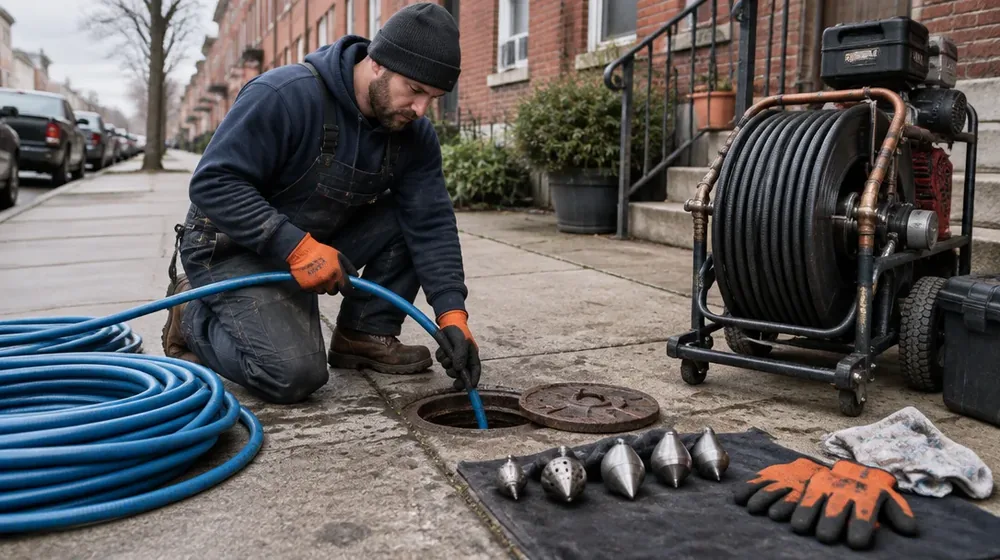
Hydro Jetting vs Snaking: What Philly Homes Need
A cable bores a hole through the blockage so water moves again. A jetter scours the whole pipe wall back toward bare m…

Hydro Jetting Cost in Philadelphia: 2026 Guide
Most Philadelphia homeowners budget around national jetting ranges, then discover access, lateral length, and root cut…
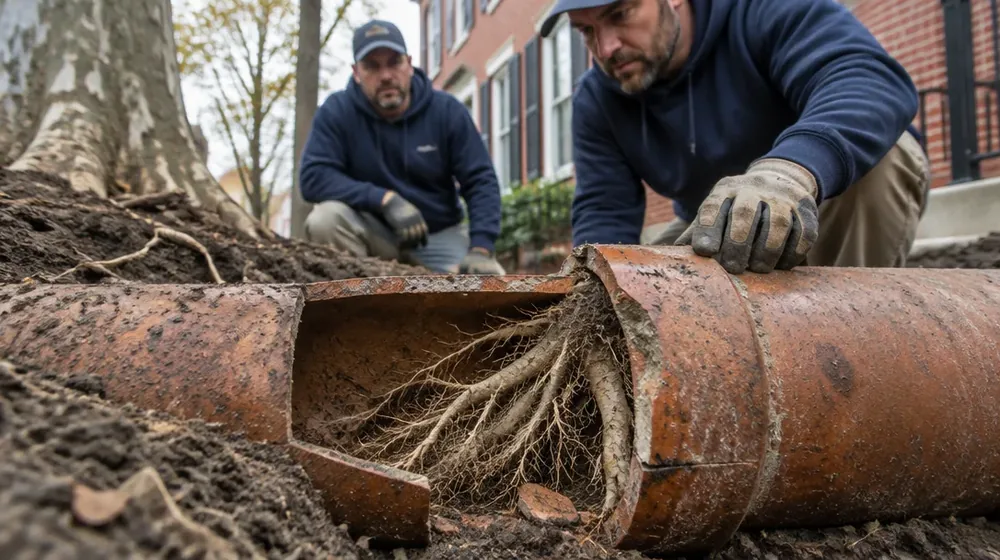
Tree Roots in Philadelphia Sewer Lines Guide
Roots do not break into sound pipe. They find the clay joint that is already leaking, thicken in the flow, and become …
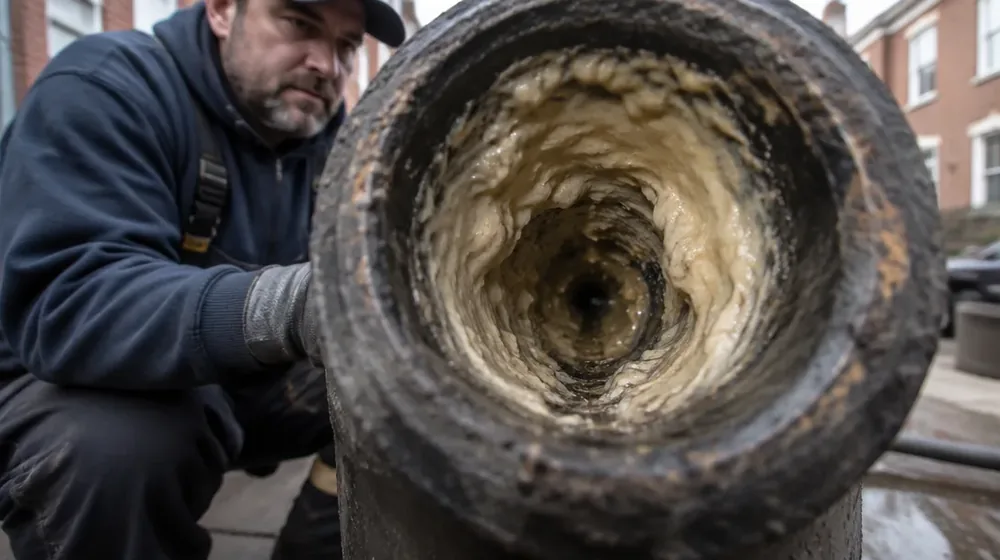
Grease Lines: Philly Rowhouses & Restaurants
Grease goes down warm and liquid, meets cold iron, and becomes a wall coating rather than a plug. That is why the same…