How Hydro Jetting Works: PSI, GPM, Nozzles, and Philly Rowhouse Realities
A hydro jetter is a pump, a hose, and a nozzle working as one system. The pump builds pressure, the hose delivers it into the line, and the nozzle converts it into cutting and scouring jets. Rear-facing jets pull the hose forward while washing the wall, and forward jets break up the blockage ahead. Pressure gets the attention, but flow rate, nozzle choice, and pipe condition decide the result.
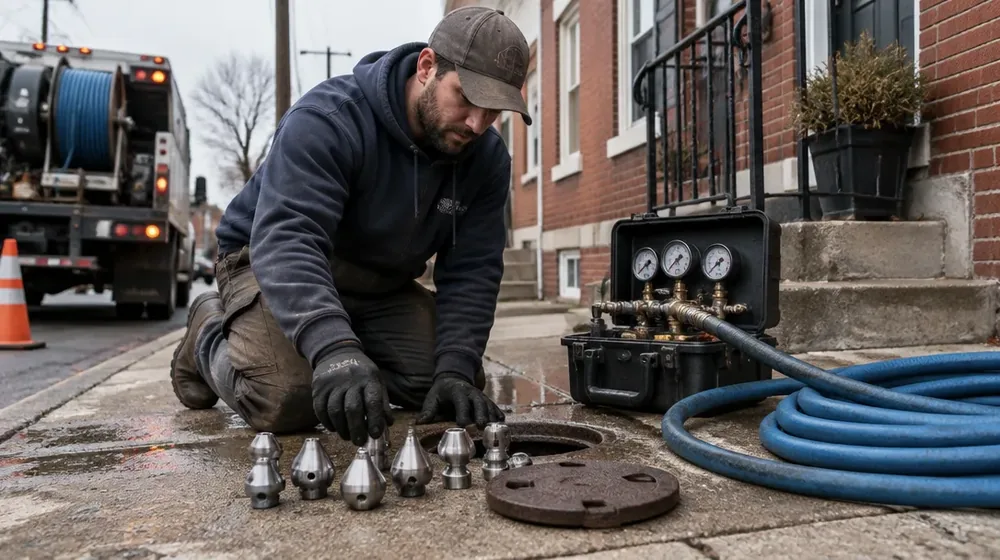
The mechanism: pump, hose, nozzle, and rear-jet propulsion
A jetter pump pressurizes ordinary water and sends it through a flexible high-pressure hose that is fed into the drain from a cleanout. At the end of the hose sits a small stainless nozzle drilled with precisely angled ports. Most ports face backward, and their discharge does two jobs at once: the thrust pulls the hose forward through the line under its own power, and the fan of water scours the full circumference of the pipe wall as it travels. One or more forward ports break up the obstruction ahead so the scouring jets can pass and then clean behind them.
Propulsion matters because it makes the cleaning self-advancing and self-centering. The operator does not shove the hose the way a cable is driven; the operator meters its advance and retrieves it slowly so the jets dwell on each foot of wall. On the return pass the line is flushed toward the cleanout, and the dislodged grease, sludge, and grit exit the pipe instead of resettling downstream. That controlled dwell time is the difference between a line that was merely opened and a line that was actually cleaned.
The cleaning action is erosion plus transport, and both halves have to work. Erosion is the jets peeling grease, biofilm, soap, and loose scale off the wall back toward bare material. Transport is the flow volume carrying that debris out to the cleanout and on to the main. A machine with high pressure but weak flow can cut without clearing, leaving debris to re-lodge at the next joint or belly. Competent operators size both halves to the line, which is why specifications always pair PSI with GPM rather than quoting pressure alone.
Hose diameter scales with the pipe being cleaned. Small flexible hoses serve kitchen and bathroom branches around two inches, mid-size hoses serve three- and four-inch house laterals, and large hoses serve six-inch and larger mains. Running an oversized hose in a small branch risks getting stuck at bends, while running an undersized hose in a main leaves the wall untouched at the crown. Matching hose, nozzle, pressure, and flow to the measured diameter is the quiet technical core of the service.
PSI and GPM ranges by pipe material and diameter
| Pipe material | Typical diameter | Working PSI band | Working GPM band |
|---|---|---|---|
| PVC and ABS plastic | 2 to 6 inch | 1,500 to 2,500 PSI | 4 to 12 GPM |
| Sound cast iron | 3 to 6 inch | 2,000 to 3,500 PSI | 8 to 18 GPM |
| Vitrified clay tile | 4 to 6 inch | 1,500 to 3,000 PSI | 8 to 18 GPM |
| Concrete and transite | 6 inch and up | 2,000 to 3,500 PSI | 12 to 25 GPM |
| Heavily scaled iron | 3 to 6 inch | 2,500 to 4,000 PSI | 10 to 18 GPM |
| Orangeburg fiber pipe | 4 inch common | Not jetted; cable or replace | Not applicable |
Treat the table as orientation rather than a specification sheet, because the right setting depends on wall condition as much as material. Sound PVC tolerates moderate pressure easily since the wall is smooth and jointed with solvent welds, so the work there is mostly about flow volume flushing grease out rather than pressure cutting anything hard. Sound cast iron accepts higher pressure that strips grease and loose scale, while clay laterals with shifted joints want restrained pressure so the jets do not wash bedding soil out through open joints and create voids above the pipe.
Heavily scaled iron is the one case where the top of the band is genuinely needed, and it is also the case where judgment matters most. Tuberculation, the knobby rust growth inside aging iron, demands aggressive pressure to remove, yet the same corrosion that built the scale has thinned the wall beneath it. An operator who runs maximum pressure on paper-thin iron can perforate the stack. The camera pass before the work is what tells the operator where the band to use sits for each segment of the run.
Flow rate deserves equal billing because Philadelphia blockages are rarely pure water problems. Grease from rowhouse kitchens, sludge from combined laterals, and grit washed in from areaway drains all need volume to stay suspended until they reach the cleanout. A four-inch lateral typically wants high single-digit to mid-teen GPM so the return flow keeps debris moving. Low-flow machines leave a clean wall with a debris pile at the next low spot, which reads as a failed cleaning when the line slows again within weeks.
Nozzle types and what each one actually does
The penetrator nozzle opens fully blocked lines. It concentrates most of its flow into aggressive forward jets that drill through grease plugs, packed paper, and sludge dams so that a cleaning head can follow. Operators run it in first on lines with standing water and no passage, then switch heads once flow is established. Homeowners sometimes watch this pass and assume the job is done, but penetration only bores the pilot hole; the scouring pass that follows is the actual cleaning.
Rotary and warthog-style spinning nozzles do the wall work. Internal vanes spin the jets so they sweep the full circumference, peeling grease sheets off cast iron and flushing biofilm out of PVC with a uniformity no fixed-port head matches. These are the heads that restore near-original diameter on grease-bound kitchen laterals from South Philadelphia to the Northeast, and they are the reason post-clean camera footage on a properly jetted grease line looks dramatically different from the before footage. Spin rate and standoff distance are tuned to the diameter so the jets strike the wall at full energy.
Root-cutting and chain-flail heads handle intrusions that water alone cannot shear. Fine root hair yields to water, but established root masses from London plane, silver maple, and honey locust street trees need mechanical cutting first, with the jets flushing the cuttings out behind the cutter. Descaling chains, which are lengths of chain spun by the water that flail against iron scale, serve the same staged role inside tuberculated cast iron stacks. In both cases the sequence is mechanical action first and hydraulic flushing second, never pressure alone against a hard obstruction.
Specialty heads cover the edge cases Philadelphia serves up regularly. Cornering and flexible heads navigate the tight bends of old rowhouse plumbing where rigid heads hang up. Fan and de-icing heads wash sandy grit from areaway and French-drain tie-ins without cutting. Larger warthog heads with controlled rotation serve six-inch mains and commercial lines. A truck that carries one general head and nothing else is equipped for one kind of line, and Philadelphia laterals are never one kind of line.
Why the camera comes before the pressure
Pressurized water finds every weakness at once, which is its virtue on sound pipe and its hazard on failing pipe. A 1915 clay lateral with tight joints jets beautifully, while the identical-looking lateral next door with separated joints, an Orangeburg patch, or paper-thin scaled iron converts the same pressure into a collapse, a washed-out void, or a flooded excavation. Nothing visible from the surface distinguishes those two lines. The camera is the only instrument that prices the risk before water is committed, and on pre-1970 Philadelphia laterals it is standard practice rather than an upsell.
Competent footage documents material boundaries, diameter changes, footage marks to every defect, depths at the curb and at repair candidates, and flow behavior under load. Standing water mid-line with debris drifting back after a flush proves a belly that swallows cleaning money on a schedule. Paper snagging rhythmically at a lip proves an offset joint that roots will re-enter within a season. Grease sheets flexing under flow prove lamination thick enough to justify the full scouring pass. Each observation aims the pressure, the flow, and the nozzle at the actual target.
The camera also protects the homeowner commercially. Footage with marks lets any future bidder price cutting, jetting, spot repair, or replacement without re-exploring, which compresses every later visit from investigation to execution. The post-clean verification pass proves the wall is actually bare and the bore actually round, and it becomes the baseline the next service interval is measured against. Jetting without that record asks the homeowner to pay for a result nobody documented.
There are lines the camera disqualifies from jetting entirely. Orangeburg fiber pipe deforms under pressure and shreds under aggressive work. Badly tuberculated iron can perforate once scale, which was structurally load-bearing in effect, is stripped away. A separated clay joint with a void above it can collapse when the supporting sludge washes out. The Pennsylvania Uniform Construction Code and the Philadelphia Plumbing Code presume work appropriate to the pipe at hand, and declining to pressurize a failing line is diligence rather than timidity.
Philadelphia rowhouse angles: access, cleanouts, and shared runs
Access decides whether jetting is practical before pressure is ever discussed. The work should launch from a proper exterior two-way cleanout or a basement cleanout with room to work, because running a jetter through a pulled toilet or a roof vent is slower, messier, and harder to control. Many Philadelphia rowhouses built before the Second World War lack a modern cleanout, and installing one is frequently the highest-value money in the whole job: it converts every future service from an excavation-class visit into a routine one.
Party-wall construction adds a wrinkle found across the rowhouse belt from Fishtown and Kensington to Point Breeze and West Philadelphia. Kitchen runs often travel laterally through shared walls before dropping to the lateral, which means long horizontal grease-coated footage in small-diameter pipe with multiple bends. Those runs respond well to jetting with a properly sized flexible hose and a spinning head, but they punish oversized equipment that hangs up at the second bend. Measuring the run on camera first keeps the equipment choice honest.
The combined sewer context raises the stakes of a thorough cleaning. Much of Philadelphia operates on combined sewers where stormwater and sanitary flow share the same mains, a legacy that federal combined-sewer-overflow background documents describe as a nationwide challenge during heavy rain. When a summer cloudburst surcharges the main, a partially coated lateral that drained fine in dry weather becomes the first on the block to back up. Homes with wet-weather backup history should weight the decision toward the full scouring pass, because the next stress test arrives with the next storm cell off the Schuylkill and Delaware corridors.
Street trees complete the Philadelphia picture. London plane, silver maple, and honey locust roots exploit every shifted clay joint from the curb lawn to the foundation, and the standard competent sequence on a root-active lateral is to cut the mass to full diameter, jet the hair and trapped paper out so it does not re-lodge downstream, and camera the cleared line to log entry footage and depth. Either tool alone leaves half the job undone, and the logged footage is what prices the eventual spot repair or lining that closes the joint for good.
What a proper jetting visit looks like, step by step
Confirm branch versus main
One slow sink is a branch job; multiple fixtures, gurgling across rooms, or sewage at the lowest drain is a main-lateral job. The distinction decides which hose and head come off the truck.
Work from a real cleanout
Exterior two-way or basement cleanout with the cap opened carefully and from the side. Missing cleanouts often mean installing one before jetting rather than improvising through a fixture.
Camera first on older or repeat lines
Material, diameter, footage to each defect, and depth at the curb. On pre-1970 Philadelphia laterals this step decides whether jetting is safe at all.
Penetrate, then scour, then flush
Penetrator head to open fully blocked footage, spinning head to scour the wall on a slow retrieval pass, then a flushing pass that carries debris out to the cleanout.
Verify with the camera again
Post-clean footage proving bare wall, round bore, and remaining wall thickness, with footage marks logged for the record the homeowner keeps.
Prove it under load
Run a full tub or laundry discharge while watching the line. A lateral that passes a hose but fails under a real slug of water is not fixed.
Measure any visit against that sequence and most bad outcomes become visible early. A visit that skips straight to pressure with no camera on a 1910 lateral, or that declares victory without running water under load, has left undone the two steps that protect the homeowner. The sequence costs a little more time on site and saves far more across the life of the line.
Winter timing deserves one practical note. Jetting in a January cold snap leaves a freshly wetted line that must drain fully before a hard freeze, and exterior cleanout caps left loose after service invite frost into the riser. Competent cold-weather work ends with the line proved empty, caps properly seated, and unheated basement laterals checked for exposure. Schedule the thorough cleaning before the deep-winter and heavy-spring-rain windows so the line faces both with full diameter available.
What jetting cannot fix, and what that means for your decision
A belly defeats jetting as a cure. The jets wash the sediment out of the sagged section, yet the low spot remains and solids settle there again within months. Camera footage showing water sitting mid-line with debris drifting back after flushing is the signature, common where old trench backfill settled beneath rowhouses or where delivery traffic compacted soil over the lateral. Money spent jetting a belly on a quarterly schedule is better banked toward regrading or replacing that segment.
Open joints and cracks similarly limit what cleaning buys. Jetting shears fine root hair and flushes the sludge that roots trap, which extends the interval between services, but it does not close the joint that admitted the roots. Collapsed sections, separated joints with voids above, and Orangeburg that has gone oval are repair targets, not cleaning targets. The honest recommendation pairs the cleaning with a repair figure so maintenance can be compared against correction on paper.
Wall loss is the third boundary. Jetting strips loose scale beautifully yet cannot restore thickness that tuberculation has already consumed, and aggressive pressure on paper-thin iron risks perforation. When the post-clean camera shows pitting, pinholes, or daylight through the wall, the cleaning has done its diagnostic job even though it cannot do a structural one. Replacement or lining, not another scouring, is the next conversation.
None of those limits argue against jetting; they argue for sequencing it correctly. Camera first so the pipe is known, the right pressure and head so the cleaning matches the material, verification after so the result is documented, and a repair plan where footage shows the pipe itself has failed. Homeowners who follow that order spend the least over time and replace pipe only when evidence shows the pipe is done. Anyone advising pressure before pictures on a century-old Philadelphia lateral is asking the homeowner to underwrite a risk the camera would have priced in minutes.
Frequently asked questions
What PSI is used for residential hydro jetting?
Most house laterals clean in the 1,500 to 3,500 PSI band, with sound PVC at the lower end and scaled cast iron at the upper end. The setting follows the material and wall condition the camera showed, not a single default. Fragile or unknown pipe gets scoped first, and Orangeburg fiber pipe is not jetted at all.
Does GPM matter as much as PSI?
It matters as much or more for the final result. Pressure cuts and scours while flow volume carries the debris out to the cleanout. A high-pressure, low-flow machine can scour the wall and still leave debris piled at the next low spot. Four-inch laterals typically want high single-digit to mid-teen GPM for proper transport.
Which nozzle is used for grease versus roots?
Spinning rotary heads scour grease sheets off the wall around the full circumference. Root masses need mechanical cutting heads first, with the jets flushing cuttings out behind the cutter. Fully blocked lines get a penetrator head to open passage before the cleaning head follows. One general head cannot do all three jobs well.
Can hydro jetting damage old Philadelphia pipes?
It can damage pipe that is already failing, which is why older laterals get a camera first. Sound iron, clay, and PVC handle appropriate pressure; Orangeburg, paper-thin scaled iron, and separated joints do not. A proper operator matches pressure, flow, and nozzle to the footage rather than running one setting for every house.
Should the line be camera inspected after jetting too?
Yes. The post-clean pass proves the wall is bare, the bore is round, and the remaining wall is sound, and it logs footage marks for every defect that remains. That file is the proof of value for the money just spent and the baseline the next service interval is measured against.
Services mentioned in this guide
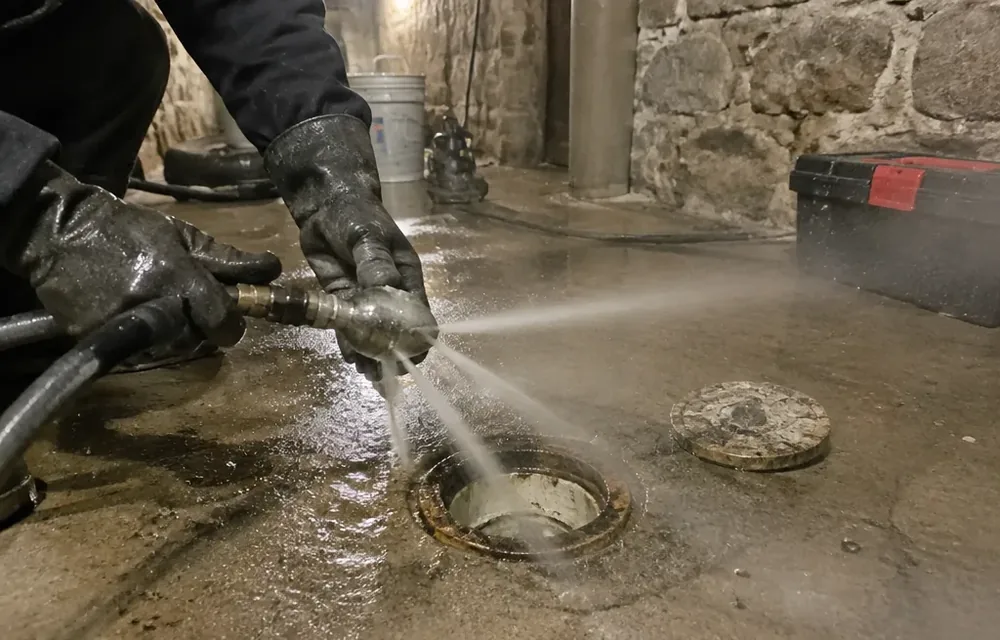
Hydro Jetting
A cable bores a hole through the clog.
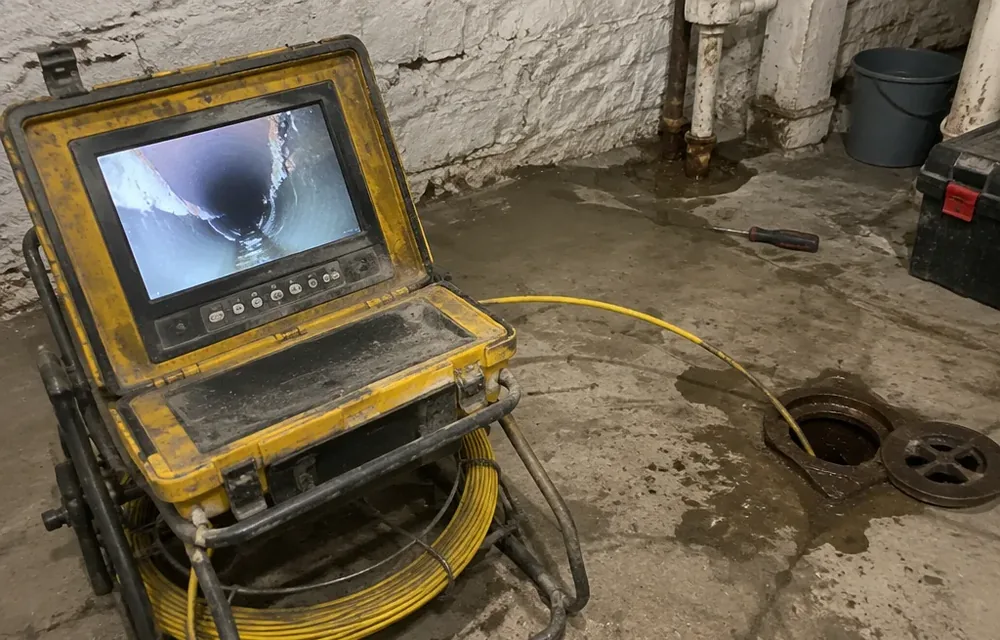
Sewer Camera Inspection
Every expensive sewer decision in Philadelphia — jet, repair, line, replace — depends on one thing: what the pipe actually looks like inside.
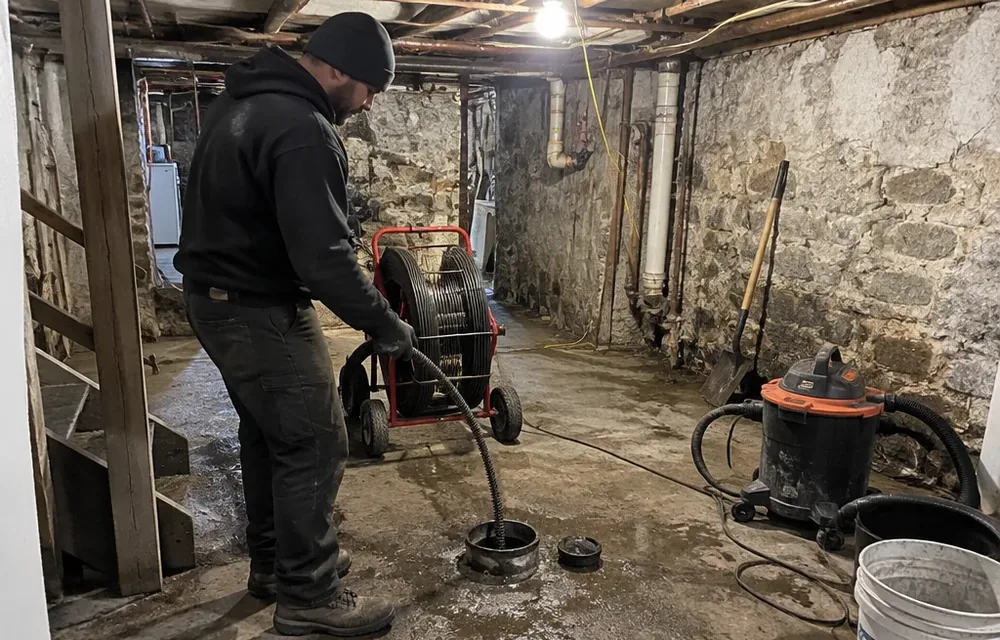
Main Sewer Line Cleaning
The lateral is the most expensive drain you own — a 60-to-100-foot clay run from your rowhouse to the street main, shared with stormwater, hunted by street-tree roots.
Free tools that help with this exact problem
More guides
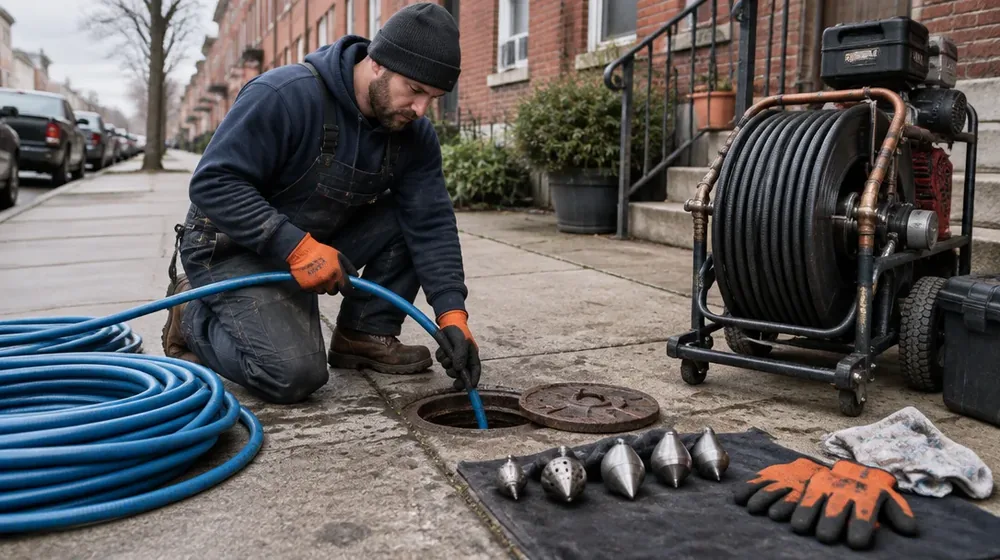
Hydro Jetting vs Snaking: What Philly Homes Need
A cable bores a hole through the blockage so water moves again. A jetter scours the whole pipe wall back toward bare m…

Hydro Jetting Cost in Philadelphia: 2026 Guide
Most Philadelphia homeowners budget around national jetting ranges, then discover access, lateral length, and root cut…
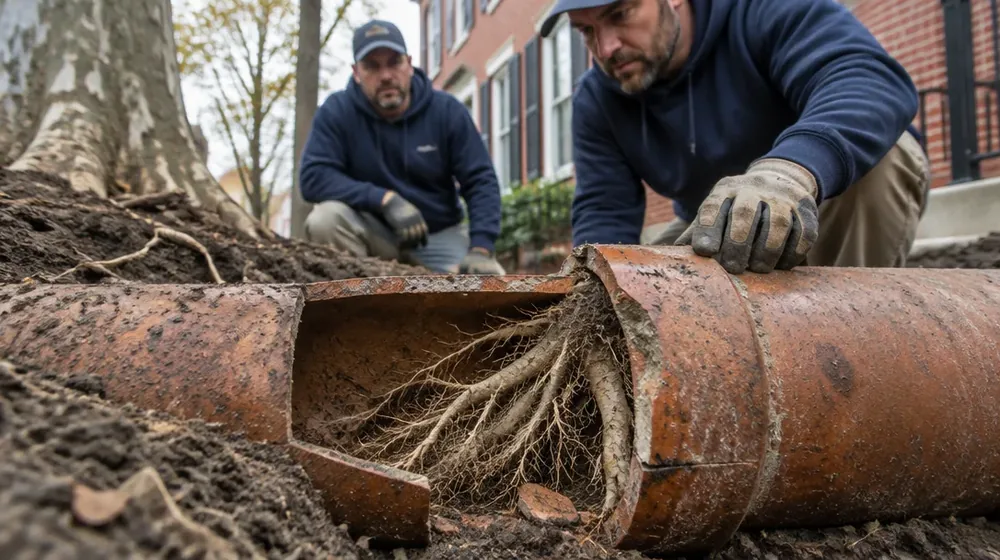
Tree Roots in Philadelphia Sewer Lines Guide
Roots do not break into sound pipe. They find the clay joint that is already leaking, thicken in the flow, and become …
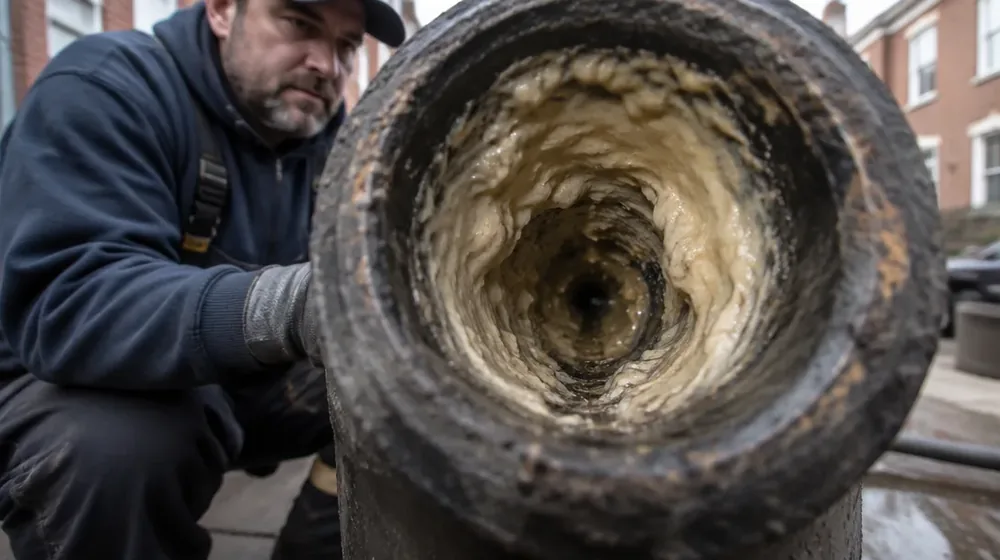
Grease Lines: Philly Rowhouses & Restaurants
Grease goes down warm and liquid, meets cold iron, and becomes a wall coating rather than a plug. That is why the same…