How much does a sewer camera inspection cost in Philadelphia?
Most Philadelphia homeowners encounter sewer camera inspections priced at roughly 150 to 400 dollars for a straightforward residential line with accessible cleanout, footage review, and a basic written summary. Missing cleanouts, long sidewalk-corridor laterals, and locating or mapping add-ons push higher, while inspections bundled with a same-visit clearing sometimes carry a reduced standalone figure.
- Direct answer
- 2 min read
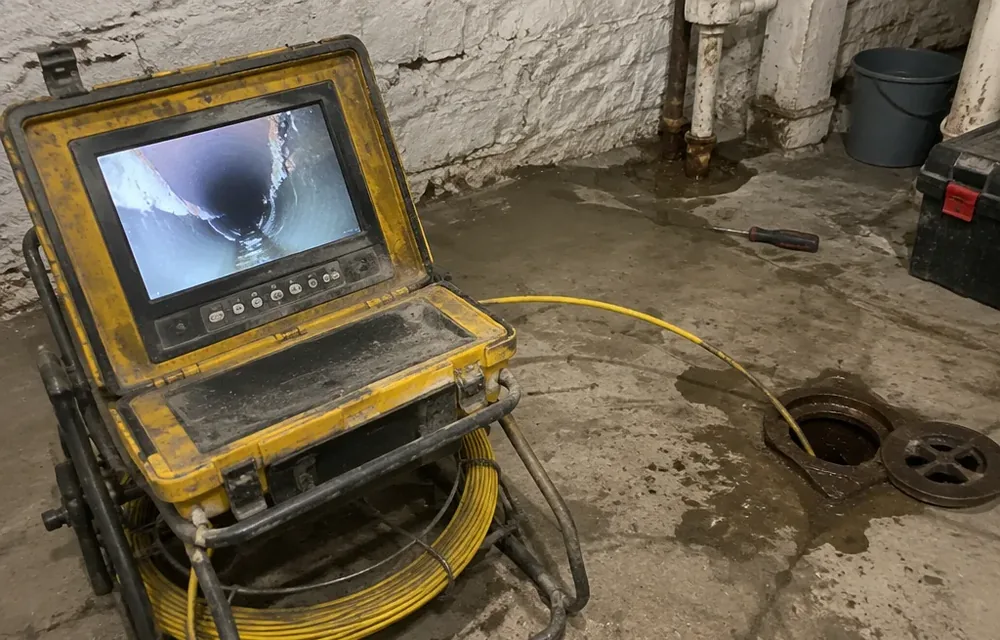
Access is the largest cost driver and the most Philadelphia-specific one. A Northeast Philadelphia ranch or any house with an exterior two-way cleanout lets the technician drop the camera in within minutes. A pre-war rowhouse in South Philadelphia, Kensington, or Point Breeze with no cleanout needs a pulled toilet or an opened trap for entry, adding labor, fixture handling, and restoration to the same inspection. Lateral length matters next: rowhouses whose lines run beneath the front sidewalk or areaway to a combined main need more push rod, more time, and more interpretation than a short straight run. Then comes the locate question. A basic inspection records video; a full diagnostic adds a sonde transmitter in the camera head tracked from above ground with paint marks and depth readings at each defect, which is what repair bidders need and what costs extra when it is not bundled. Footage length, the number of problem spots documented, and whether you receive a narrated video file versus a glance at a monitor round out the differences between two figures that look similar on paper.
Philadelphia contractors commonly credit part or all of the inspection fee toward repair or replacement work booked with the same company, and that practice is worth asking about before scheduling. The logic is straightforward: the camera file de-risks the repair bid by showing exact defect positions and depths, so the contractor passes some of that saved uncertainty back to the homeowner who provided it. Get the credit terms in writing with the inspection booking, including the time window and which services qualify, because a verbal promise made at the door is hard to redeem months later. Even without a credit, an independent inspection file pays for itself by letting multiple repair bidders price the same documented defects instead of each padding for unknowns. Homeowners who plan to collect competing bids should say so upfront and request the full file with marks and depths rather than a summary opinion.
A usable inspection file contains more than a video clip. Expect continuous footage with an on-screen distance counter, a written log tying each finding to its footage mark and depth, still images of each defect, pipe material and diameter notes, the direction of travel from house toward main or reverse, and locate marks with depths for every repair candidate. For Philadelphia laterals, the report should call out clay joint offsets, root entry points, cast iron scale and channeling, bellies holding water, transitions between materials, and any Orangeburg or collapse with exact positions. Keep the file permanently: it makes the next clearing visit faster, it anchors repair bids to evidence, and it documents pre-existing conditions before any excavation. An inspection that ends with kept video, logged marks, and plain-language findings is a finished diagnostic; one that ends with a verbal all-clear is an opinion you cannot reuse.
Want the full picture?
What Is Sewer Camera Inspection? Philly Guide — Read the full guide: what a sewer camera inspection shows.
Follow-up questions
Should I get a camera inspection before hydro jetting?
Yes. The camera screens out Orangeburg, collapse, and severe bellies that pressure would worsen, and it lets the crew match nozzle and pressure to the actual pipe. Jetting blind risks turning a cleanable line into a repair.
Do I own the inspection video?
You should. Ask before booking that the video file, still images, and the written log with footage marks and depths come to you as part of the visit, so future contractors and competing bidders all work from the same evidence.