How Often Should You Hydro Jet? Philadelphia Maintenance Schedules
Most Philadelphia homes never need scheduled jetting, while grease-heavy kitchens, root-active clay laterals, and commercial lines need it on a calendar. The right interval follows what coats the pipe, how fast it rebuilds, and what the camera shows, not a single rule for every house.
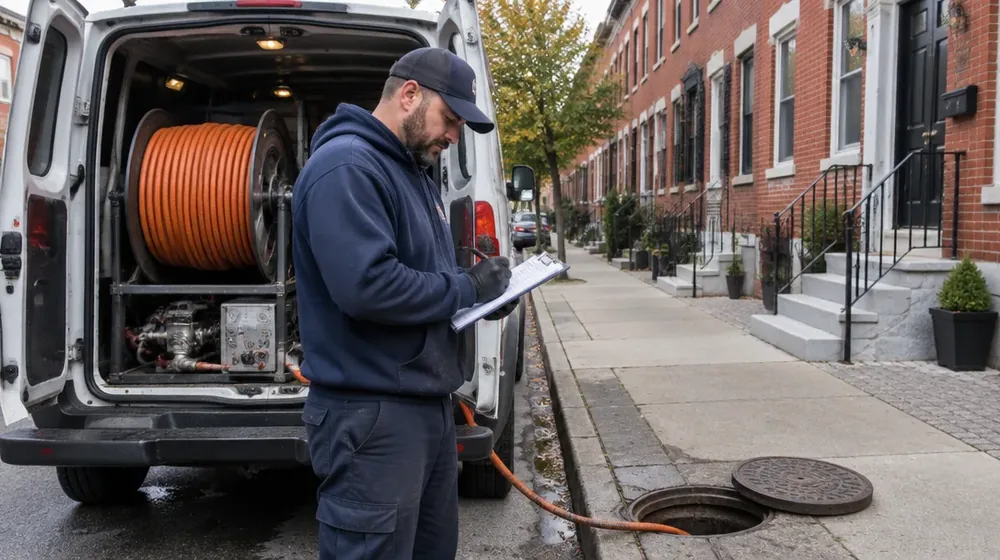
The short answer by line type
| Line type | Typical jetting interval | What sets the pace |
|---|---|---|
| Average home, no history | Only as needed, not scheduled | Sound pipe with no coating or roots |
| Rowhouse kitchen grease lateral | Twelve to twenty-four months | Cooking fat load plus cast iron roughness |
| Clay lateral with root entry | Twelve to eighteen months | Tree species, joint condition, paper load |
| Restaurant or food service | Three to twelve months | Covers, volume, interceptor service |
| Basement floor drain, combined area | Twelve to twenty-four months | Storm grit plus sludge settling |
| Post-lining maintained line | Twenty-four to forty-eight months | Smooth liner with joints sealed |
Read the table as starting points that the camera then adjusts, not as appointments every house must keep. A post-war Northeast Philadelphia home with a replaced plastic lateral, good cleanout access, and no backup history may go years without any pressurized cleaning, needing only fixture care and an inspection if symptoms ever appear. A South Philadelphia rowhouse kitchen lateral in century-old cast iron with heavy cooking output can recoat within a year of a full scouring, even after exemplary work, because fat solidifies on cool iron every week. The interval belongs to the pipe and its load, not to the equipment.
Two variables move every row of the table more than any other. The first is what the post-clean camera showed: bare sound wall holds its interval, while an open root joint, a belly holding water, or paper-thin scale shortens it by the nature of the defect. The second is habit load after the cleaning: fat to the trash versus fat to the sink, standard paper versus wipes, spaced laundry versus simultaneous slugs during storm peaks. A twelve-month grease interval becomes twenty-four with disciplined sink habits, while a twenty-four-month root interval becomes twelve when wipes feed the same joint. Schedule from footage plus habits, and re-scope whenever symptoms shift earlier than expected.
Philadelphia context compresses intervals on predictable blocks. Dense rowhouse belts in Fishtown, Kensington, Point Breeze, South Philadelphia, and West Philadelphia combine old iron, clay joints, mature London plane and maple street trees, and combined sewers that settle grit during dry spells. Any lateral carrying two or more of those exposures sits on a shorter clock than a suburban plastic lateral of the same length. Conversely, a fully replaced line with a smooth interior, sealed joints, and a modern two-way cleanout holds its results longest, because there is little roughness for debris to grip and full access for quick verification.
Kitchen grease lines: the twelve-to-twenty-four-month clock
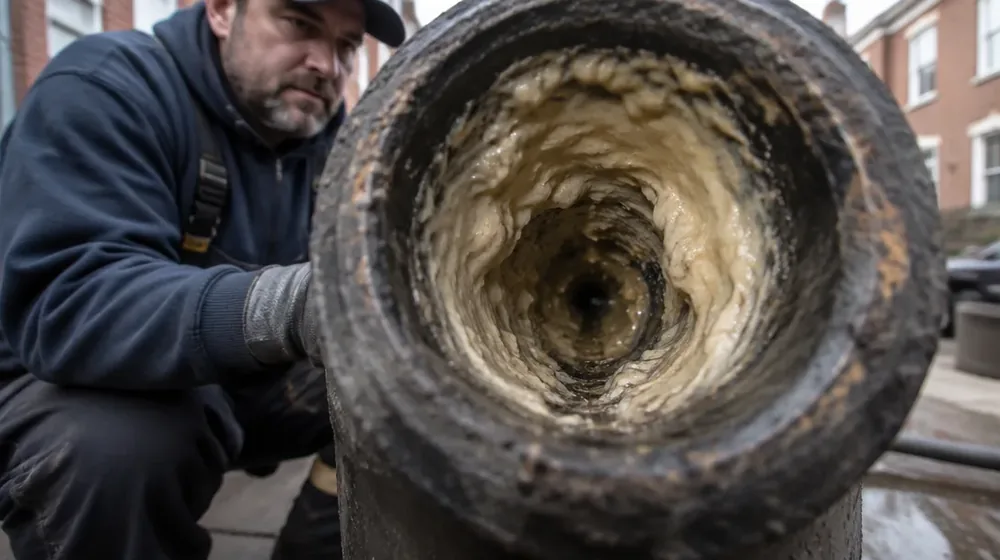
Rowhouse kitchen laterals set the most common residential schedule because grease rebuilds steadily and invisibly. Each hot discharge of fat, oil, and cooking residue cools as it travels through cast iron, plating the wall in thin laminated sheets that thicken month by month. Dishwashers that discharge cooler water accelerate the plating, and garbage disposals add suspended solids that embed in the fat matrix. After a full scouring pass restores near-original diameter, the coating restarts the same week, and the pace of household cooking decides whether the line needs attention in one year or two. Heavy daily cooking with frequent frying sits at the short end; light cooking with disciplined scraping sits at the long end.
Camera footage calibrates the grease clock better than any calendar guess. A post-clean survey that shows bare wall with visible joints and a round bore sets a true zero, and a follow-up check at twelve months shows how many months of coating one year of habits deposits. If twelve-month footage shows only a thin film with full bore preserved, the interval extends toward twenty-four months with the same habits. If it shows laminated sheets narrowing the bore by a third, the twelve-month mark becomes the maintenance point, and the conversation turns to sink discipline that stretches it. Without that measured pair of surveys, the household is scheduling from memory rather than from buildup rate.
Behavior change is the lever that lengthens the grease interval without spending more on cleaning. Scrape plates to the trash, pour fat into a jar for disposal with household waste, wipe pans before washing, and run hot water with dish soap after greasy loads so fat stays suspended past the lateral. Treat the disposal as a convenience for small scraps rather than as a food waste system on lines with chronic grease. Restaurant corridors from Center City to East Passyunk demonstrate the same principle at commercial scale: lines with disciplined trapping and regular service hold diameter, while lines without it choke on schedule. Homes follow the same physics at lower volume.
Seasonal timing sharpens the grease schedule in Philadelphia. A thorough scouring in late spring carries the line through summer storm season with maximum diameter, which matters on combined laterals where a narrowed kitchen run meets a surcharged main during cloudbursts. A check in autumn confirms the line enters the holiday cooking peak and January freeze with full bore available, since exterior caps left loose after service invite frost into the riser and freshly wetted lines must drain fully before hard cold. Households that align grease maintenance with storm and freeze windows get more protection from the same visit than those scheduling by symptom alone.
Root-active clay laterals: the twelve-to-eighteen-month clock
Clay tile laterals with open joints near street trees run on a biological clock that no cleaning stops, because roots regrow toward the moisture and nutrients inside the line every growing season. London plane, silver maple, and honey locust roots exploit shifted joints from the curb lawn to the foundation, entering as fine hair that traps paper and thickening into mats that narrow the bore. Cutting plus flushing restores full diameter, yet the joint remains open, and the next season growth begins again. The footage log of entry points by distance and depth predicts the pace: one hairline entry under a small tree extends toward eighteen months, while multiple entries under mature planes compress toward twelve.
What the household flushes decides where inside that band the line actually lands. Standard toilet paper breaks down and passes root hair with less snagging, while wipes labeled flushable, paper towels, and hygiene products catch on fibers and rebuild the plug that cutting just removed. Laundry lint and utility sink grit add mass that settles where roots slow the flow. Homes that restrict the line to human waste and standard paper, space large discharges, and avoid simultaneous slugs during wet periods consistently reach the longer end of the band. Homes that treat the toilet as a waste bin return to the short end regardless of how thorough the last flush was.
The long-term exit from the root clock is joint closure, not perpetual cutting. A logged entry at a defined footage and depth can be sealed, spot-repaired, or lined, which removes the opening that admits roots while preserving the sound segments around it. Until that work is scheduled, calendar maintenance protects the line: cut to full diameter, flush hair and pulp out so it does not re-lodge downstream, verify on camera with marks logged, and set the next visit before symptoms return rather than after. Philadelphia blocks where rowhouses share lateral age, clay material, and curb-lawn trees often show the same entries repeating house to house, so one survey with depths informs both the maintenance rhythm and the eventual repair scope.
Growth seasonality suggests scheduling cutting and flushing in late spring after the first flush of root growth, with verification before summer storm peaks when combined mains surcharge and narrowed laterals back up first. A second check in autumn suits lines with aggressive trees that push late growth, and it stages any planned joint work for the drier window when excavation and lining proceed most cleanly. Waiting until a total blockage forces an emergency visit surrenders timing control and often trades a planned daytime service for an after-hours response with water already at the floor drain. The calendar exists to keep root work routine instead of urgent.
Commercial lines and post-lining care
Food-service lines run on the shortest clock in the city because loading never pauses. Fryers, woks, dish pits, and floor drains feed fat and solids at a pace no home kitchen matches, and interceptor service, pre-rinse habits, and overnight cooling all influence how fast the downstream pipe coats. A small cafe with disciplined trapping and modest volume may hold a six- to twelve-month water-maintenance rhythm, while a high-volume fryer operation on an old cast iron run needs quarterly attention to keep full bore. Health and operations risk, not just drainage speed, drives the schedule: a dining-room backup during service costs more than any planned maintenance ever will.
Non-food commercial lines follow their own loads. Laundromats lay down lint and soap curds that mat in long horizontal runs. Salons load hair and color chemicals that bind with soap into dense plugs. Light industrial and garage floor drains collect grit and petroleum film that settle wherever flow slows. Each setting earns its interval from post-clean footage plus load observation rather than from a generic commercial rule. What unites them is documentation: video with footage marks, defect depths, and a written maintenance note that lets managers compare service providers on defined scope instead of on vague promises about cleanliness.
Post-lining lines earn the longest interval because the host pipe changes character. A cured-in-place liner or a full replacement in smooth plastic presents a continuous, jointless interior with little roughness for grease or paper to grip, so the same household habits deposit far less per month than on tuberculated iron or jointed clay. Many lined laterals go two to four years between water services, needing only habit discipline and periodic camera verification that the liner remains sound and the transitions at each end stay smooth. The first post-lining survey is the baseline that proves installation quality; later surveys at lengthening intervals confirm the asset is holding rather than recoating.
Descaled cast iron stacks in three-story rowhouses sit between commercial and lined intervals. Chain-flail descaling plus flushing removes knobby tuberculation and restores bore, but the iron wall beneath remains aged and somewhat rough, so biofilm re-establishes faster than on new plastic. An eighteen- to thirty-month rhythm with camera checks suits many such stacks, tightened when upper-floor fixtures show early slowing or loosened when footage shows smooth sustained bore. Pair the schedule with vent and flow checks, since stacks carry air as well as water and restricted venting mimics drainage failure. Measured footage keeps the conversation on wall condition rather than on guesswork about age alone.
Signs you are overdue, and the rowhouse schedule that works
Track the early signals
Sinks draining slower each month, gurgling across rooms, odors at the lowest drain, and paper snagging are coating warnings. Log dates so intervals are measured, not remembered.
Confirm with a load test
Run a full tub or laundry discharge and watch the lowest drain. Hesitation under load after months of normal flow means the bore has narrowed since the last service.
Scope before symptoms force it
A camera check at the planned interval shows film versus lamination, hair versus mass, and belly versus coating, which aims the cleaning instead of repeating it blindly.
Clean from a real cleanout
Exterior two-way or basement fitting with containment ready, penetrator then spinning heads as the footage dictates, and flushing that carries debris out rather than downstream.
Verify and log the reset
Post-clean footage proving bare wall and round bore, marks logged by footage and depth, plus a written note setting the next date from buildup rate and habits.
Adjust habits to stretch it
Fat to the trash, standard paper only, spaced laundry, and seated caps before freeze. Each habit adds months to the same pipe.
Overdue lines announce themselves in a predictable order that Philadelphia homeowners can learn to read. First comes slower drainage at the heaviest-use fixture, usually the kitchen sink on grease lines or the lowest toilet on root-active mains. Then comes cross-fixture talk: the toilet burps when the washer drains, or the tub hesitates when the sink runs, proving the restriction sits downstream of both. Then come odors at floor drains as biofilm thickens and water seals see less turnover. Finally comes wet-weather failure, where a line that passed dry-weather flow backs up during the first cloudburst because the narrowed bore cannot pass the surge. Each stage shortens the remaining safe window, and acting at the first two preserves routine scheduling.
A rowhouse schedule that works pairs calendar discipline with footage evidence across the year. Late spring brings the main check: post-winter camera verification on lines with known grease or roots, thorough scouring where footage shows lamination or matting, and full-bore proof before summer storm season when combined mains surcharge. Autumn brings the pre-winter pass: confirmation that the line enters holiday cooking and January freeze with diameter intact, caps properly seated, and unheated basement segments checked for exposure. Between those anchors, households track the early signals monthly and advance the next visit when load tests hesitate rather than waiting for water at the floor drain. Two anchor visits plus symptom-aware adjustment beats both neglect and overservicing.
Keep the record and the schedule compounds in value. Store each video file with its footage and depth log, the buildup rate observed between surveys, and the habit changes recommended with reasons stated. A grease line that showed a third of its bore recoated in twelve months earns a twelve-month maintenance point until habits change the rate. A root entry logged at one footage and depth prices both the next cutting visit and the eventual joint closure without re-exploring. A lined lateral with smooth two-year footage earns a longer verification interval with confidence. Philadelphia rowhouses reward this measured approach because their pipes share age, material, and tree exposure block by block: what the camera proves on one lateral often predicts the rhythm next door, and a household that maintains from evidence spends the least over time while replacing pipe only when footage shows the pipe itself is done.
Frequently asked questions
How often should a Philadelphia home hydro jet?
Most homes without a coating or root history need it only as symptoms dictate, not on a schedule. Grease-heavy kitchen laterals often suit twelve to twenty-four months, root-active clay laterals twelve to eighteen months, and lined or replaced lines two to four years. Post-clean camera footage plus habit load sets the exact date.
How often do restaurants need hydro jetting?
Food-service lines run shorter cycles because loading never pauses. Modest cafes with disciplined trapping may hold six to twelve months, while high-volume fryer operations on old iron need quarterly service. Interceptor care, pre-rinse habits, and post-clean footage refine the rhythm for each kitchen.
What happens if I wait too long between jetting visits?
Coating rebuilds until the bore narrows, cross-fixture gurgling appears, odors rise at the lowest drain, and wet-weather backups strike first during storms. Waiting converts a planned maintenance visit into an urgent clearing, often with water already present. Acting at early slowing preserves routine scheduling.
Does lining or replacement change the schedule?
Yes, usually toward longer intervals. A smooth jointless liner or new plastic interior gives debris little to grip, so the same habits deposit far less per month. Many lined laterals go two to four years between services with periodic camera checks confirming the asset is holding.
How do I set the right schedule for my rowhouse?
Start from post-clean footage that proves bare wall, observe buildup at twelve months, and adjust for cooking load, tree exposure, and combined-sewer settling. Pair a late-spring main check with an autumn pre-winter pass, track early signals monthly, and advance the next visit when load tests hesitate.
Services mentioned in this guide
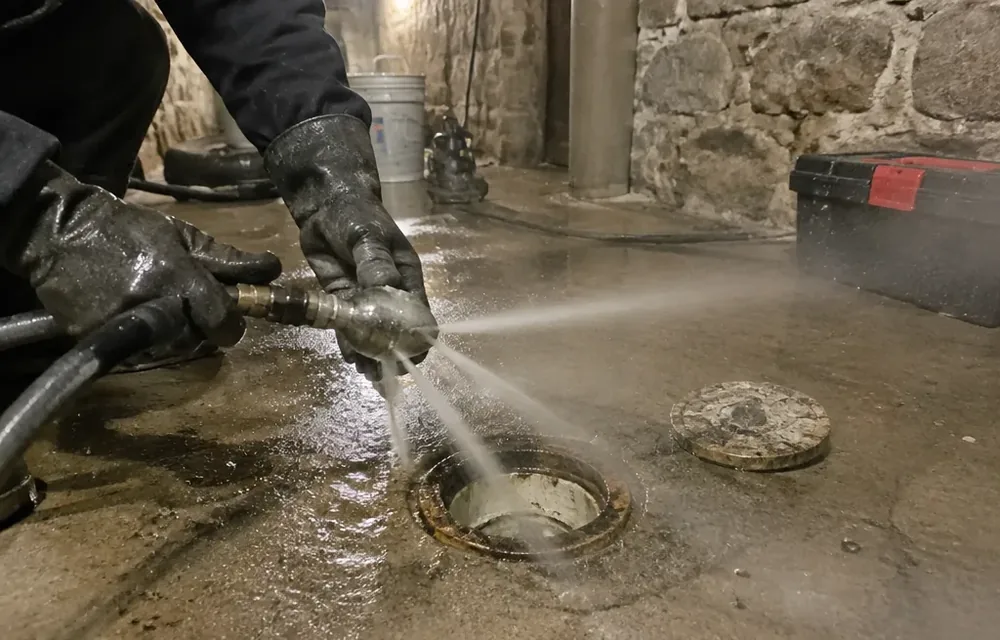
Hydro Jetting
A cable bores a hole through the clog.
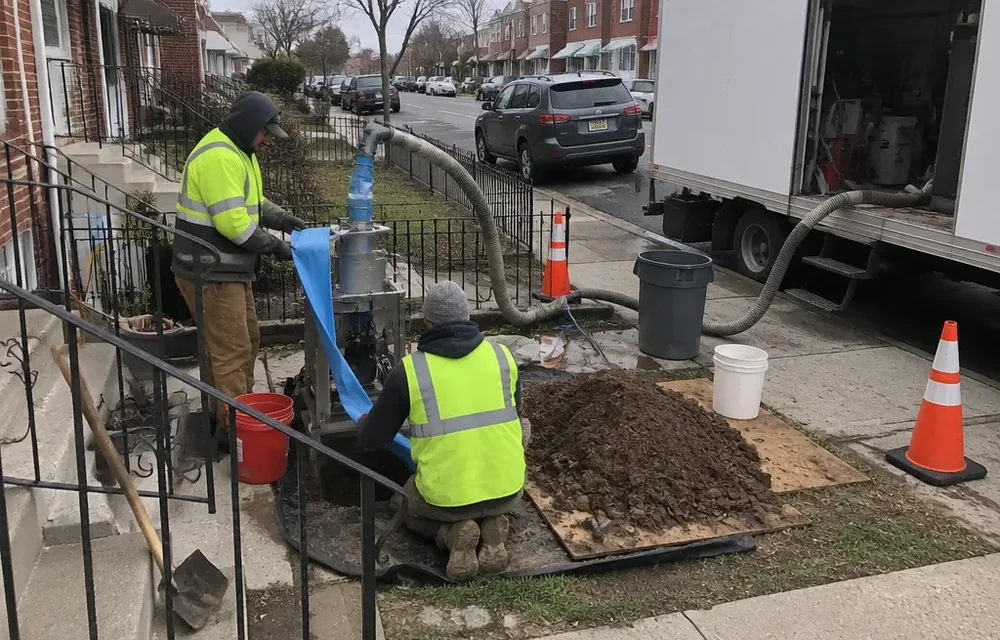
Commercial Hydro Jetting
Commercial drains fail on schedule — fryer volume, tenant count, storm season — so they should be serviced on schedule.
Kitchen Grease Line Jetting
Grease is the one clog material a cable cannot fix.
Free tools that help with this exact problem
More guides
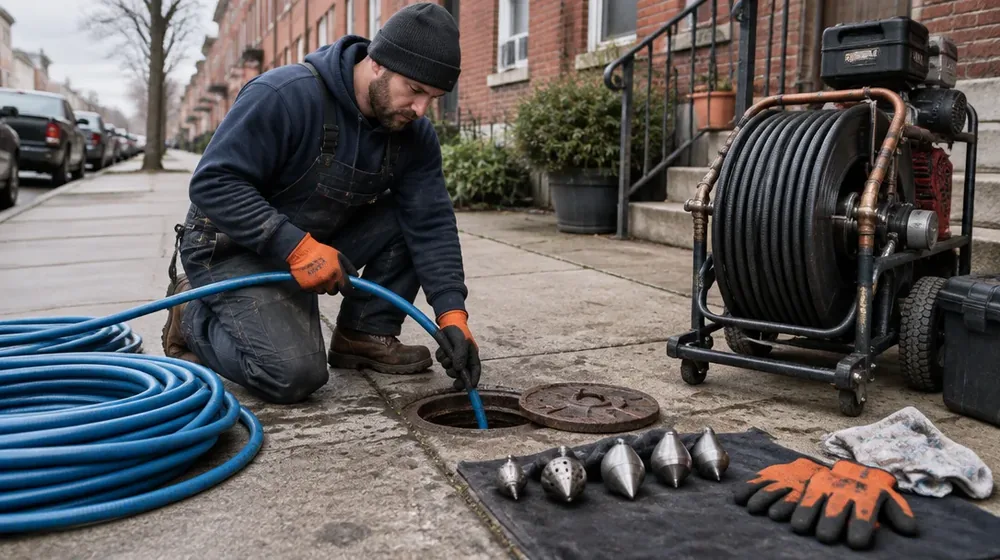
Hydro Jetting vs Snaking: What Philly Homes Need
A cable bores a hole through the blockage so water moves again. A jetter scours the whole pipe wall back toward bare m…

Hydro Jetting Cost in Philadelphia: 2026 Guide
Most Philadelphia homeowners budget around national jetting ranges, then discover access, lateral length, and root cut…
Grease Lines: Philly Rowhouses & Restaurants
Grease goes down warm and liquid, meets cold iron, and becomes a wall coating rather than a plug. That is why the same…
Philly Rowhouse Laterals: Clay, Iron & More
The year your Philadelphia rowhouse was built predicts what is buried in front of it. Clay joints admit roots, cast ir…