How to Check a Pennsylvania Plumber License in Philadelphia
Verifying license and insurance before work begins takes minutes and is the homeowner responsibility that protects every larger decision. Here is exactly how Philadelphia homeowners do it.
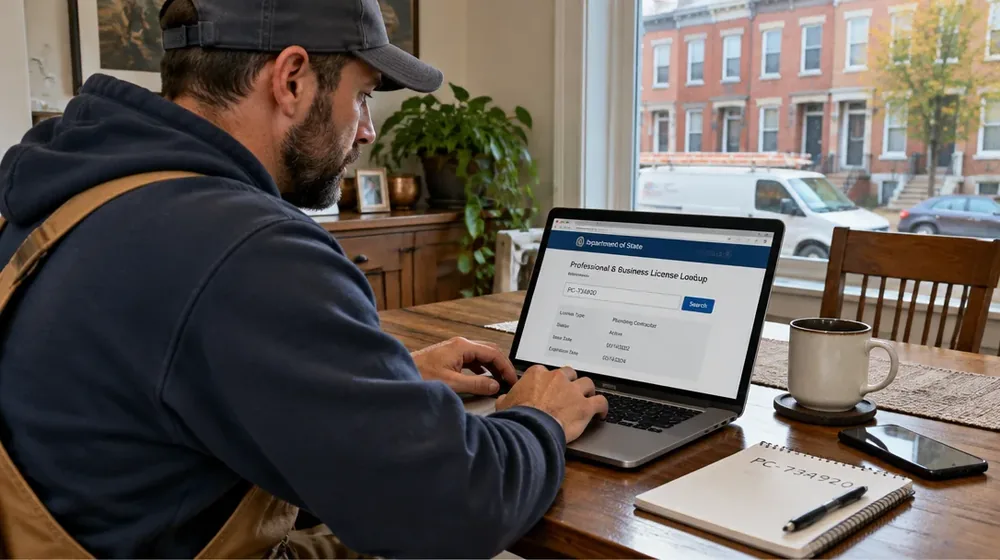
Why verification is your job, stated without drama
Pennsylvania structures plumbing oversight differently from many states, with the state Attorney General registration system for home improvement contractors operating alongside Philadelphia licensure requirements for plumbing work performed inside the city. That layered structure confuses homeowners into assuming someone else verified the truck at the curb, when in practice no agency stands between a homeowner and an unverified hire. Checking registration, city licensure as applicable, and insurance before authorization is the homeowner duty that underwrites everything else, from the camera footage to the warranty paper.
The cost asymmetry is what makes the minutes matter. A correctly performed lateral cleaning or repair carries a defined price and a documented result, while work by an unverified operator carries open-ended exposure: unpermitted plumbing that resurfaces at a future sale, damage without an insurer to answer, deposits paid for work that never starts, and defects without a warranty worth the paper. Philadelphia rowhouse work compounds each exposure, because laterals cross sidewalks, party walls, and combined-sewer connections where mistakes implicate neighbors and city infrastructure rather than one bathroom.
None of this requires trusting or distrusting any individual contractor. Verification is a neutral procedure applied to everyone before money moves: collect the numbers, run the lookups, confirm insurance directly, and proceed with whoever passes. Operators who welcome the check are the only kind worth hiring, and the check itself improves the behavior of the entire market each time a homeowner performs it.
Budget the verification into every project timeline rather than treating it as emergency overhead. The lookup takes about a minute with the number in hand, insurance confirmation takes a call or an emailed certificate, and permit expectations can be confirmed with the city before scheduling. Doing it during calm planning beats doing it with sewage rising, which is when leverage is lowest and the temptation to skip is highest.
Philadelphia and Pennsylvania: which credential covers your job
| Credential | Where to check | What it tells you |
|---|---|---|
| PA home improvement registration | Attorney General lookup | Registered status for residential contracting work |
| Philadelphia plumbing licensure | City Licenses and Inspections records | Authority to perform plumbing inside city limits |
| Liability insurance certificate | Insurer or agent directly | Active coverage, limits, and dates for your job |
| Permit and inspection record | City permit history | Whether past work was permitted and signed off |
| Complaint and discipline history | State and city lookup notes | Patterns worth weighing alongside references |
Match the credential to the work. Plumbing repairs, lateral corrections, water heater replacement, and gas-adjacent work inside Philadelphia implicate city plumbing licensure and routinely require permits with inspection, while general home improvement contracting implicates state registration. Sewer lateral replacement additionally crosses right-of-way, restoration, and Philadelphia Water Department coordination that permitted contractors handle as routine. Ask which credentials the bidder holds for your specific scope rather than accepting a general assurance of being covered.
Insurance deserves equal weight with licensure rather than secondary status. A certificate showing general liability coverage with current dates, issued or confirmed through the insurer or agent rather than merely photocopied, is what answers for damage if excavation strikes a neighboring service or a basement flooding follows a faulty connection. Workers on site without coverage convert an ordinary accident into the homeowner liability, which is why confirmation runs to the insurer rather than stopping at a card.
The five-minute lookup sequence, step by step
Collect numbers before scheduling
Full business name, registration or license numbers, and a contact for insurance certificates.
Run the state registration lookup
Pennsylvania Attorney General home improvement search; confirm active status and matching business name.
Check city licensure for Philly work
City Licenses and Inspections records for plumbing authority inside Philadelphia.
Confirm insurance with the insurer
Certificate with dates and limits verified through the agent or carrier, not a photocopy alone.
Review history and permits
Complaint notes where published and permit history showing inspected work of similar type.
Keep the record with the project file
Numbers, certificates, permit cards, and footage together for resale and warranty.
Run the sequence in writing rather than by phone memory. Mismatched business names between the lookup, the certificate, and the proposal are the most common finding and sometimes innocent, as when a contractor operates under a trade name, but the explanation should be documented before authorization rather than after a dispute. Numbers that cannot be produced, lookups that return inactive or unmatched status, and insurance that cannot be confirmed through the carrier are each independently sufficient to pause.
Keep the verification artifacts with the camera footage, the written scope, and the paid invoice as one project file. At a future sale, that file answers the buyer questions about permitted plumbing and lateral condition that otherwise become renegotiation leverage; at a warranty call, it establishes who performed what under which credential on which date. Documentation assembled in minutes at hiring pays across the ownership of the home.
Red flags that stop the job before it starts
Cash-only full payment in advance is the brightest flag. Deposits tied to scheduled milestones with the balance due on verified completion are normal contracting; full prepayment for work not yet performed, especially in cash without receipt, removes the homeowner leverage that guarantees performance. Philadelphia lateral and excavation work additionally involves permit fees, restoration deposits, and staged inspections that a fixed-advance demand cannot accommodate honestly.
Reluctance to be checked is disqualifying regardless of explanation. Operators who deflect the license question, promise paperwork that never arrives, present numbers belonging to another business, or discourage permits to save time are describing exactly the exposure verification exists to prevent. The honest response to a credential request is immediate production plus an invitation to confirm; anything else is information in itself.
Blind capital pricing is a scope flag rather than a credential flag but equally decisive. No contractor can price a lateral replacement, lining, or major repair honestly without camera footage showing defect extent, footage, and depths, so a capital figure offered from symptoms or from a single fixture visit should be declined in favor of an independent scope. Similarly, pressure-based cleaning proposed for a pre-1970 lateral without a camera inspection, or excavation proposed without utility marking and permit discussion, announces how the project will be managed.
Storm-chasing behavior during surcharge events deserves special caution. After major cloudbursts over the Schuylkill and Delaware corridors flood Philadelphia basements in clusters, canvassers appear offering immediate excavation or lining at disaster pricing. Legitimate contractors triage emergencies, document conditions, and schedule permanent work after the main recedes with footage and permits; anyone demanding an immediate capital commitment while water still stands is selling urgency rather than plumbing.
Permits, inspections, and the resale shadow
Sewer lateral corrections, water heater replacement, gas appliance work, and most plumbing alterations inside Philadelphia are permitted work with inspection, and the permit history follows the property rather than the contractor. Unpermitted plumbing reliably resurfaces during a future sale when buyer inspection, title review, or insurer inquiry asks for the record, and resolving it then costs considerably more than permitting it correctly now. Confirming permit expectations with the city before scheduling is therefore price protection rather than bureaucracy.
The inspection itself is homeowner leverage rather than contractor burden. A city sign-off on buried work verifies slope, bedding, materials, and connections that no homeowner can evaluate after backfill, and the signed record becomes the answer to every future question about the lateral. Contractors who frame permits as optional delay are asking the homeowner to trade permanent documentation for days of schedule, which is never the homeowner interest on buried infrastructure.
Sidewalk-corridor and right-of-way work adds restoration and coordination layers that permitted contractors handle routinely. Opening the sidewalk or areaway above a rowhouse lateral implicates city restoration standards, pedestrian protection, and Philadelphia Water Department awareness where the run meets the main, and the figure should state those items before authorization. Vague restoration promises on a signed proposal become specific disputes on an open trench, which is why the permit and restoration lines belong in the scope rather than in conversation.
Getting the scope in writing alongside the credentials
Credentials qualify the bidder; the written scope defines the job. Before authorization, the proposal should state the access point, pipe diameter and approximate footage, whether root cutting and pre- and post-clean camera passes with kept footage are included, the pressure approach matched to the shown material, the load-test proof of completion, and the written contingency if excavation proves necessary. That six-line format makes competing figures comparable and prevents the cheapest headline from omitting the steps that protect the homeowner.
Commercial corridors and rental rowhouses add documentation duties worth naming. Food businesses on corridors like East Passyunk and South Street should hold grease-trap logs, jetting records, and credential files together for health and insurer review, while landlords with below-grade rental units on combined-sewer blocks should hold lateral footage, backwater hardware records, and mitigation contacts where a tenant flood would demand them at night. Organized files read as diligence in every later conversation.
Warranty terms belong in the same document rather than in verbal assurance. What is covered if the same line blocks within months, who returns under what response time, and what conditions void coverage should be stated before work begins, because recurring blockage usually signals a coated or defective line rather than bad luck, and the second visit is where the first visit promises are tested. A warranty that excludes the very recurrence the line history predicts is not coverage.
Philadelphia-specific contacts and habits that compound
Build the habit of checking before every plumbing hire rather than once per contractor. Credentials lapse, insurance renews, business names change, and a verification from three years ago describes a different legal factscape than today hiring. The minute-long lookup scales to every job from a fixture visit to a full lateral replacement, and applying it uniformly removes the awkwardness of selective checking while protecting uniformly.
Keep the city-facing contacts with the project file rather than searching during emergencies. The Pennsylvania Attorney General lookup path for registration, the city Licenses and Inspections path for Philadelphia plumbing authority and permits, the Philadelphia Water Department path for lateral-versus-main boundaries and wet-weather guidance, and the insurer confirmation path for certificates together form the verification set that answers every hire. Stored once and reused each time, they convert a chore into a checklist.
The related services frame the work verification protects: drain cleaning for routine clearing, sewer camera inspection for the documentation every capital decision needs, and emergency drain service for the urgent calls where pre-verified contacts matter most. Verified operators performing scoped work to code is the entire strategy, and each half is visible in the file before money moves.
Frequently asked questions
How do I check a plumber for Philadelphia work?
Collect the business name, license or registration numbers, and insurance contact, then run the Pennsylvania Attorney General registration lookup and the city Licenses and Inspections records for Philadelphia plumbing authority, and confirm the insurance certificate through the carrier. Keep all three with the project file.
What is the difference between state registration and city licensure?
State home improvement registration covers residential contracting generally, while plumbing work inside Philadelphia additionally implicates city plumbing licensure with permits and inspection. Ask which credentials cover your specific scope rather than accepting a general assurance, and confirm both where both apply.
How do I confirm insurance rather than just seeing a card?
Request a certificate showing current dates and limits and verify it through the listed insurer or agent. Confirm the business name matches the proposal and that coverage spans your job dates. Unverifiable or expired coverage pauses the hire regardless of schedule pressure.
Do sewer and plumbing jobs need permits in Philadelphia?
Most lateral corrections, plumbing alterations, water heater replacement, and gas-adjacent work do, with inspection sign-off that follows the property into future sales. Confirm expectations with the city before scheduling and require the permit and restoration lines in the written scope.
What red flags should stop a plumbing hire?
Full cash prepayment, reluctance to produce verifiable credentials, capital pricing without camera footage, pressure cleaning proposed for old pipe without scoping, excavation without permits and utility marking, and disaster-priced capital demands while water still stands. Each independently justifies pausing.
Services mentioned in this guide
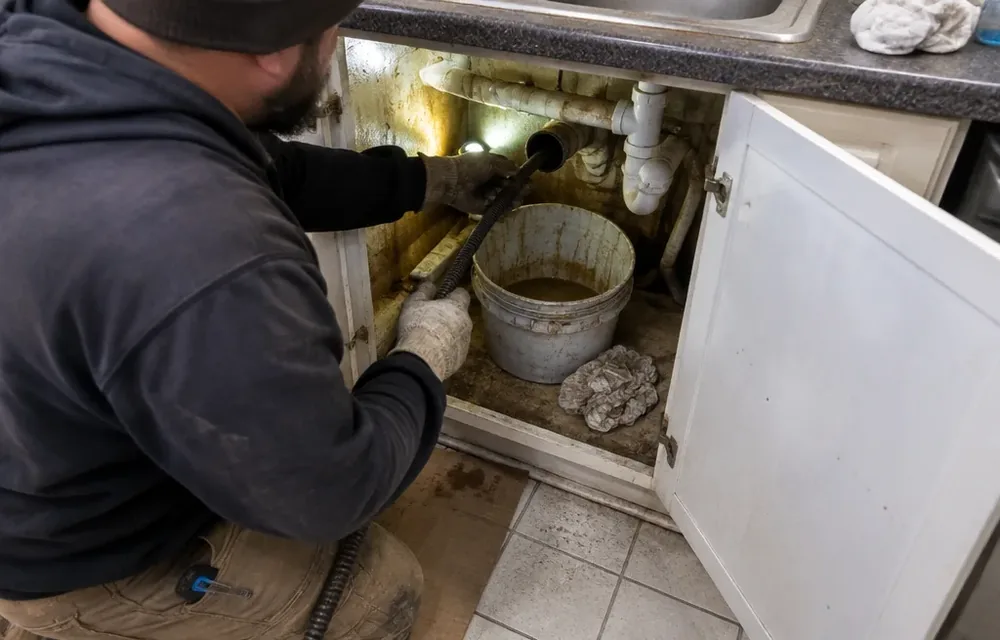
Drain Cleaning
A single slow sink is a nuisance.
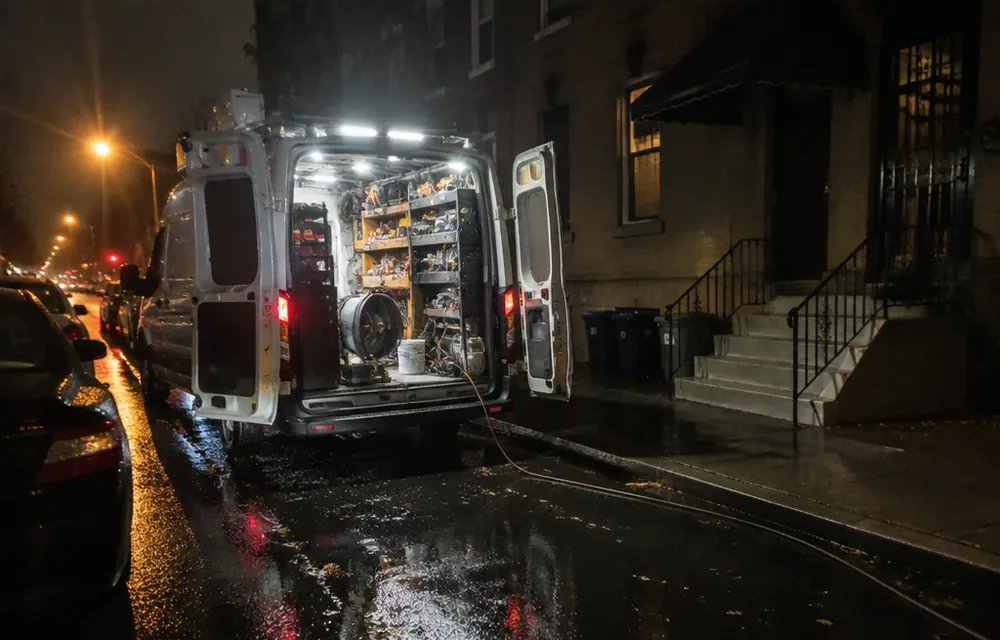
Emergency Drain Service
Sewage on the basement floor does not wait for business hours, and neither do we.
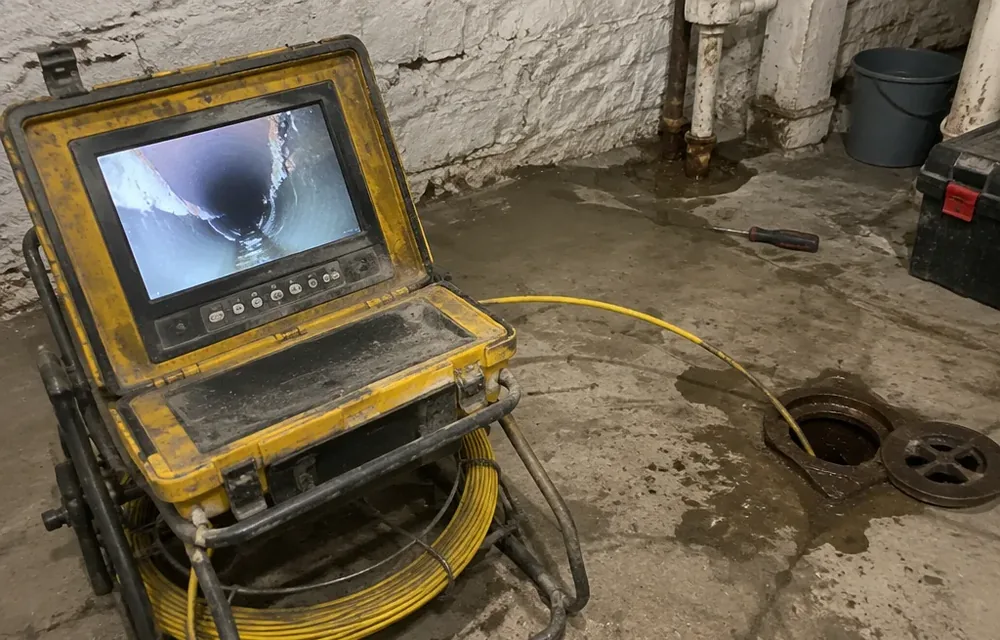
Sewer Camera Inspection
Every expensive sewer decision in Philadelphia — jet, repair, line, replace — depends on one thing: what the pipe actually looks like inside.
Free tools that help with this exact problem
More guides
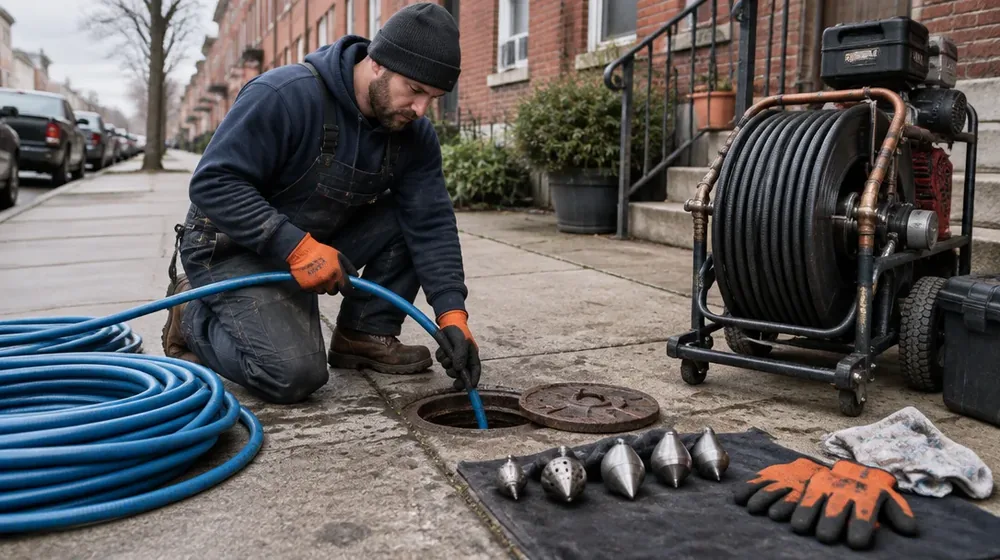
Hydro Jetting vs Snaking: What Philly Homes Need
A cable bores a hole through the blockage so water moves again. A jetter scours the whole pipe wall back toward bare m…

Hydro Jetting Cost in Philadelphia: 2026 Guide
Most Philadelphia homeowners budget around national jetting ranges, then discover access, lateral length, and root cut…
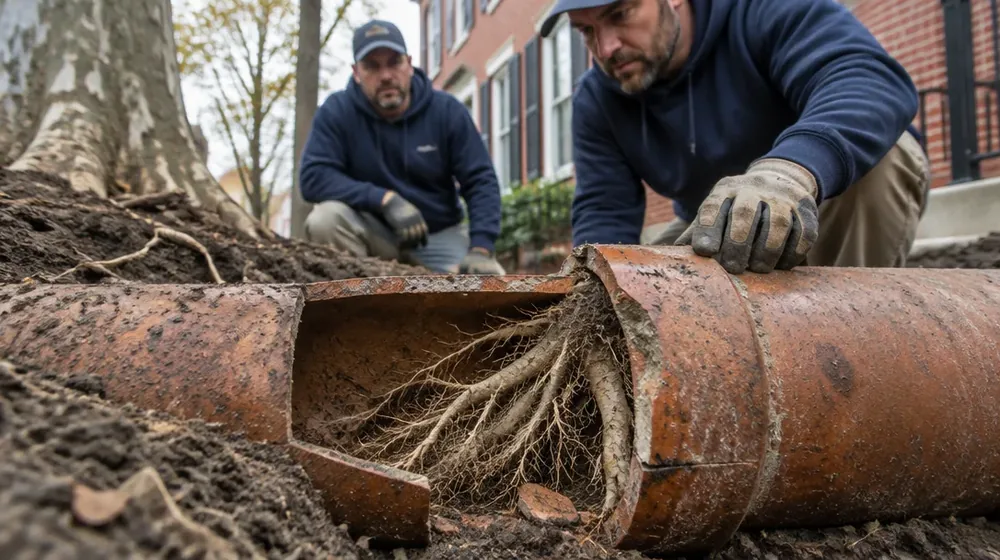
Tree Roots in Philadelphia Sewer Lines Guide
Roots do not break into sound pipe. They find the clay joint that is already leaking, thicken in the flow, and become …
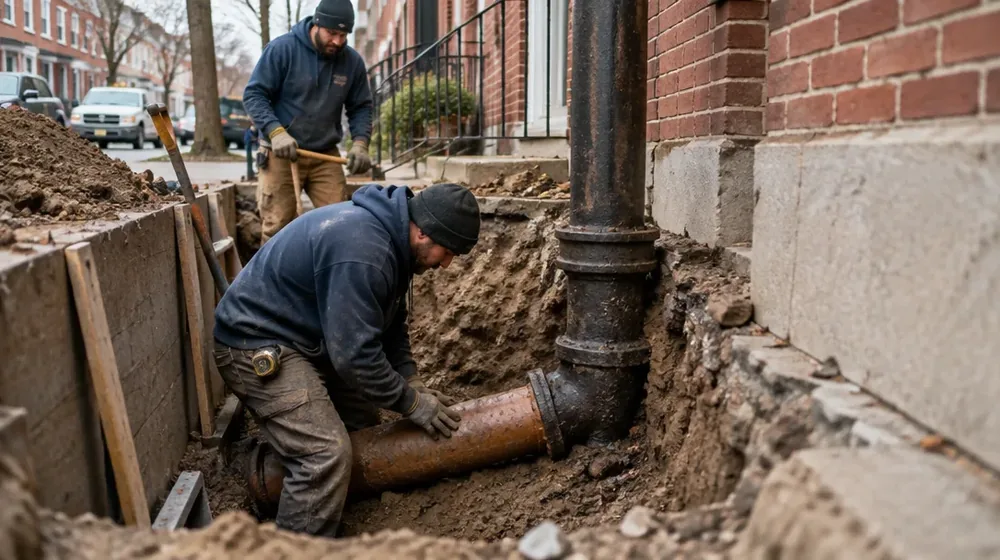
Philly Rowhouse Laterals: Clay, Iron & More
The year your Philadelphia rowhouse was built predicts what is buried in front of it. Clay joints admit roots, cast ir…