What is a drain snake and how does it work?
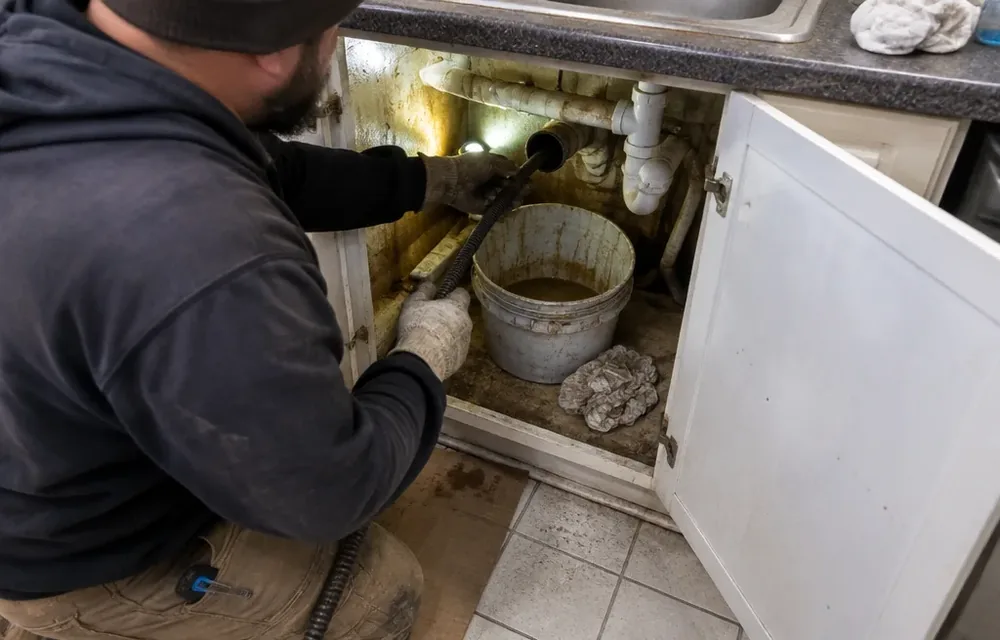
A drain snake is a coiled steel cable with a cutting or grabbing head that a hand crank or motor spins inside the pipe, letting the tip bite, hook, or bore through the blockage so flow resumes. Drum machines feed long cables into branch lines and laterals, while small hand augers handle traps and short runs near the fixture.
- Direct answer
- 2 min read
The two tools Philadelphia homeowners meet most often work differently. A hand auger or small drum snake, typically twenty-five to fifty feet of quarter-inch to three-eighths-inch cable, threads through a sink, tub, or shower drain and is cranked by hand or a small motor while interchangeable heads do the work: a bulb or drop head navigates bends, a C-cutter or spade scrapes, and a small root saw chews fibrous material. A toilet auger, also called a closet auger, is a different tool built for one job: a short three-to-six-foot cable inside a curved guide tube that hooks over the bowl rim so the cable enters the trapway without scratching porcelain. Using a regular snake in a toilet risks chipping the glaze and wedging the head in the trap, while using a closet auger past the toilet wastes time because its short cable cannot reach the branch line or stack where the real blockage usually sits.
The buy-versus-call math favors the call sooner than most people expect. A basic hand auger costs roughly the price of a takeout dinner and clears a hair clog near a tub drain in minutes, which is a fair do-it-yourself win. But a powered drum machine with real reach costs several hundred dollars to buy or a meaningful rental fee plus deposit, transport, and cleanup, and rental cables arrive with dull generic heads and no camera, so renters commonly bore a hole through the clog, declare victory, and back up again within weeks. Chemical openers compare worse on old Philadelphia plumbing. Caustic products built on sodium hydroxide generate heat and need to reach the clog at strength, yet in a slow rowhouse line they dilute in standing water, sit against rubber gaskets and old iron, and can craze porcelain and discolor fixtures while leaving the actual buildup untouched. Enzyme and bacterial maintainers have a legitimate maintenance role after mechanical cleaning, but no bottled product removes laminated grease, scale, or roots.
Snaking has hard limits that explain most Philadelphia callbacks. A cable bores a channel through grease and sludge rather than scouring the wall, so the narrowed opening grabs paper and congeals shut again, sometimes within weeks. Fine root hair at clay tile joints mats around the cable instead of severing, which is why streets with mature London plane and silver maple trees produce repeat root backups that only mechanical cutting followed by jetting resolves. Scale inside century-old cast iron, sagging bellies that hold water, and crushed or Orangeburg segments cannot be snaked back to round at all. The rational sequence is snake for the simple near-fixture clog, camera when problems repeat or involve multiple fixtures, and jetting once footage confirms sound pipe. That order spends the least money for the longest clear line.
Want the full picture?
Hydro Jetting vs Snaking: What Philly Homes Need — Read the full comparison: jetting vs snaking and when each wins.
Follow-up questions
Can I snake my own drain safely?
A short hand auger on a single slow sink or tub is reasonable do-it-yourself work if you go gently and stop when you meet solid resistance. Skip the powered drum machine without experience, never force a cable, and call a pro when multiple fixtures back up or sewage appears.
Should I try a chemical opener before snaking?
One cautious attempt on a single slow fixture is the common pattern, but never use caustic chemicals in a toilet, in standing water, or ahead of a pro visit, because trapped chemicals endanger whoever opens the line next. If the first attempt fails, switch to mechanical clearing rather than doubling the dose.
Services behind this answer
Drain Cleaning
A single slow sink is a nuisance.
Bathroom Drain Cleaning
Bathroom clogs are almost never mysterious: hair, soap scum and toothpaste solids, wrapping around cast iron scale in a century-old branch arm.