My kitchen sink drains slow — is it grease or something deeper?
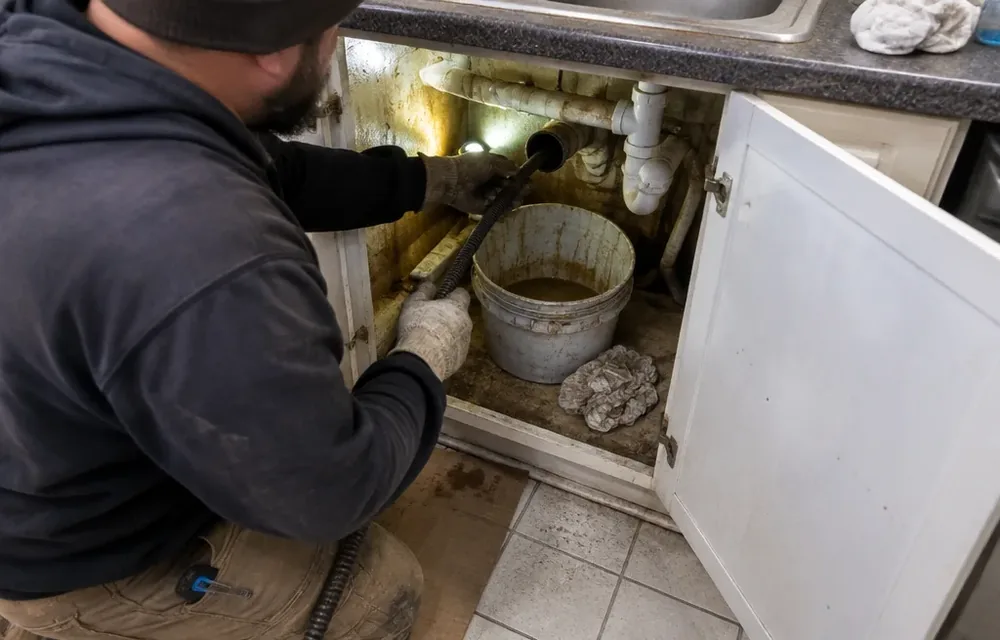
A single slow kitchen sink with gurgling only at that fixture usually means grease coating in the branch line, while slow drains at several fixtures, sewage odors, or water appearing in lower drains point to a deeper lateral problem. Watch the other fixtures for one day: kitchen-only trouble stays local, while house-wide symptoms implicate the main.
- Direct answer
- 2 min read
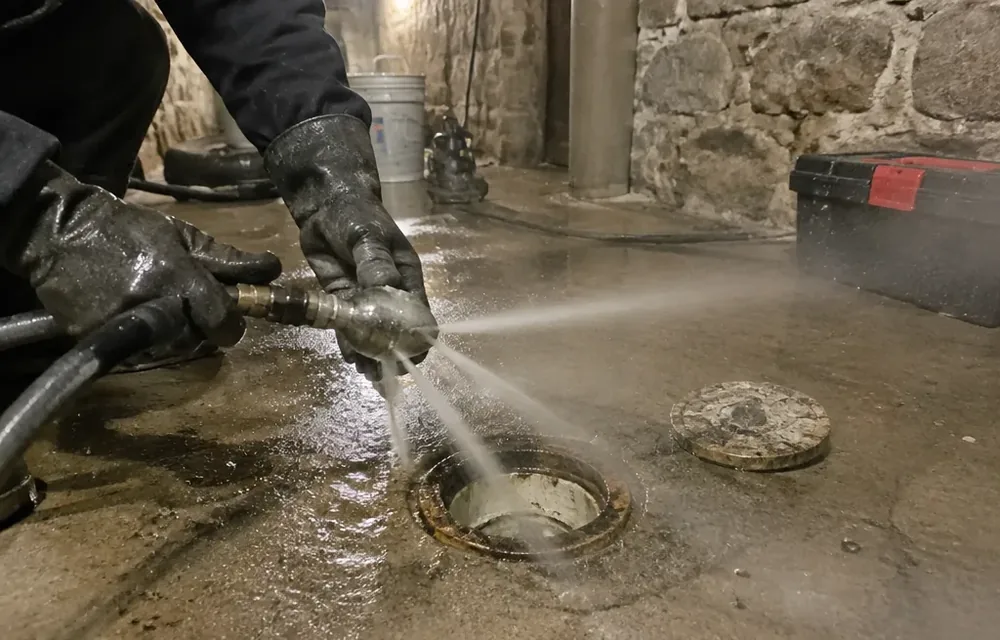
Grease is the default Philadelphia kitchen load and its behavior is distinctive. Warm fat poured down the sink congeals on the first cold iron it meets, then food solids bind into the film until the bore narrows along its full circumference. The sink drains slowly but steadily, plunging helps briefly, boiling water seems to help for a day, and the pattern recurs within weeks or months. Narrow galley kitchens in South Philadelphia and Center City rowhouses with long runs to the street main re-coat fastest, and restaurant corridors such as South Street, East Passyunk, Frankford Avenue, and Baltimore Avenue load shared lines the same way at higher volume. A cable pass through this coating bores a temporary channel that closes again; only scouring removes the full-circumference layer, which is why the same line fails twice in eighteen months on cables yet holds for years after one proper jetting.
Deeper trouble announces itself through company rather than solitude. The kitchen slows together with a sluggish tub or a basement floor drain that burps during laundry; toilets gurgle when the sink drains; backups arrive during heavy rain when combined mains surcharge; or the same footage keeps blocking annually with white fibers on the cutter, which is roots at a clay joint rather than grease at all. Cast iron scale narrowing the bore, a belly holding standing water mid-line, or storm grit packed into a flat spot all mimic grease at the kitchen while belonging to the lateral. The discriminating test costs nothing: run an upstairs tub and watch the kitchen and basement drains. If distant fixtures react, the restriction sits downstream of where the branches join, and no amount of sink plunging reaches it.
Respond in proportion to what you find. Kitchen-only grease gets habit changes first: cooled fat into a jar for the trash, greasy pans wiped before washing, strainers catching solids, and no chemical openers that heat and warp without removing film. Recurrence after those changes, or any multi-fixture symptom, earns a camera inspection with footage marks before another blind clearing, because the footage separates scouring targets from repair targets and aims every dollar after it. Philadelphia homes with any wet-weather history should schedule that look in dry spring weather, when the line photographs honestly and crews work at standard scheduling.
Want the full picture?
Grease Lines: Philly Rowhouses & Restaurants — Read the full grease guide: rowhouses, restaurants, and fixes.
Follow-up questions
Do enzyme or chemical openers clear grease lines?
They freshen odors and may soften fresh film, but they never remove laminated full-circumference coating. Repeated use delays the scouring that actually resets the line.
Can a disposal cause a slow kitchen sink?
Yes. Ground food solids bind into grease film and accelerate narrowing. Using strainers and wiping pans before washing extends the interval more than any additive.