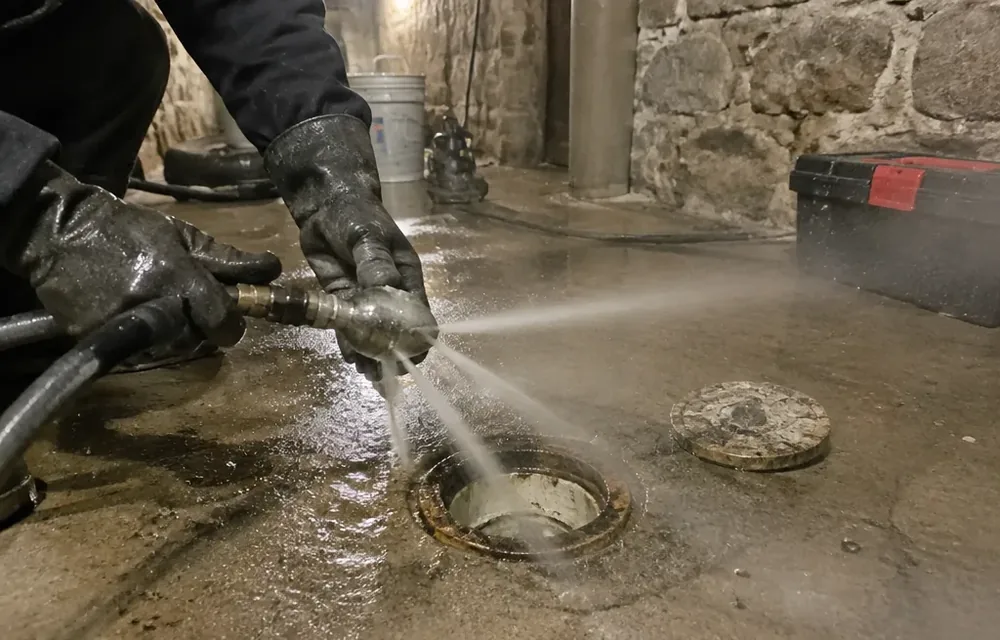
Can hydro jetting damage a sewer line?
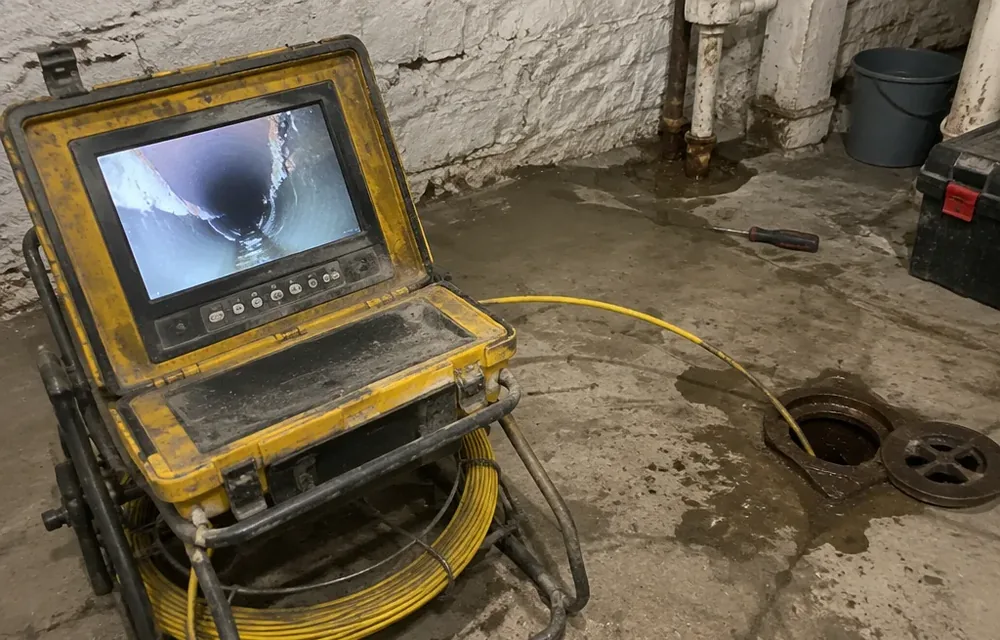
Yes, hydro jetting can damage a sewer line that is already structurally compromised, because thousands of PSI inside failing pipe converts weakness into collapse. Sound pipe is never harmed by correct pressure, which is why the entire safety question reduces to one step: camera inspection before jetting on any older, repeat-offender, or unknown line.
- Direct answer
- 2 min read
The at-risk catalog fills entire Philadelphia blocks. Orangeburg fiber pipe from the 1945 to 1972 window, common in the Northeast, parts of the Southwest, and pockets of South Philadelphia, softens and deforms until pressure ruptures it. Cast iron scaled paper-thin from the inside channels along the invert until a jet stream opens the wall. Clay segments already offset or cracked shift further under load, and severe bellies holding standing water or outright collapses with soil visible need excavation, not cleaning. Freeze-thaw heave, delivery loading over sidewalk corridors, and a century of utility trench settlement keep shifting these joints, so even a line that jetted safely years ago can graduate into the danger category without any symptom visible at the surface.
The professional sequence removes the danger rather than accepting it. A pre-clean camera documents material, diameter, footage marks at every defect, depth at the curb, and flow behavior under load, narrated in real time with a kept video file and written summary. Blocked lines get cut first and, where sound, jetted lightly before the diagnostic scope, so joints and walls photograph instead of debris. Pressure and nozzle then match the findings: conservative settings on aging cast iron stacks, full working pressure only on verified sound clay and PVC, and no pressure at all on Orangeburg or collapse. Philadelphia crews should launch from a proper exterior or basement cleanout, handle caps cautiously since a cap may hold back a sewage column, and finish winter visits with caps seated and risers protected from frost.
Your leverage as a homeowner is procedural. Decline any proposal to jet a pre-1970 Philadelphia lateral without footage, regardless of scheduling pressure. Require the kept file with marks, depths, and a surface locate tying the run to the sidewalk and areaway above, then require the six-line scope: access point, diameter and footage, cutting and camera inclusion, pressure matched to shown material, load-test proof, and the written contingency if excavation proves necessary. A contractor who shows you failing footage and declines to jet has just saved you an excavation; keep that contractor, and send the footage to every future bidder so they compete on judgment rather than on who imagines the worst pipe.
Want the full picture?
Camera Inspection Before Hydro Jetting Guide — Read why the camera runs first and what footage must show.
Follow-up questions
Is low pressure always safe on old pipe?
No. Even modest pressure is wrong for Orangeburg, collapse, or voids with soil visible. The material finding, not the pressure dial, is what makes a line jettable.
What should I receive after the inspection?
A kept video with footage marks, a material and diameter log, depths at defects and the curb, a surface locate, observed flow behavior, and recommendations tied to specific footage.